.svg&w=384&q=75 "Naijagoal logo")

Dortmund Faces Hoffenheim: A True Test Awaits
The transfer window is shut. The rumours have faded. For Borussia Dortmund, only the football is left now.
They’ve opened the season cleanly enough: three points banked against Hamburg in the league, safe passage past HEBC in the cup. Routine work. Hoffenheim will not be routine.
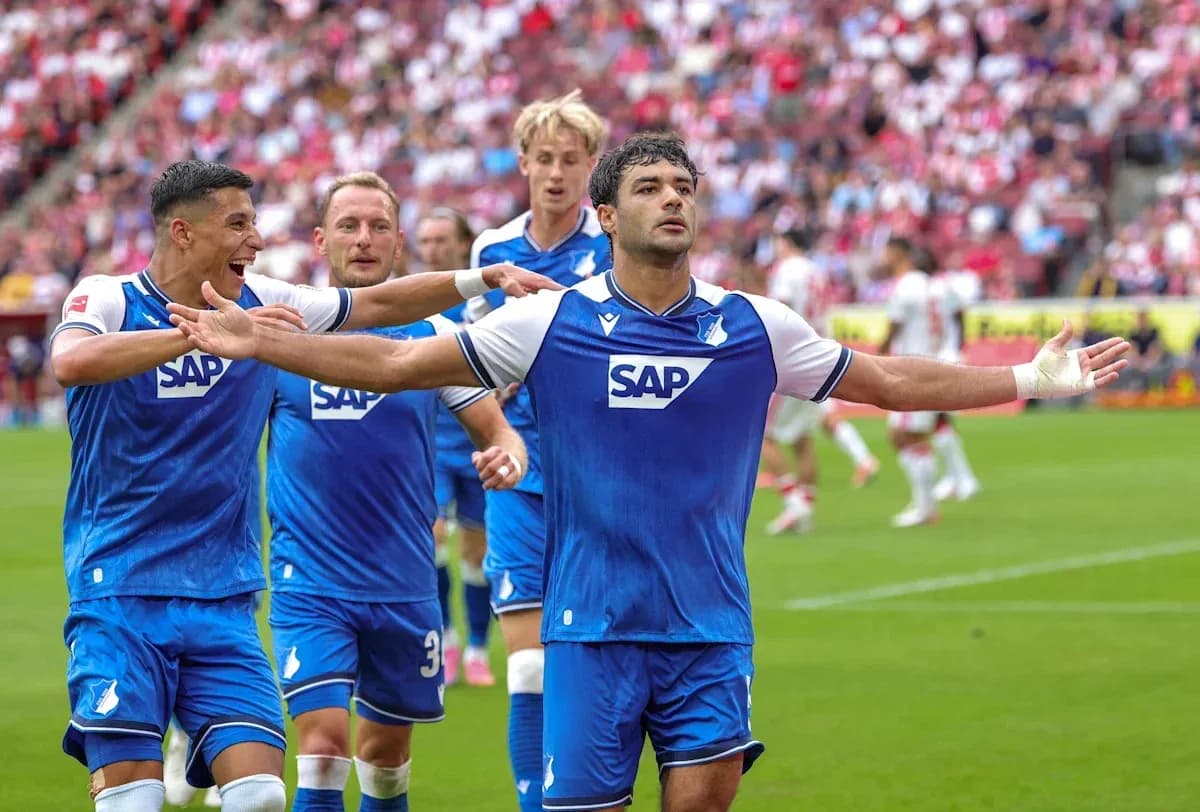
The Sinsheim club arrive as the first genuine measuring stick of Dortmund’s campaign. Last season they finished just a point short of the Champions League places, a surge built under Christian Ilzer that has quietly turned into one of the Bundesliga’s more impressive rebuilds.
Ilzer walked into a relegation fight in 2024/25, steadied the ship, kept them up, then came back and doubled their points tally the following year. That’s not a fluke. That’s a plan taking hold.
Ilzer’s Hoffenheim: Rebuilt on the Fly
Hoffenheim’s summer was anything but calm. Bazoumana Toure, their electric wide threat, has gone. Fisnik Asllani’s move to RB Leipzig collapsed at the medical table and he remains injured. The squad has been reshaped on the fly.
To plug the Toure-sized hole, Hoffenheim turned to Wolfsburg’s Patrick Wimmer, a direct, aggressive winger who fits Ilzer’s front-foot football. Alongside him, two of the most eye-catching names in the Bundesliga have arrived: Mats Rots and Nathan De Cat.
De Cat is the intriguing one. A genuine two-way midfielder, he is expected to slot into the engine room next to Wouter Burger, whose own name has already become a running joke in Bundesliga circles but whose importance on the pitch is no laughing matter.
Only Wimmer made the XI in Hoffenheim’s wild 2–3 defeat to Köln on the opening weekend. That will almost certainly change here. Ilzer has options, and he knows this fixture demands more. Asllani, though, remains unavailable.
Kovac’s Puzzle: Who Plays and How?
On the Dortmund side, the questions stack up quickly.
First: personnel. Konstantelias is out with an ACL injury. Samuele Inacio is suspended. Niko Kovac must find a new partner for Karetsas in the band of two behind Serhou Guirassy.
Three names sit on the manager’s whiteboard: Marcel Sabitzer, Carney Chukwuemeka, and new signing Ethan Nwaneri. Each offers a different flavour. Sabitzer brings experience and control. Chukwuemeka adds drive and physicality. Nwaneri is the wild card, a talent with sharp edges and no fear.
The expectation, though, is that Kovac leans on trust. Sabitzer looks the likeliest to step in.
Then comes the bigger question: style.
Against both Hamburg clubs, Dortmund hogged the ball and peppered goal. Across those two games they out-shot their opponents 35–9, with a staggering 20 of those attempts coming in the Bundesliga opener alone. They dictated everything.
Hoffenheim won’t let them do that so easily. Ilzer’s side finished fourth in possession numbers last season; Dortmund were sixth. On the opening weekend, Hoffenheim again took charge of the ball, seeing 59% of it in the loss to Köln. They want to build, not chase.
Something has to give. Either Dortmund wrest control of midfield in a hostile environment, or they accept long spells without the ball and turn those rare surges forward into something ruthless.
The Kramaric Problem
And then there’s Andrej Kramaric.
On paper, he’s a 35-year-old super-sub now, no longer the constant starter he once was. On grass, against Dortmund, he’s a recurring nightmare.
Only five players in history have scored more goals against die Schwarzgelben than Kramaric. Four of those sit in the Bundesliga’s all-time top ten scorers list. The fifth is 15th. That’s the company he keeps when Dortmund are on the other side.
Eighteen matches. Eleven goals. Two of them in this very fixture last season.
It’s why, even if he starts on the bench, he remains the player to circle in red. If this game is tight after an hour, expect the Croatian to stroll onto the pitch with the familiar glint of a man who knows exactly where to hurt this opponent.
Shape, Selection and a Statement Opportunity
Tactically, Kovac appears ready to return to his comfort zone.
After experimenting with a 4-3-3 against HEBC in midweek, the expectation is a switch back to a 3-4-2-1 for this test. Gregor Kobel will reclaim his spot in goal after Alexander Meyer’s cup outing.
In front of him, Gadou, Anton and Ryerson are set to form the back three. Out wide, Svensson and Beier should operate as wing-backs, asked to stretch Hoffenheim but also to track their runners relentlessly.
The midfield axis remains unchanged: Nmecha and Bellingham as the trusted pair in the centre, tasked with either seizing control of the game or surviving long stretches without it. Ahead of them, Sabitzer is tipped to join Karetsas in the two supporting roles behind Guirassy, who leads the line again after finding the net last week.
It’s a side built to flex. It may need to.
Because this isn’t just another early-season fixture. It’s the first time Dortmund’s new-look group stands across from a top-half, possession-hungry, tactically drilled opponent with real European ambitions.
Win, and Kovac’s team sends a clear message that the opening weeks were no mirage. Slip, and the questions about balance, depth and creativity without Konstantelias and Inacio grow louder.
Prediction? A narrow 2–1 Dortmund win feels about right. But in a game this finely poised, who lands the final punch: Guirassy in yellow, or Kramaric in blue?