.svg&w=384&q=75 "Naijagoal logo")
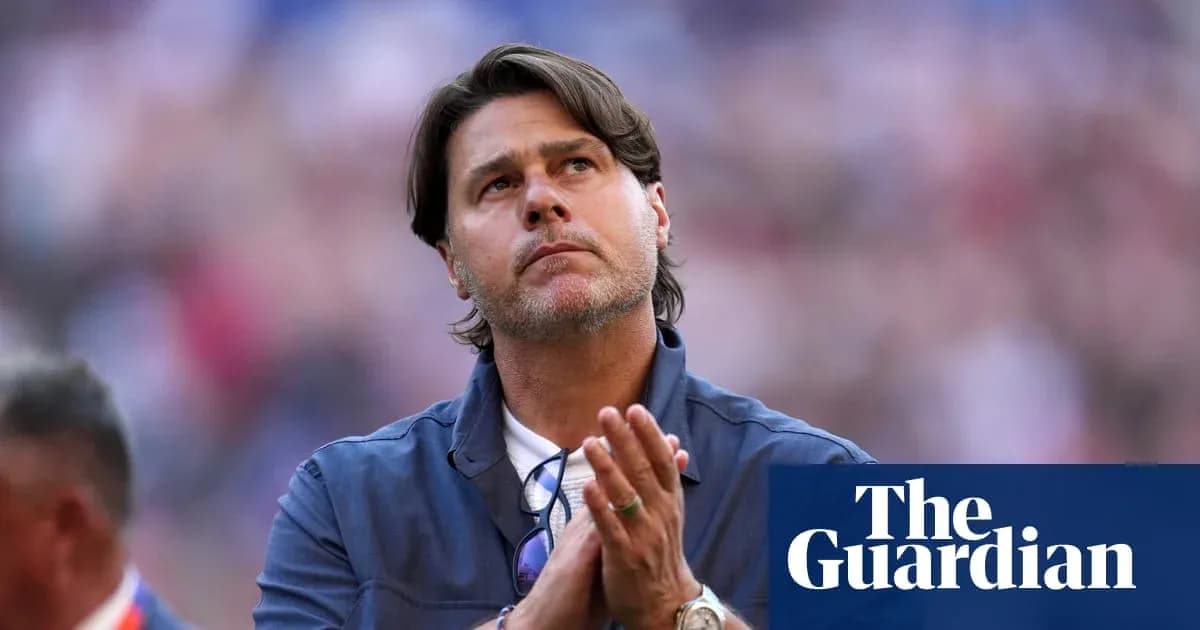

Pochettino's New Era: From Stopgap to Architect of US Soccer
Mauricio Pochettino is back on the training pitch, but this is not the same job he signed up for.
Two months after the US men’s national team’s flat World Cup exit on home soil, the Argentine coach has returned with a new contract, a wider remit and a far bigger target on his back. The short-term hire has become the long-term architect.
From stopgap to strategist
When Pochettino arrived in 2024, the brief was simple: squeeze everything possible out of a home World Cup, then see what happens. The US went out with a whimper, yet US Soccer still chose continuity over upheaval. By August, both sides had agreed an extension that will carry him through the 2030 cycle.
On paper, the next steps look familiar. Four friendlies in late September and early October against Peru, Chile, Mexico and Canada. Then the grind of qualification for the 2030 World Cup. But Pochettino’s job description now stretches far beyond matchdays.
He has spoken openly about why he stayed.
For him, this is a chance, as he put it, to “have a lasting impact on the sport in the country that has welcomed us so warmly – and for that impact to extend beyond results on the field.” US Soccer backed that up in writing. In announcing the renewal, the federation confirmed Pochettino will take a leading role in youth development, coaching education and advising on collaboration with the professional game.
No USMNT coach has ever been handed this much influence over the entire program. Technical areas that once belonged to administrators and sporting directors now sit squarely in his in-tray.
And the timing is no accident. US Soccer is in the middle of a major restructuring and is hiring two new directors to oversee the men’s and women’s senior and youth programs. Pochettino has already told the federation he’s ready to help shape those appointments – with one caveat.
“It can’t [just] be my guy,” he joked on Monday, making clear he wants to be part of the process, not the sole powerbroker.
The ambition, he says, is nothing less than transformational.
“This is the future of the USA,” Pochettino said. “We want to try to perform in the World Cup and to create something special with the fans. And now it’s about being a part of the legacy that the federation wants to create – becoming one of the most powerful countries in soccer. That is a dream, no? It’s amazing. If we can be part of that, we are so excited and so happy.”
The 2028 Los Angeles Olympics loom on the horizon, with the US already qualified as host. It has also been widely reported that the team could feature in the Copa América that same summer. Pochettino’s canvas stretches across two tournaments, a domestic landscape still finding its identity, and a generation of players that must grow up fast.
Balogun’s brutal deadline day
While the long-term plan grows, the summer transfer window delivered a harsh reminder of how fragile individual careers can be.
For the USMNT, it was a relatively quiet window. Gio Reyna moved to Strasbourg, Sebastian Berhalter to Middlesbrough, and teenage forward Zavier Gozo jumped from MLS to Crystal Palace. Many others stayed where they were.
Folarin Balogun was supposed to be different. After a breakout World Cup with the US, the Monaco striker looked set for a big-money move. Everton pushed late, talks advanced, and then, on deadline day, everything collapsed.
The Premier League club cited a potential fitness issue. Monaco disagreed. So did Balogun’s camp. The deal died anyway.
Pochettino knows the feeling of a transfer unraveling at the last moment. He also knows what that kind of public rejection can do to a player’s head.
“Yes, it’s difficult because you cannot influence that decision,” he said. “You need to support what they are doing with the people making the decisions. In some special cases, like Flo’s, I will call in the next few days. I wanted to give him a little bit of space after that situation in Everton. I want to know from him what happened. But we are always offering our support, and that’s it. I think he’s an important player for us, he was an important player in the World Cup and I hope that he can find being in Monaco, or in another place, his best place to perform in the best way.”
For the US, Balogun is not just another forward. He is a central piece of the attacking puzzle for 2030 and potentially for Los Angeles 2028. Keeping him confident and settled, wherever he plays his club football, is part of Pochettino’s new reality.
The tug-of-war for talent
If Pochettino’s expanded role is about structures and systems, one of his most delicate tasks remains intensely personal: convincing dual nationals to choose the US.
He kept his cards close when asked about the 26-man roster he’ll call in later this month. One absence is already confirmed. Augsburg center-back Noahkai Banks will not be there.
The 19-year-old, who holds both German and American eligibility, has not yet decided his international future. He has said he wants to make a call by “the next international break, or at the latest by the international break after next.” Germany are pushing hard. Reports there say new national team coach Jürgen Klopp has scouted Banks in person.
Pochettino knows the US cannot afford to be passive in these battles.
“We are in contact with all the potential dual nationals,” he said. “I think it’s important for us, of course, because that is the human connection that is so important. Even if they, like in that case, Noki, didn’t change his mind and is waiting still, no decision, and of course we cannot consider him for the next camp … But the organization is working with all the dual nationals and players with the possibility to make a decision. That human connection is important because if one day they feel that they can defend and they want to fight and to be part of our national team … Of course, if they deserve it, and we consider that they deserve to be involved, of course we are going to call [them up].”
The message is clear: doors stay open, but standards stay high. The US will court, but not beg.
A project stretching to 2028 and beyond
Four friendlies in the fall will not define Pochettino’s tenure. Nor will the next qualifying campaign on its own. His work now sits at the intersection of three timelines: the immediate need to restore belief after a painful World Cup exit, the medium-term push toward Los Angeles 2028, and the long-term dream of turning the US into a genuine global power.
He has the contract. He has the authority. He has the pressure that comes with both.
The question now is whether the country that has entrusted him with its soccer future can move as quickly, and as boldly, as the coach it has chosen to lead it.