.svg&w=384&q=75 "Naijagoal logo")

Gary Neville's Warning to Michael Carrick on Manchester United's Late Goals
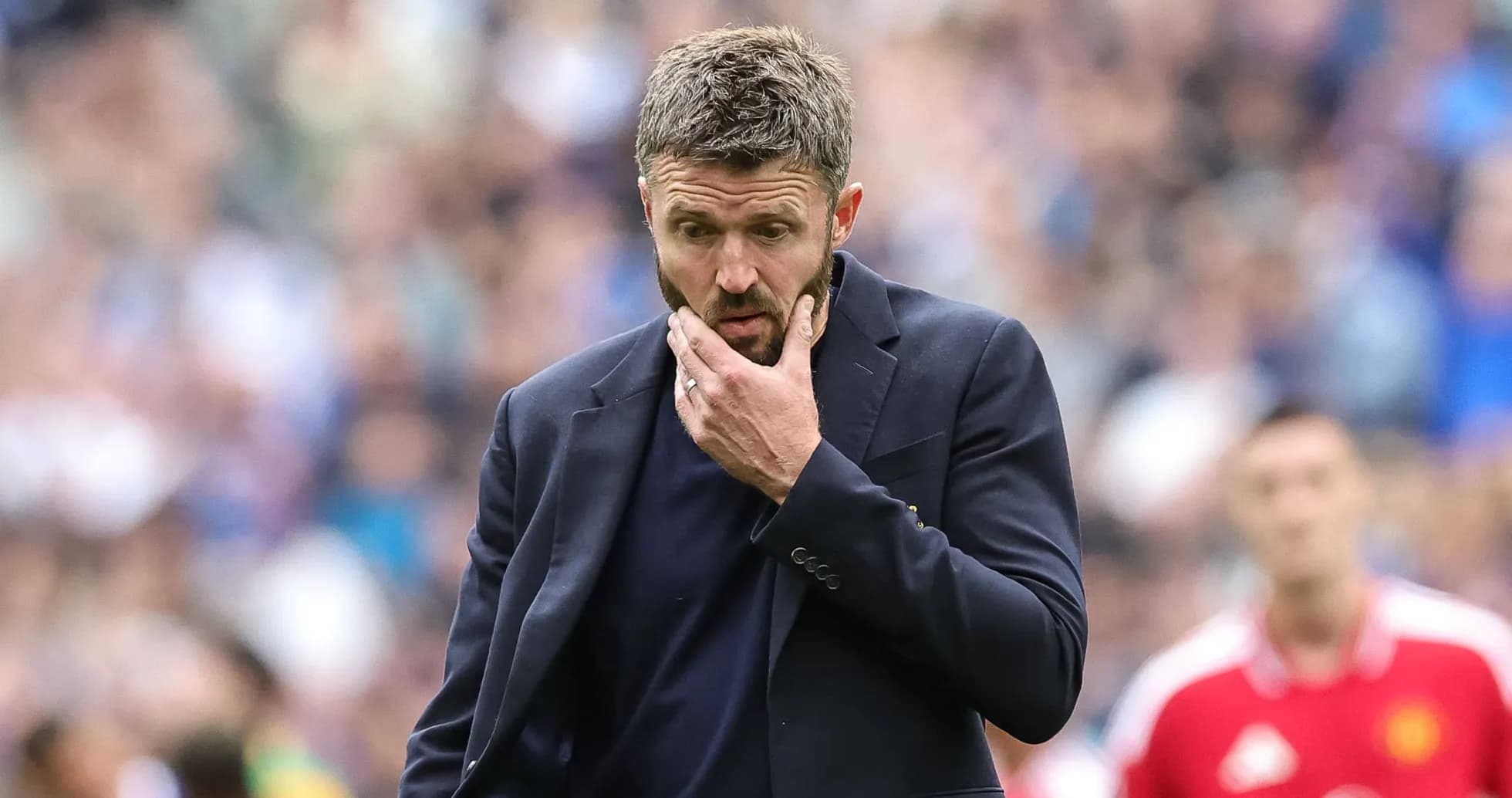
Gary Neville has warned Michael Carrick he is in danger of walking straight into the same trap that swallowed Erik ten Hag and Ruben Amorim after Manchester United let victory slip in stoppage time at Hill Dickinson Stadium.
United were in control, ahead and apparently untroubled, before the game flipped in the dying seconds. Everton surged, United retreated, and Ainsley Maitland-Niles punished them with a 96th-minute equaliser. Two points gone. Questions back on the table.
Three games into the Premier League season, United have four points and a familiar problem: they cannot close the door when the pressure rises.
Neville’s warning shot
Speaking on the Gary Neville Podcast, the former United captain cut straight to the issue he sees every week: this team does not scare opponents.
"Teams think they've got a chance against them," Neville said. He felt United eased off, drifted, and then paid the price. "I thought they were a little bit complacent and I was saying it after the first goal, they lacked that killer instinct before that period when Everton equalised and then they react again."
The pattern irritates him. United play well in spells, lose focus, then scramble to respond after the damage is done. For Neville, that is not bad luck. That is mentality.
Defensive tinkering under fire
What really baffled him, though, came in the final minutes. With United under growing pressure, Carrick reshuffled his backline, taking off key defenders and, in Neville’s view, inviting Everton on.
He homed in on the substitutions of Luke Shaw and Diogo Dalot, likening them to the constant late-game tinkering that dogged previous managers.
"I don't think it's going to go away and that's my big fear," Neville admitted. "I think conceding goals is going to chase them and hunt them down the road and I don't know how Michael deals with it because he's got his best back four on the pitch. I don't know why Shaw went off with five minutes to go – hopefully he's not injured."
The message was blunt: if Carrick starts breaking up his strongest defensive unit in tight games, he risks repeating the same structural chaos that undermined his predecessors.
Carrick fronts up on game management
Carrick, calm as ever in his post-match interviews, did not try to dress it up. He praised the quality of Everton’s strikes from range, but accepted that United’s game management is nowhere near where it needs to be.
"Obviously, we can't ignore it," he said. "We need to concede fewer goals to give us a better chance of winning games. We'll certainly look at that and keep improving. There's obviously things we need to get better at as a team."
He pointed to the nature of the goals as some mitigation, without leaning on it as an excuse. "There's been two strikes from distance really, two really good strikes from their point of view. Sometimes they fly in the top corner and more often than not they probably don't. Yeah, for sure, it is [on conceding late]."
The late concession is the recurring theme. United are not being cut apart repeatedly; they are being punished in moments. But those moments are defining their season’s opening weeks.
Rashford worry adds to United’s problems
As if the dropped points and defensive doubts were not enough, United now face a fresh concern over Marcus Rashford.
The forward, who had looked sharp on the left and linked impressively with Shaw, was withdrawn in the second half. Carrick later confirmed it was not tactical.
"He felt a little bit of something, so we had to change him," the United manager explained. He was encouraged by what he saw down that flank before the change. "We had good connections pretty much all over the pitch at different times of the game, and Marcus and Shaw have played together for a long period of time and have a good understanding. And you can see that, they look really dangerous down that side, and there is obviously more to come."
United will hope that “little bit of something” does not become something serious. With the team already fragile at the back, losing one of their main attacking outlets would only deepen the strain.
Carrick now stands at an early crossroads: tighten a leaky, unsettled defence without blunting his best partnerships, or risk seeing late goals and old doubts define another United season.