.svg&w=384&q=75 "Naijagoal logo")

Old Trafford's Future: Who Will Fund the New Stadium?
Manchester United have finally cleared the biggest physical hurdle to building a new home. The club has secured land at Wharfside, across from the now-abandoned Freightliner site, and with it, the green light in practical terms for a proposed 100,000-seater stadium.
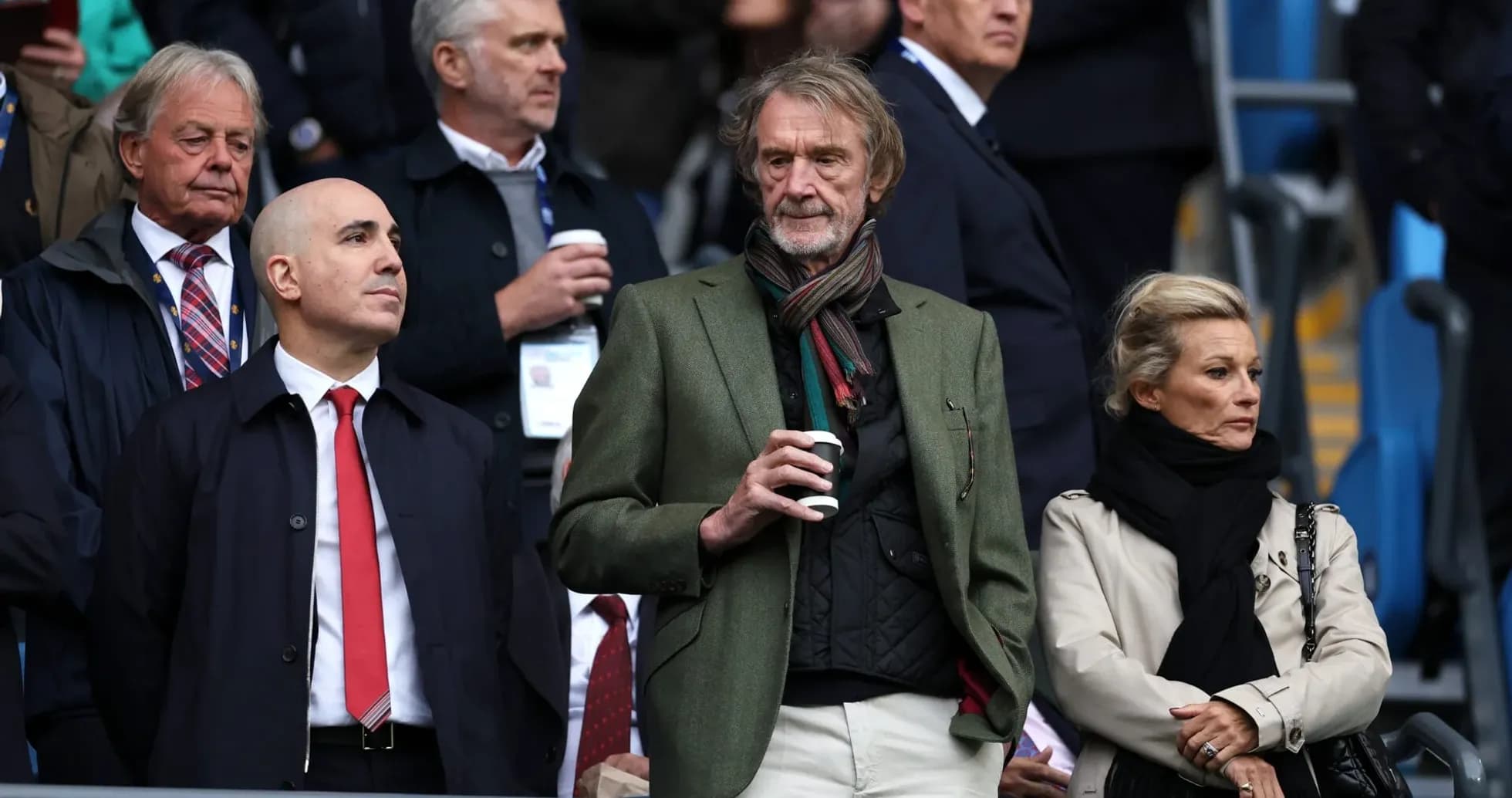
The dream is no longer a sketch on Sir Jim Ratcliffe’s notepad. There is now a place for it to stand.
The problem is how to pay for it.
Land secured, questions multiply
For months, the Freightliner land looked like the answer, before that plan became unworkable. The switch to Wharfside removes the immediate logistical block and gives United a viable footprint for a vast new arena to replace Old Trafford.
On paper, that’s the breakthrough.
In reality, it only exposes the next, far more complicated issue: funding a project that could dwarf anything the club has attempted before.
Political support has shifted just as the stadium plans edge forward. Andy Burnham, a key backer of government money for the wider area’s regeneration – though not for the stadium itself – is on course to leave his role as mayor of Manchester and move into Downing Street as Prime Minister. His stance was clear: public cash for the neighbourhood, not for United’s concrete and steel.
That leaves Ratcliffe staring at a financial jigsaw with several awkward pieces missing.
A stadium that could strain the balance sheet
Adam Williams, GRV Media’s head of football finance, believes United face a far tougher landscape than Tottenham did when they built their own modern super-stadium.
Tottenham struck at the right time. Interest rates were at historic lows. Much of their debt was locked in at between two and three per cent. United are walking into a very different market.
The Bank of England’s base rate stands at 3.75 per cent. Lenders will not only start from that higher floor, they will add a premium to reflect United’s risk profile. The club recently refinanced $425m of notes at 5.36 per cent. That figure may not be the ceiling.
Spurs went into their stadium build with “next to no debt,” as Williams notes. United are already carrying around £1.4bn, even before transfer-related obligations are considered. On top of that, Ineos – Ratcliffe’s empire – has seen its credit rating downgraded by several agencies in recent years. Less security, higher risk, higher cost.
The conclusion is brutal: United are likely to pay roughly double the interest rate Spurs secured for their project.
£2bn? That might not be enough
Then comes the cost of actually building the thing.
Construction prices have surged. Raw materials, labour, logistics – all dragged upwards by geopolitical tension and supply chain shocks. United’s working figure of £2bn for a new stadium already looks optimistic to the experts Williams has spoken to.
Large capital projects rarely come in on time and on budget. They usually arrive late and over the original estimate. That means United may have to borrow more than they first envisaged, and pay more for the privilege.
Borrow more principal. Pay more interest. Carry more risk.
This is not a simple case of plugging in a few numbers and watching the cash roll back.
Revenue vs reality
United’s hierarchy will look at Tottenham’s experience and see both a model and a warning.
Spurs have almost quadrupled their matchday income since leaving White Hart Lane. Their new stadium is a money machine on paper – NFL games, concerts, corporate hospitality stacked on top of Premier League fixtures.
Yet, as Williams points out, they are still losing money in most years. The reasons go beyond interest and running costs, but the lesson is clear: revenue is not the same as profit. An extra £100m in matchday income and sponsorship does not automatically neutralise the weight of borrowing.
What matters is the profit the new stadium generates after everything is paid – not just the headline turnover.
Stakes, shares and the soul of the club
So how do United make this work?
Williams sketches out the likely toolbox: personal seat licences, bonds, loans, equity, naming rights. A complex blend, not a single magic solution.
His verdict is stark. He does not see a way through without one of three painful moves:
- A) Selling a stake in the club, or turning the stadium into a separate business and selling a stake in that.
- B) Launching another IPO.
- C) Squeezing fans and commercial partners so hard that the new stadium pays for itself in the short term, but at the cost of the club’s identity in the long run.
That last path is the nightmare scenario for many supporters – a gleaming new arena that feels less like Old Trafford and more like an airport lounge with a pitch in the middle.
And then there is the question that would have been unthinkable a decade ago: naming rights.
What price would be enough to put a corporate brand in front of “Old Trafford”? Is there a figure that makes the trade-off palatable? Or is that line simply not to be crossed, whatever the financial strain?
Heritage versus revenue. Emotion versus arithmetic. It is no longer a theoretical debate.
Timelines slipping, targets shifting
When the project was first floated in 2025, the aim was bold: a new stadium ready by 2031.
We are now five months from 2027. No shovels in the ground. No cranes on the skyline. Just plans, projections and a ticking clock.
The funding puzzle has become the central issue in whether this stadium can be built on anything like the original schedule. Every option – equity, debt, naming rights, fan contributions – takes time to structure, negotiate and approve. None of them guarantee a smooth build from first dig to opening night.
United have set their sights on hosting the 2035 Women’s Euros final in the new arena. That target now looks like the more realistic milestone. Nine years to design, finance, build and open a venue worthy of that stage.
Once construction finally begins, the club can attach a real timeline to the project. Until then, the completion date will keep drifting into the distance.
The land is there. The ambition is there. The question, hanging over Old Trafford’s future like a storm cloud, is whether United can find a way to pay for their new Theatre of Dreams without selling too much of what made the old one sacred.