.svg&w=384&q=75 "Naijagoal logo")

Martin Odegaard Seizes Control in Community Shield Victory
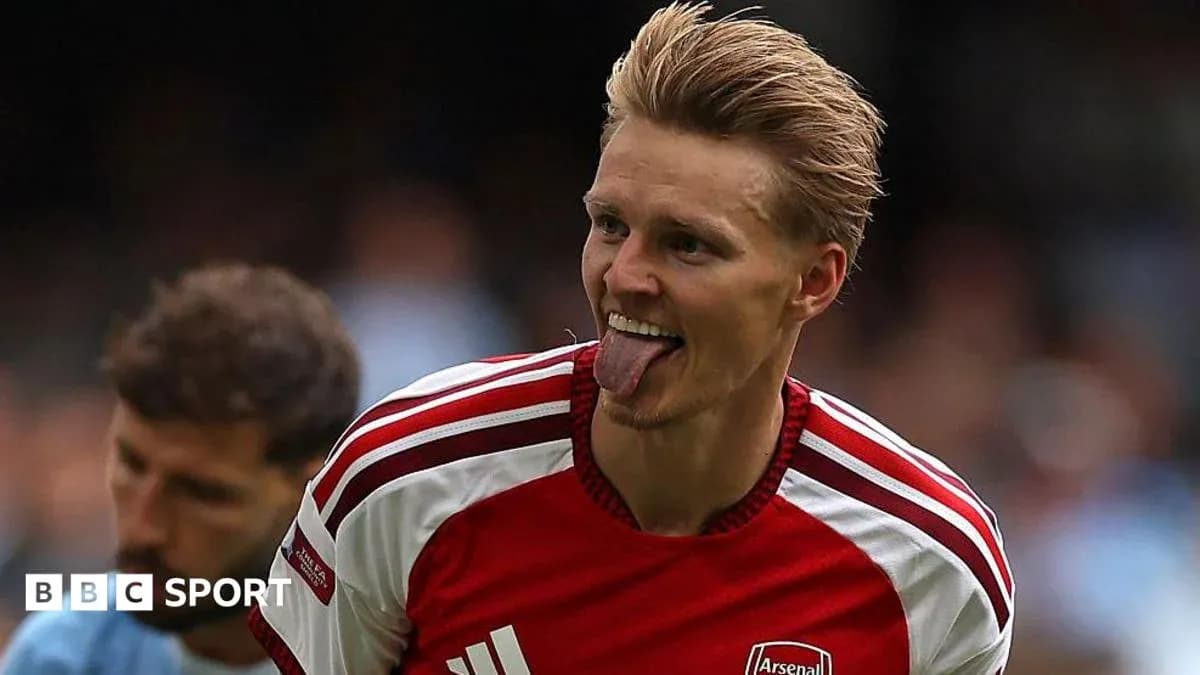
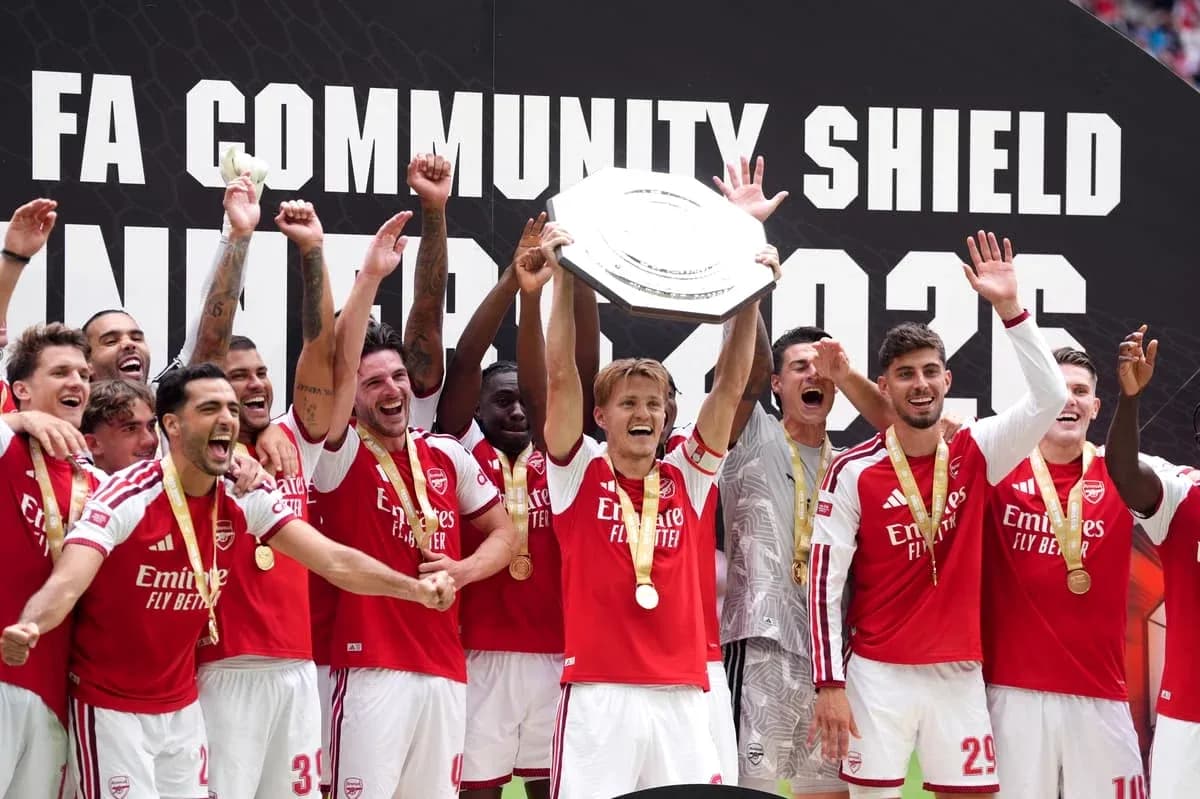
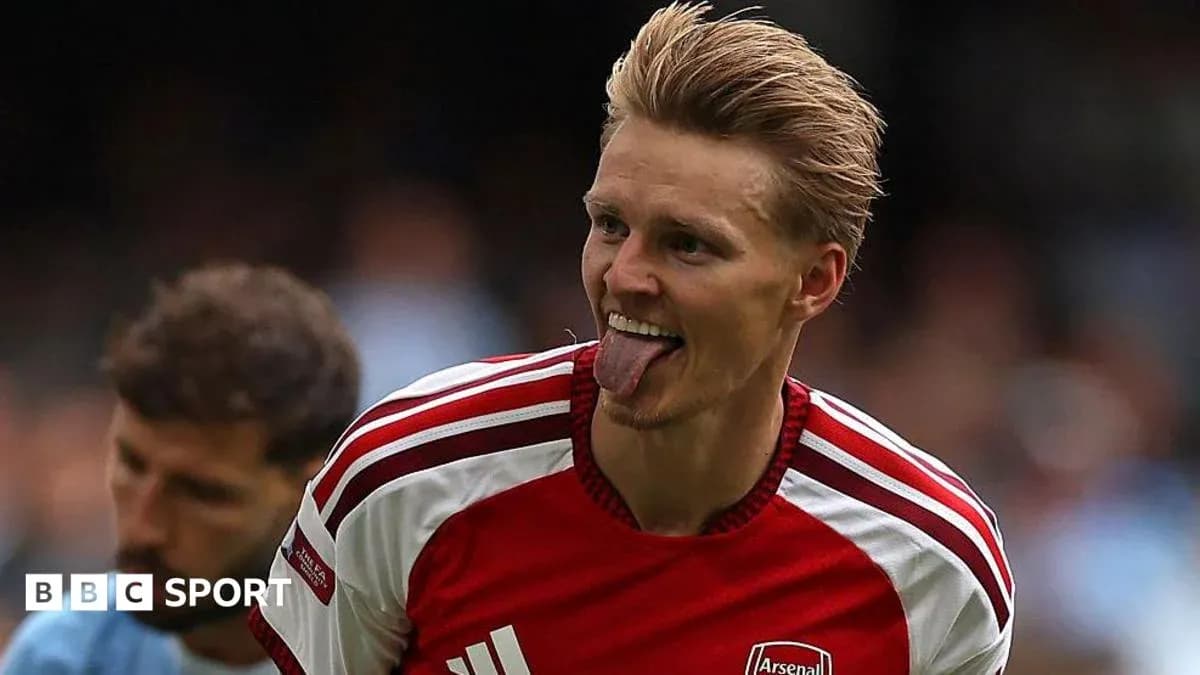
Martin Odegaard walked off in Cardiff with the trophy in one hand and the match in the other. Arsenal’s captain didn’t just lift the Community Shield; he seized control of a game against Manchester City and, in doing so, offered a sharp reminder of the player he once was – and clearly intends to be again.
This 3-0 demolition of City will be remembered for the scoreline. It should probably be remembered for Odegaard.
Odegaard back on the front foot
Last season was supposed to be his masterpiece. Arsenal finally ended their 22-year wait for a Premier League title, yet their chief creator spent much of it watching from the sidelines, patched up and frustrated. Knee and shoulder problems shredded his rhythm. He started only 16 league games, finishing with one goal and seven assists – his leanest return since joining permanently from Real Madrid in 2021-22.
Those numbers jarred with the image of the player who had been central to Mikel Arteta’s early rebuild. The doubts crept in. Was he still the same force? Should he even be captain? Former players asked the questions out loud.
On Sunday, he answered them with the ball.
Odegaard’s display against City was all angles and authority. He dictated the tempo, demanded the ball, hunted it back. Of the Arsenal players on the pitch, he completed the most passes (55 of 58), the most dribbles (three out of three) and won possession more than anyone else (nine times). It was the kind of statistical dominance that matched what everyone inside the stadium could see: he ran the game.
The moment that will live longest came with Arsenal already in control. Bursting into the box, Odegaard shaped to shoot, then let the ball roll. Gianluigi Donnarumma committed, hit the turf, and the Norwegian calmly finished, his dummy leaving one of the world’s best goalkeepers sprawled and beaten. It was the third goal, the flourish, but it felt like a statement.
Competition in midfield, clarity in his game
Arteta has not stood still since that title win. He has gone back to the area he trusts most: midfield. Arsenal paid £75m for Bruno Guimaraes and dropped him straight into the heart of the side. Myles Lewis-Skelly is pushing through. Martin Zubimendi has arrived. Declan Rice remains a cornerstone. Eberechi Eze offers something different. Mikel Merino, another of the many options, has already called this group “probably the best in football”.
Looking at the list, it is hard to argue. It is even harder to find guaranteed minutes.
Yet in Cardiff, Odegaard didn’t look threatened. He looked energised. The added competition appears to have sharpened his edge rather than dulled it. He and Guimaraes, starting together for the first time, clicked quickly, exchanging passes in tight spaces and dragging City’s midfield around. Guimaraes impressed in his 45 minutes; Odegaard owned the full show.
“Sometimes you are just in the flow. You need to find that on the pitch,” Odegaard said afterwards. “All of us were flowing pretty good out there. I will just try to keep that up and keep going.”
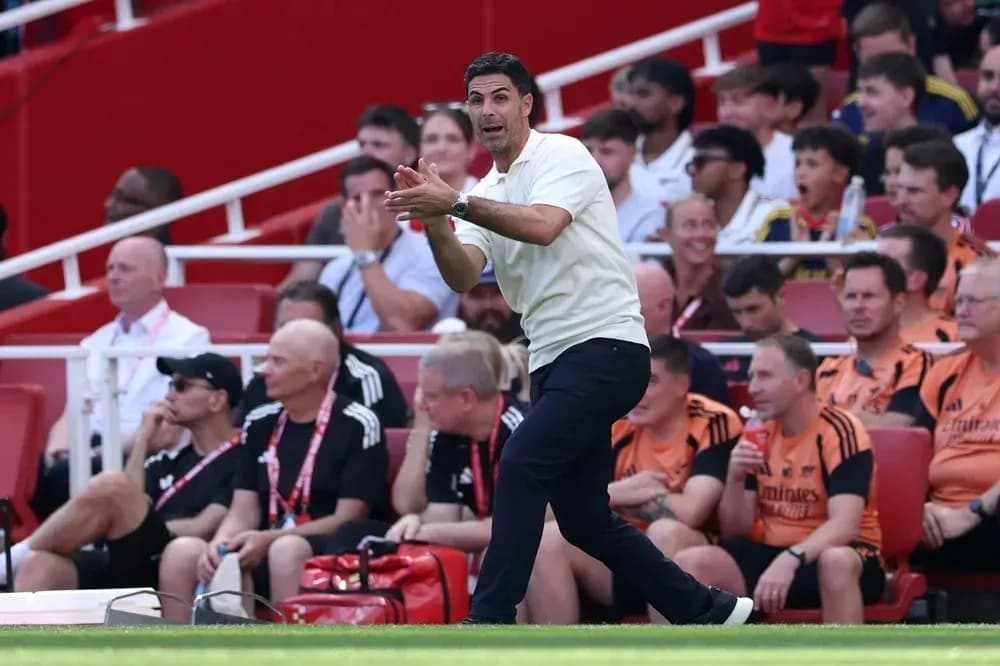
That “flow” had been missing for long stretches of last season. Injuries broke his stride, then broke it again. Arteta spelled it out: Odegaard missed “five or six months for different things” and never built any momentum. The manager is convinced that a fully fit version will look “very different” across a full campaign – and that the team needs that version.
From struggle to fuel
Odegaard did not hide from how hard the past year has been.
“Last year was really a big struggle with a lot of difficult moments. To miss so many games because of injury was really frustrating,” he admitted. “It is the worst thing for a footballer to not be able to be on the pitch and I had quite a lot of weird injuries, and bad luck.”
He managed to finish the club season on the pitch and then carried that into the World Cup with Norway, where he started five of their six games and produced four assists. The combination of a title with Arsenal and a strong tournament seemed to reset him.
“It was good for me to end the season with a title, here, and then a good World Cup. Then I had my break and I feel good, ready to go again.
“What I have just worked on is to use that as motivation for this year and to come back stronger. And to use all of those experiences in a positive way.”
Arteta has sensed the shift since day one of pre-season. He talked about Odegaard returning with “something else on the belly” – a hunger to prove a point, not just to critics but to himself, and to a dressing room now stacked with midfield talent.
A ‘new signing’ without the fee
When Arsenal first surged under Arteta, Odegaard was the elegant fulcrum, stitching attacks together and setting the press. On Sunday, that version reappeared with added bite. He pressed, he tackled, he demanded more from those around him. The armband looked less like a burden and more like a natural extension of his influence.
With Guimaraes, Rice, Zubimendi, Eze, Merino and Lewis-Skelly all vying for roles, Arsenal’s midfield looks deeper and more varied than at any point under Arteta. In that context, a fully fit, fully confident Odegaard feels almost like a luxury the club has rediscovered rather than bought.
He was once the symbol of Arsenal’s new era. After Cardiff, with the season about to start and competition raging behind him, the question flips: in a midfield this strong, how much higher can their captain still drag them?