.svg&w=384&q=75 "Naijagoal logo")

Mikel Arteta Advocates for Bigger Benches in Premier League
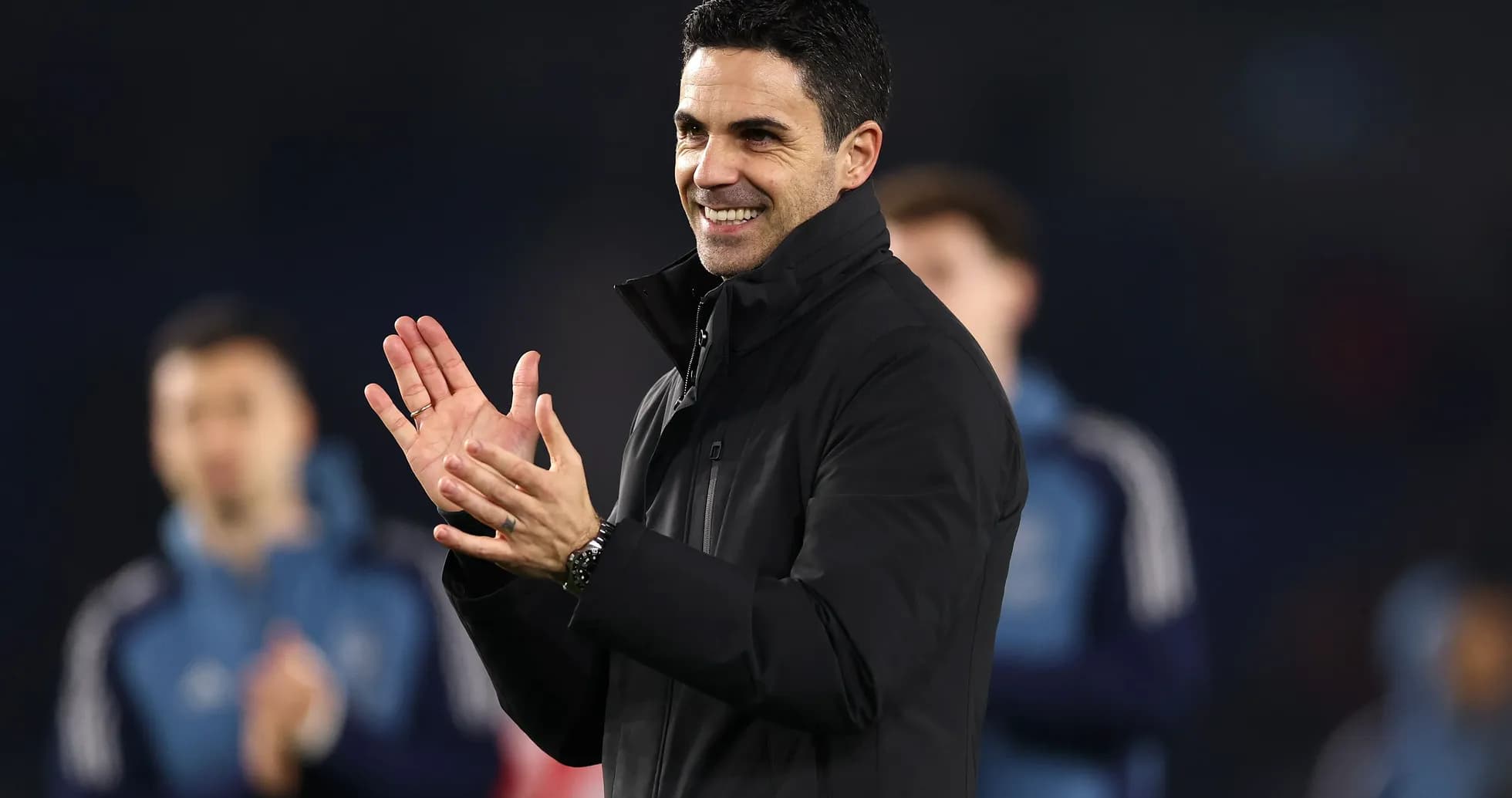
Mikel Arteta left Wembley with a trophy, a statement win over Manchester City – and a fresh demand for the Premier League.
The Arsenal manager wants bigger benches.
Not metaphorically. Literally.
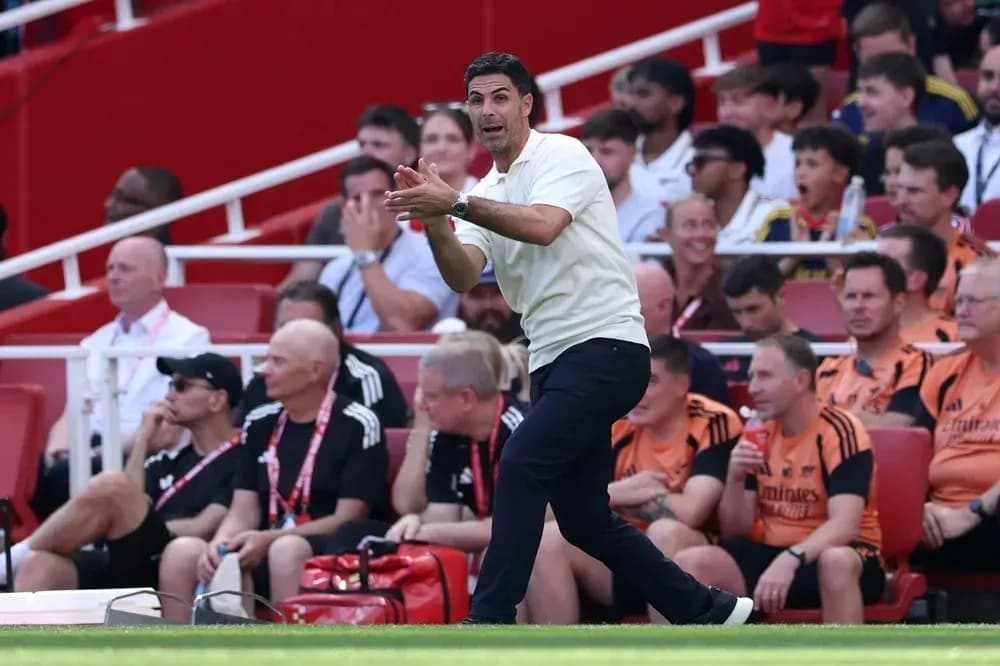
After watching his side ease to a 3-0 Community Shield victory in Cardiff, Arteta used his post-match interviews to renew his push for the league to expand matchday squads from 20 to 23 players, bringing domestic rules in line with UEFA competitions.
Big win, big omissions
The performance on the pitch gave Arsenal plenty to smile about. Off it, the team sheet told a different story.
William Saliba and Jurrien Timber were both absent, their injuries already known and easily explained. Timber still made the trip, visible around the squad in Cardiff. Illan Meslier also travelled, took part in the preparations, but never made it onto the bench – a familiar fate for a third-choice goalkeeper in domestic games.
That situation changes once Europe comes into play. UEFA competitions allow 23-man squads, giving room for an extra goalkeeper and more outfield cover. Meslier’s role this season is expected to mirror Tommy Setford’s last year: part of the travelling party for league fixtures, involved in warm-ups, then cut from the final 20, yet regularly named in Champions League squads all the way to the semi-finals.
Against City, the squeeze was brutal. Beyond Meslier, Arteta had to leave out Gabriel Martinelli, Ethan Nwaneri, Gabriel Jesus, Fabio Vieira and Reiss Nelson entirely. Under UEFA rules, at least two of those players could have been on the bench.
For a squad built to compete on multiple fronts, that’s a lot of talent watching from the stands.
Arteta’s case: ‘The load is unreal’
Arteta didn’t hide his frustration at the current limits.
"I've been trying to persuade the Premier League and the clubs to be able to extend the number of players that we can have, especially the outfield players in the squads, because we play more and more games and the load is unreal," he said.
He called it “the most difficult part of the job” – telling fully fit players they won’t even be in the matchday group.
"It's just a shame (to leave players out)," he added. "It's just a fact that we can bring 18 outfield players and we believe that for today's game these were the options that we needed, especially with the physical condition of certain players."
The message was clear: in an era of relentless scheduling, managers want more flexibility, not less.
The pushback from below
Arteta’s proposal will not land softly across the division.
Smaller clubs are likely to resist any change that appears to tilt the balance further toward the elite. A 23-man squad gives the richest sides three more weapons on the bench – three more internationals, three more game-changers – while some teams would struggle to fill those slots with fully fit senior players at all.
For those operating with thinner squads and tighter budgets, the idea of Arsenal or Manchester City rolling out yet more high-quality substitutes is hardly appealing.
Yet the landscape is shifting. Almost half of the Premier League now plays in European competition each season. For those clubs, 23-man squads are already the norm on the continent. The gap between what managers can do on a Thursday night and what they’re allowed on a Sunday afternoon grows harder to justify.
Arteta has his trophy. Now he wants his rule change. The question is whether the rest of the league is prepared to let the big benches in.