.svg&w=384&q=75 "Naijagoal logo")
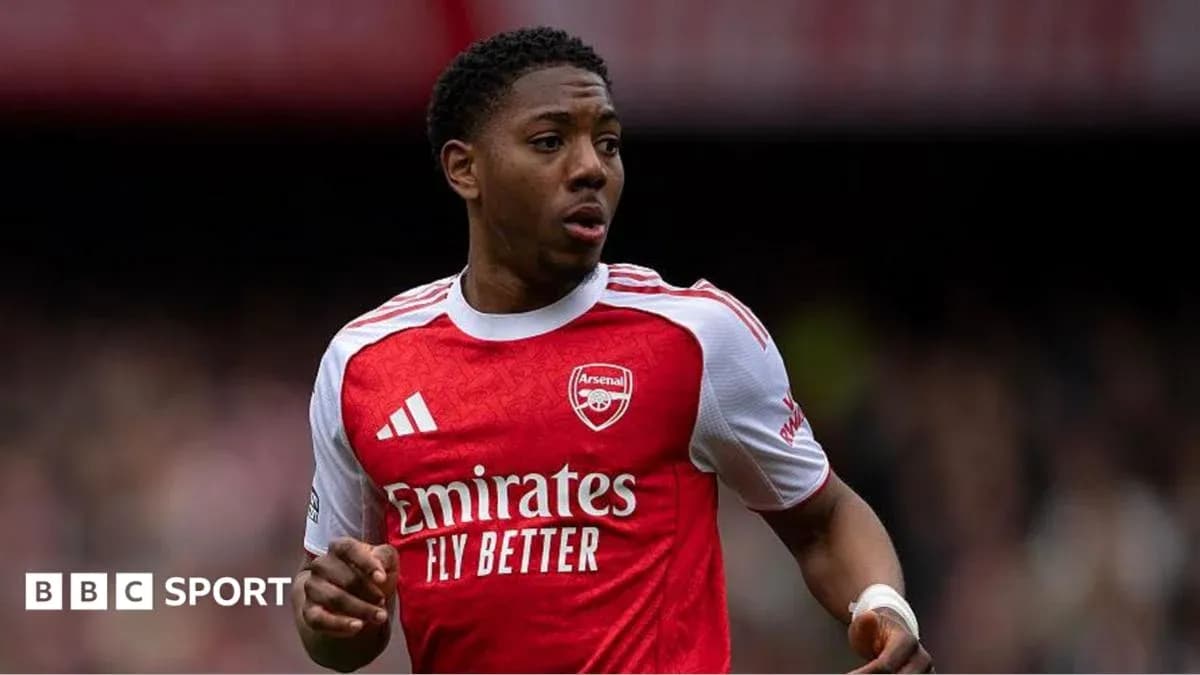

Myles Lewis-Skelly's Rise to Arsenal's Midfield Star
Myles Lewis-Skelly has never taken the easy road into Arsenal’s first team. He’s had to squeeze through gaps, not stroll through open doors.
The 19-year-old’s rise since the start of the 2024-25 season has been sharp and unforgiving. When injuries ripped through Mikel Arteta’s squad, Lewis-Skelly stepped in at left-back, a role that wasn’t his, and played it as if he’d been born there. Within months he had gone from academy hopeful to one of the Premier League’s standout young full-backs.
That surge carried him all the way to Wembley. In March 2025, on his England debut against Albania, he didn’t just pull on the shirt; he scored in it, becoming the youngest man to find the net for the national team on debut in a 2-0 win. Arsenal moved quickly. A new five-year contract followed in the summer, a clear statement that this was not a fleeting moment.
Yet the most intriguing part of his story is that all of this came from the “wrong” position.
A midfielder trapped at left-back
Lewis-Skelly is Hale End through and through, raised as a midfielder and still adamant that the centre of the pitch is where he truly belongs. Left-back was the doorway, not the destination.
Even when he lined up in the back four, the midfielder in him kept leaking out. He drifted inside to create overloads, slipped through pressure in tight pockets, then exploded away from challenges. His ability to receive under the press, protect the ball and punch through lines with his running put him among the most progressive young players in the division.
The first campaign ended with his stock high. The second asked harder questions.
Riccardo Calafiori, signed for £42m in 2024, finally put his fitness issues behind him. The Italian’s swagger in possession and his willingness to surge into the final third became a central feature of Arsenal’s attacking shape. Arteta then added Piero Hincapie from Bayer Leverkusen, initially on loan and now permanently, another defender older and more seasoned than Lewis-Skelly.
Minutes dried up. The path that had briefly opened slammed shut.
Arteta admitted he had been “tough” on the teenager. It showed. Lewis-Skelly watched from the fringes while others occupied the positions he wanted, either at left-back or in midfield.
The Fulham chance that changed everything
The turning point came from someone else’s dip. As Martin Zubimendi’s form tailed off late last season, Arteta finally handed Lewis-Skelly a start in central midfield against Fulham, with four Premier League games left.
He didn’t just take the opportunity; he seized it with both hands.
Composed at the base, aggressive when the space opened, he knitted Arsenal’s play together and gave them a new rhythm. That performance changed the conversation overnight. From that point, he started all but one of the remaining matches as Arsenal surged to the Premier League title and reached the Champions League final, where Paris St-Germain stopped them one step short of glory.
In a season defined by big-money signings and high-stakes decisions, an academy graduate had forced his way into the decisive stretch from his natural position.
“Pure profit” and a brutal reality
Modern football doesn’t allow romance to stand alone. Every academy success story carries a number in the background.
As a homegrown player, Lewis-Skelly sits on the balance sheet as “pure profit” if sold. It’s a cold phrase, one that grates with supporters who see a local product, not a line in an accounting model. Lewis-Skelly knows the discourse. When Arsenal lifted the Premier League trophy at Selhurst Park on the final day, he posted a picture with the caption: “pure profit.”
A joke. A jab. A reminder that he understands exactly how he’s viewed in the modern game.
Arsenal want to operate sustainably. Trading is part of the plan, especially after a summer in which they spent around £250m on new signings. Selling a player developed in-house is the cleanest way to balance the books.
The club had been open to listening to offers for Lewis-Skelly. That was the reality. But his late-season surge in central midfield has forced a rethink. Performances that decisive are hard to ignore, even in an era of spreadsheets and strategy decks.
Bruno Guimaraes and the looming traffic jam
The next twist is already on the horizon. Arsenal are closing in on Newcastle captain Bruno Guimaraes in a deal that could rise to £80m. A midfielder of that calibre doesn’t arrive to sit quietly in the background.
Guimaraes’ signing would add another layer of congestion in the middle of the pitch, where Lewis-Skelly is trying to carve out a permanent home. On paper, it looks like another barrier.
Yet this season might still hand him an opening that money can’t buy.
The World Cup’s late finish has delayed the return of several Arsenal mainstays. Captain Martin Odegaard, England midfielders Declan Rice and Eberechi Eze, plus Zubimendi and Mikel Merino – fresh from winning the tournament with Spain – have not yet fully rejoined the squad. Their legs are heavy, their pre-season short.
Lewis-Skelly, by contrast, has been working. He started and impressed in friendlies against Girona and Real Betis, quietly building a case in front of the coaching staff while others rest and recover.
Owning the base
Against Betis, Arteta trusted him at the base of midfield. Deepest in the triangle. The fulcrum.
He looked at ease. When Arsenal needed progression, he carried the ball through the thirds, shrugging off pressure and dragging his team up the pitch. When Calafiori went wandering on one of his trademark charges, Lewis-Skelly instinctively slid across, filling the left-back zone, closing the door behind his team-mate.
The understanding between the pair is already obvious.
“We just speak in the last few days about this connection that we have - we don’t need to speak,” Calafiori said afterwards. “I really like to play with him, a really good player.”
Those are the kind of on-pitch relationships that managers trust when the real games start.
Nine days to make a statement
In nine days, Arsenal face Manchester City in the Community Shield. It’s a curtain-raiser in name, but for players like Lewis-Skelly, it’s something far more important: a stage.
With key midfielders still playing catch-up on fitness, the door is ajar again. This time, the teenager isn’t being asked to improvise at left-back. He’s standing in his own territory, the centre of the pitch, with the chance to show he should have been there all along.
The numbers and the transfer fees will always swirl around a club of Arsenal’s size. The debate over “pure profit” won’t disappear. But if Lewis-Skelly keeps bending big occasions to his will, the real question won’t be how much he’s worth on a spreadsheet.
It will be this: how can Arsenal afford to build their midfield without him?