.svg&w=384&q=75 "Naijagoal logo")
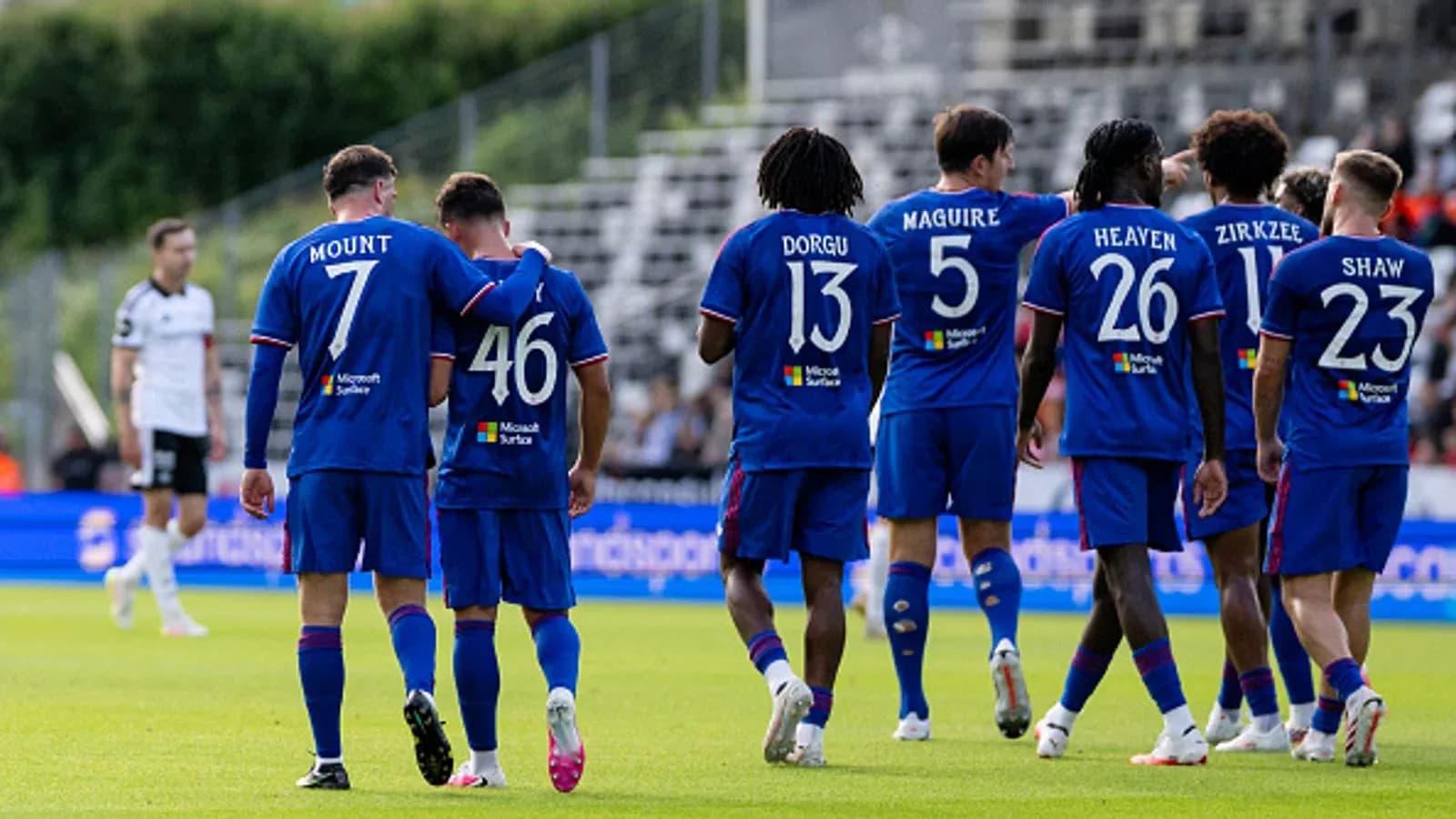

Manchester United Shine in 5-0 Victory Over Rosenborg
Manchester United hit their stride in Norway, brushing aside Rosenborg 5-0 to collect their first win of pre-season and, more importantly, offer a glimpse of what Michael Carrick’s United might actually look like.
Six days after a flat defeat to Wrexham, this was sharper, cleaner and, at times, surprisingly sophisticated. The scoreline will grab the headlines. The shift in style should keep them.
Carrick-ball, version two
When Carrick first walked into Old Trafford as interim boss, his United lived off the break. They were lethal in transition, built around runners like Bryan Mbeumo and Patrick Dorgu, and the quick-thinking of Bruno Fernandes and Matheus Cunha.
From that first 2-0 win over Manchester City to the end of the season, the numbers told the story: third in fast breaks per game, joint first for goals from fast breaks per 90, second in expected goals from those situations. They were a counter-attacking side in all but name.
On the ball, though, they were ordinary. Thirteenth in possession, 11th in average possession duration. The same old post-Ferguson problem: when opponents sat in, United ran out of ideas.
Rosenborg, 13 games into their league season and far ahead in fitness, should have been able to use that to their advantage. United, still working through pre-season legs, ought to have needed space to run into.
They didn’t. That’s the point.
Without Fernandes or Cunha, United looked comfortable dictating the game. They moved Rosenborg around, stretched them, and used Joshua Zirkzee as a reference point to build attacks instead of just as a runner in behind. The ball stuck to him. Attacks grew from there.
The transitions haven’t disappeared. The second and fourth goals were classic Carrick-era United – quick, direct, ruthless once the ball was turned over. But the balance has shifted. This felt like a team trying to control, not just react.
It also made the signing of Youri Tielemans look less like a luxury and more like a plan. If Carrick wants a side that can probe, recycle and patiently open up a block as well as counter, a passer like Tielemans suddenly makes perfect sense.
Zirkzee dazzles – but what does it change?
On the night, there was no debate about the standout performer. Zirkzee owned the pitch.
Since his 2024 arrival, United’s No 11 has been a puzzle. Not a classic No 9, not quite sharp enough to dislodge Fernandes as a No 10. Moments of outrageous technique, long spells of frustration. A player who draws comparisons to Dimitar Berbatov one minute and questions about his role the next.
In Trondheim, he was exactly what Carrick needed: a magnet for the ball, secure under pressure, sharp on the half-turn, bringing others into the game. In his 60 minutes, he assisted the first goal and scored the second.
The goal was outrageous. A slick give-and-go with substitute Harry Amass, a burst into the box, then the show. Quick feet to wrong-foot two defenders, the same trick again to sit the goalkeeper down, and a calm finish into an empty net. One of those goals that makes even a pre-season crowd gasp.
It capped a performance that will have fans talking. Some will want him starting more often. Some will see a new solution to United’s attacking puzzle.
The reality is more complicated. The tempo in Norway suited him. Time on the ball, space to drop into, defenders not snapping into every duel the way they do in the Premier League. This game didn’t answer the question of whether he can thrive at English speed and intensity.
Benjamin Sesko still looks the more natural line-leader for the league grind. If anything, this felt like a preview of how Carrick might use Zirkzee – and eventually Sesko – as a link player, a facilitator, someone who helps United play through the thirds when they can’t simply run in behind.
Zirkzee reminded everyone what he can do. Whether that turns into trust when the real games start is another matter.
Carrington’s kids take centre stage
For all the tactical intrigue, this was also a night for the academy.
United’s tradition of rolling out homegrown talent is no marketing slogan; it is baked into the club’s identity. Trondheim added a few more names to that lineage.
Shea Lacey started as the No 10 and grew into the game. The 19-year-old has already flickered around the first team – he nearly scored a spectacular goal in that 2-2 draw with Burnley – but this was a more central role, more responsibility.
He handled it. His movement was intelligent, his touches tidy, and when the chance came for the opener, his finish was calm. No panic, no rush, just a composed strike. United fans voted him player of the match, and it didn’t feel sentimental.
The noise around Lacey had cooled over the past year. Once the headline act in the youth ranks, injuries and competition dulled the hype. Performances like this suggest there is still a serious player there, one who could yet carve out a meaningful place in the senior squad.
Amass made his mark after the break. The full-back’s progress last season stalled with injuries after an impressive spell at Sheffield Wednesday, but he wasted no time here. His goal showed the instincts of a modern full-back – timing his run, arriving in a dangerous pocket, finishing with assurance. He also defended his flank with discipline and looked comfortable in possession.
United want another left-back. That’s no secret. But nights like this raise a simple question: should Amass be given the chance to grow as Luke Shaw’s permanent deputy rather than watching someone else block his path?
Jacob Devaney and Ethan Williams both scored and will always have that. Two young players with tangible moments to replay for the rest of their lives.
The quiet star among them, though, was Jaydan Kamason.
The 19-year-old right-back did get caught out of position a few times without the ball. With it, he was electric. His two assists came from low, drilled crosses that showed vision and precision, the kind of delivery you expect from a winger, not a defender. His footwork matched that impression – nimble, confident, aggressive.
Carrick’s faith was telling. Kamason played more minutes than most of the other youngsters. Managers don’t do that by accident.
The JJ Gabriel question
And then there was the name everyone wanted to see but never did.
JJ Gabriel, 15 years old and already being talked about as United’s next wonderkid, travelled with the squad. That alone set social media buzzing. Supporters in Trondheim, and watching from afar, waited for their glimpse of the future.
They waited in vain.
Gabriel stayed on the bench, fluorescent bib on, game untouched. No late cameo, no token five minutes, no first taste of senior football.
Does that mean expectations should be dialled down? Not necessarily. Carrick had already hinted before the game that Gabriel’s time would come across the pre-season schedule, not necessarily in this one match.
For now, the teenager remains an idea more than a reality, a name on a teamsheet rather than a player on the pitch.
In Norway, United didn’t need him. They had Zirkzee’s artistry, Lacey’s composure, Amass’ drive, Kamason’s energy and a 5-0 win that did more than lift the mood. It hinted at a team evolving beyond pure counter-attacks, trying to grow into something more complete.
If this is the early sketch of Carrick’s United, what will the finished version look like when the real pressure arrives?