.svg&w=384&q=75 "Naijagoal logo")
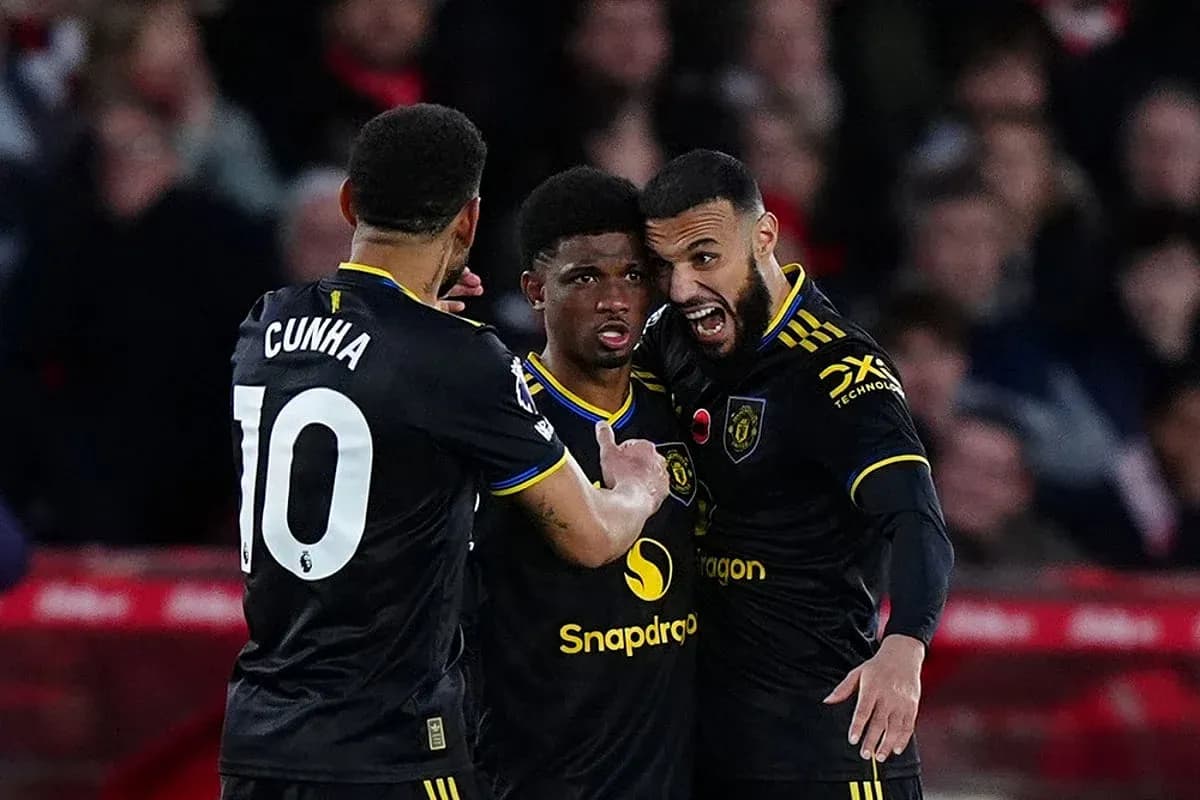
Manchester United vs Nottingham Forest: Premier League Clash on 17 May 2026
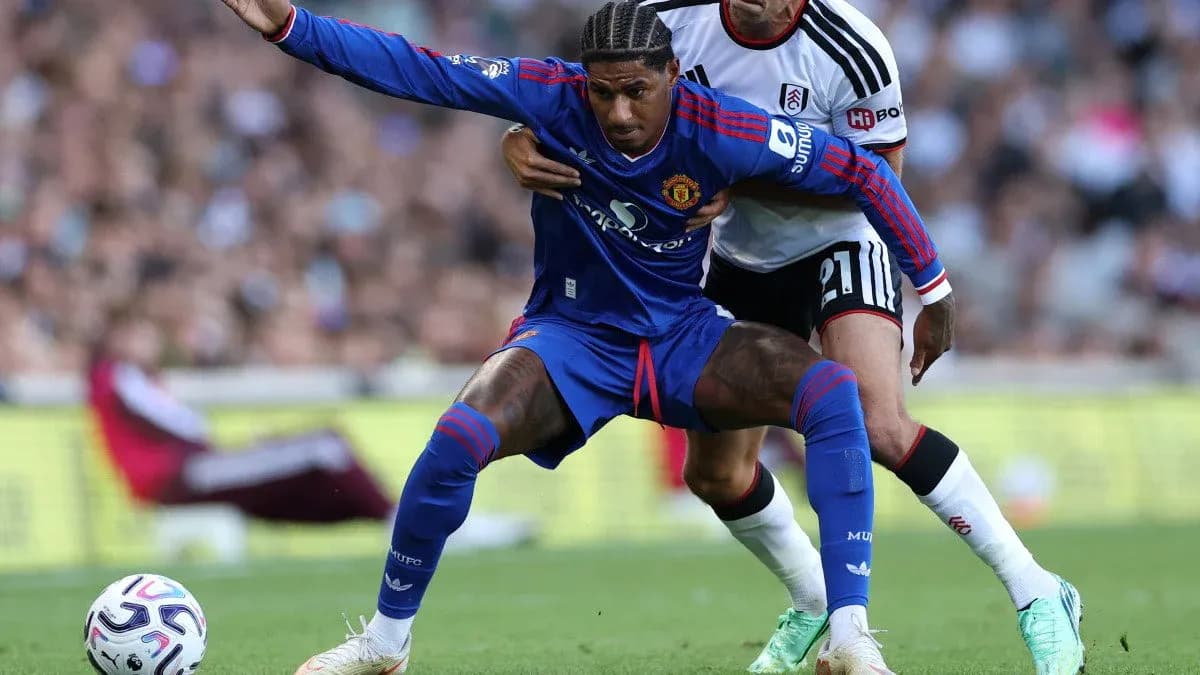
On a tense Sunday lunchtime at Old Trafford in Manchester, 17 May 2026 offers a clash heavy with narrative weight: Manchester United chasing a top-three finish and Champions League security, Nottingham Forest arriving with the swagger of a side that has recently learned how to punch upwards. Under the watch of M. Salisbury, the famous arena becomes the stage where United’s pursuit of elite status collides with Forest’s drive to turn survival into something more ambitious.
Season Context
Manchester United come into this fixture sitting 3rd in the Premier League with 65 points from 36 matches, backed by a positive goal difference built on 63 goals scored and 48 conceded. That attacking output (63 goals in 36 games) underlines a side that can overwhelm opponents, but the defensive record (48 conceded) hints at vulnerability when games become stretched.
Nottingham Forest arrive in Manchester 16th with 43 points from their 36 matches, having scored 45 goals and conceded 47. The narrow negative goal difference (-2) reflects a team that has been competitive but often on the edge, their mid-table safety not yet guaranteed yet clearly within reach thanks to a respectable attacking return (45 goals in 36 games).
Form & Momentum
Manchester United’s recent league form is captured in the sequence “DWWWL”, a run that speaks of momentum with a sting in the tail (4 matches unbeaten before a defeat). With 63 goals from 36 games, United average roughly 1.75 goals per match (63/36), which supports the idea of a consistently dangerous attack, even if their 48 goals conceded (1.33 per game) shows a defence that can be exposed when the balance tips forward.
Nottingham Forest, by contrast, carry the form string “DWWWD” into Old Trafford, an impressive stretch that underlines a resilient and confident side (unbeaten in that five-game snapshot). Their season-long profile of 45 goals scored and 47 conceded across 36 matches (about 1.25 scored and 1.31 conceded per game) suggests Forest are walking a fine line, but their recent surge is reinforced by last-five indices of 73% form, 100% attack, and 67% defence, indicating a team currently performing above their season baseline.
Head-to-Head Patterns
History between these sides has tilted intriguingly towards Forest in recent league meetings, especially away from Old Trafford’s traditional script. On 1 November 2025, Nottingham Forest and Manchester United shared a 2-2 draw at City Ground in the Premier League (2-2, Premier League, season 2025, November 2025), a chaotic contest that showed Forest’s ability to trade blows with United over ninety minutes.
Earlier in the calendar year, on 1 April 2025, Nottingham Forest edged a tight home encounter 1-0 against Manchester United at The City Ground (1-0, Premier League, season 2024, April 2025), a result that underlined Forest’s capacity to shut down United’s attack when organised and disciplined. Even Old Trafford has not been a safe haven: on 7 December 2024, Nottingham Forest stunned Manchester United 3-2 at Old Trafford in a breathless league match (2-3, Premier League, season 2024, December 2024), a reminder that Forest have already proved they can win on this very pitch.
Tactical Preview
Manchester United’s season-long statistical profile and lineups data point to a side comfortable alternating between a 3-4-2-1 and a 4-2-3-1, each used 18 times. That flexibility allows United to tilt the pitch in different ways: a back three to release wing-backs and flood the half-spaces, or a back four to maximise the creative influence of Bruno Fernandes as a central playmaker. With 63 goals in 36 league games (63/36) and an average of 1.8 goals per match in the broader statistical sample, United’s attacking structure is clearly geared around sustained pressure and chance creation.
Bruno Fernandes, a midfielder, is the creative heartbeat, with 8 goals and 19 assists in the Premier League (27 direct goal contributions) and 125 key passes, making him the primary conduit between midfield and attack. Ahead of him, attackers B. Šeško and B. Mbeumo bring different threats: B. Šeško has 11 goals from 30 appearances, a classic penalty-box presence with 34 shots on target, while B. Mbeumo adds 9 goals and 3 assists plus 46 key passes, offering both scoring and wide creativity. Behind them, midfielder Casemiro anchors the structure with 9 goals, 2 assists and 88 tackles, but also a heavy disciplinary load (9 yellow cards and one yellow-red), underlining how United’s aggressive midfield screen can spill into risky challenges.
Nottingham Forest, meanwhile, are structurally more stable than their league position suggests, with a clear tactical identity built around the 4-2-3-1 formation (used 29 times). That shape suits a compact double pivot and a creative band of three, with M. Gibbs-White central to their attacking plan. The midfielder has 13 goals and 4 assists in the league, supported by 46 key passes and 52 dribble attempts, a profile that makes him Forest’s main line-breaking presence between midfield and attack.
Out wide or from deeper zones, N. Williams, listed as a midfielder in this squad data, contributes both defensively and offensively: 2 goals, 3 assists, 91 tackles and 43 interceptions, plus 30 successful dribbles, show a player who drives Forest up the pitch while also providing crucial defensive cover. With Forest’s season numbers at 45 goals scored and 47 conceded, but a last-five attacking index of 100% and 14 goals in that span, the tactical picture is of a team currently leaning into its offensive strengths, trusting the back line and double pivot to survive the spaces left behind.
The key duel may be between United’s creative core and Forest’s central block: Bruno Fernandes, Casemiro and supporting midfielders trying to prise open the gaps around M. Gibbs-White and Forest’s double pivot, while Forest look to transition quickly into those same spaces United’s adventurous structure can leave unguarded.
Statistical Snapshot
- Competition: Premier League, season 2025 — 17 May 2026.
- Venue: Old Trafford, Manchester.
- Prediction: Win or draw — Double chance : draw or Nottingham Forest.
- Win Probabilities: Home 10% / Draw 45% / Away 45%.
- Model: Manchester United 42.2% — Nottingham Forest 57.8%.
Betting Verdict
The prediction model leans firmly towards Nottingham Forest avoiding defeat, and the recent head-to-head results at both The City Ground and Old Trafford give weight to that stance (notably the 2-2 draw in November 2025 and Forest’s 3-2 away win in December 2024). With Forest’s last-five attacking index at 100% and a form string of “DWWWD”, backing them on the double chance aligns with both numbers and narrative. Market prices for the match winner suggest United as strong favourites at around 1.57–1.66 for the home win, with Forest out at roughly 4.80–5.23, but the model’s 10% home win probability versus 45% draw and 45% away signals value on the outsider. In this context, “Double chance: draw or Nottingham Forest” looks a defensible, data-backed angle for those willing to oppose the Old Trafford mystique.