.svg&w=384&q=75 "Naijagoal logo")
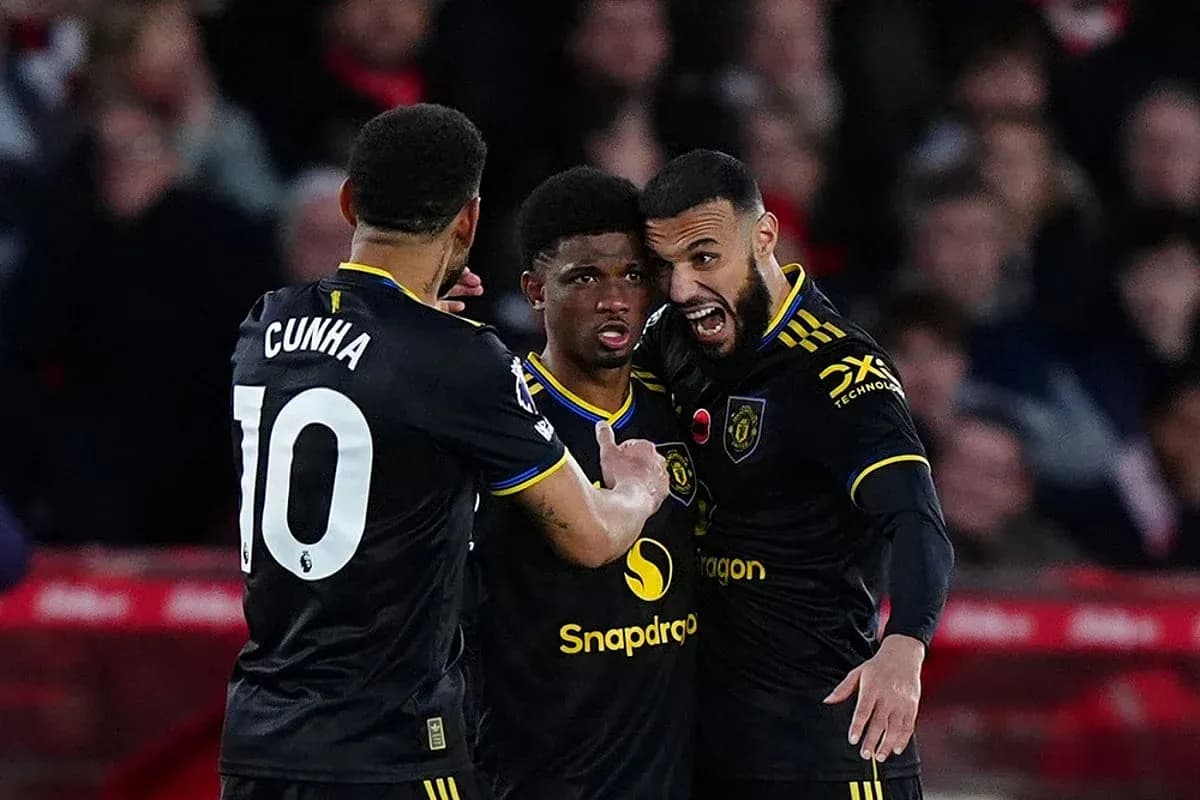
Manchester United vs Nottingham Forest: Premier League Clash with High Stakes
Manchester United host Nottingham Forest at Old Trafford in Regular Season - 37 of the Premier League, a late-season fixture with heavy implications at both ends of the table: United sit 3rd with 65 points and a Champions League league-phase spot within reach, while Forest are 16th on 43 points, close enough to the bottom pack that any result here can still shift their relegation risk.
Head-to-Head Tactical Summary
The recent head-to-head record is finely balanced and venue-sensitive. On 1 November 2025 at the City Ground in the Premier League (Regular Season - 10), Nottingham Forest and Manchester United drew 2-2, with United leading 1-0 at half-time before Forest recovered to share the points. Earlier in the same competition cycle, on 1 April 2025 at The City Ground (Premier League, Regular Season - 30 of the 2024 season), Forest edged a 1-0 home win over United, leading 1-0 at half-time and then managing the game out.
At Old Trafford, the last league meeting on 7 December 2024 (Premier League, Regular Season - 15) ended in a 3-2 away win for Nottingham Forest, after a 1-1 first half, underlining Forest’s capacity to exploit United in transition even away from home. In cup play, United won 1-0 at The City Ground on 28 February 2024 in the FA Cup 5th Round, after a 0-0 first half, in a tighter, more controlled knockout context. Going further back, on 30 December 2023 at The City Ground in the Premier League (Regular Season - 20), Forest beat United 2-1, again from a 0-0 first half. Overall, Forest have taken three wins and a draw in the last five meetings, with United’s only recent success coming in the FA Cup tie.
Global Season Picture
- League Phase Performance: In the league phase, Manchester United are 3rd with 65 points from 36 games, scoring 63 and conceding 48 (goal difference +15). Their home record is strong: 12 wins, 3 draws, 3 losses, with 36 goals for and 22 against. Nottingham Forest are 16th with 43 points from 36 games, with 45 goals scored and 47 conceded (goal difference -2). Away from home, Forest have 7 wins, 3 draws, 8 losses, scoring 26 and conceding 25, making them notably more effective on the road than at home.
- Season Metrics: In the league phase, Manchester United show a high-event profile: 63 goals for and 48 against in 36 matches (1.8 scored and 1.3 conceded per game), supported by consistent use of 3-4-2-1 and 4-2-3-1 structures. Their disciplinary load is significant, with yellow cards spread heavily between minutes 31-90 and a notable cluster of red cards between minutes 46-60 and 76-90, hinting at aggressive second-half pressing and risk-taking. Nottingham Forest, in the league phase, have a more moderate attacking output at 45 goals for and 47 against (1.3 scored and 1.3 conceded per game), with 4-2-3-1 as the dominant setup. Their card distribution also skews to the second half, especially minutes 46-75, indicating increased defensive workload and pressure phases after the interval.
- Form Trajectory: In the league phase, Manchester United’s recent form string “DWWWL” shows a strong late push: three consecutive wins, then a draw, before a setback in the most recent outing. That pattern points to upward momentum but with defensive vulnerabilities still present. Nottingham Forest’s “DWWWD” reflects a clear upturn: unbeaten in five, with three wins and two draws, suggesting that they arrive at Old Trafford with confidence, particularly in managing tight games and closing out points.
Tactical Efficiency
Using the league-phase statistics as a proxy for tactical efficiency, Manchester United profile as attack-first: 63 goals scored at 1.8 per game against 48 conceded at 1.3 per game, and a relatively low number of clean sheets (7) for a top-three side. That combination indicates a strong attacking index but a defense that allows regular chances and requires their goalkeeper and back line to absorb sustained pressure, especially in the second half where yellow and red cards spike.
Nottingham Forest’s 45 goals scored and 47 conceded (both at roughly 1.3 per game) point to a more balanced but lower-ceiling attack and a defense that is competitive but not dominant. The fact they have 9 clean sheets and 14 matches where they failed to score shows a “boom-or-bust” offensive pattern: when their attacking structure clicks, they can shut games down; when it does not, they struggle to create enough xG and lean heavily on defensive resilience.
Comparing these season profiles, United’s attack/defense balance is tilted toward high-output, high-risk football, which aligns with their strong home record but leaves space for counter-attacking sides like Forest to exploit transitions. Forest’s away numbers (26 scored, 25 conceded) are almost neutral, suggesting that their tactical approach on the road is relatively efficient: they can trade chances without being overwhelmed, which is consistent with their recent success at Old Trafford in December 2024 and their general improvement in recent form.
The Verdict: Seasonal Impact
For Manchester United, this match is a pivotal late-league-phase fixture in 2026. A win would consolidate their position in 3rd, keep them firmly on course for Champions League league-phase qualification, and potentially apply pressure on the teams above in any late title or top-two conversation, depending on concurrent results. Dropped points, however, would reopen the race for the Champions League places behind them, especially given their recent loss and the tight margins typically separating 3rd to 5th in the Premier League at this stage.
For Nottingham Forest, arriving 16th with 43 points, the seasonal impact is about securing safety and building a platform for the next year. A positive result at Old Trafford — even a draw — would likely push them close to, or effectively over, any realistic relegation threshold, especially given their improving “DWWWD” form. A defeat would not automatically drag them into the bottom three, but it would leave their fate more exposed to results elsewhere and increase the pressure on their final-day fixture.
In strategic terms, this game is a high-leverage crossroads: United are playing to lock in elite European qualification and validate an attack-driven model that has produced 63 league-phase goals, while Forest are looking to convert their recent upturn and strong away profile into definitive safety. The outcome will heavily shape the narrative of both clubs’ 2026 campaigns — either as a statement home win that underlines United’s top-tier status, or as another Forest upset that complicates the Champions League race and accelerates Forest’s climb away from relegation danger.