.svg&w=384&q=75 "Naijagoal logo")

Luis de la Fuente Defends Rodri Amid Criticism
Luis de la Fuente did not bother with diplomacy.
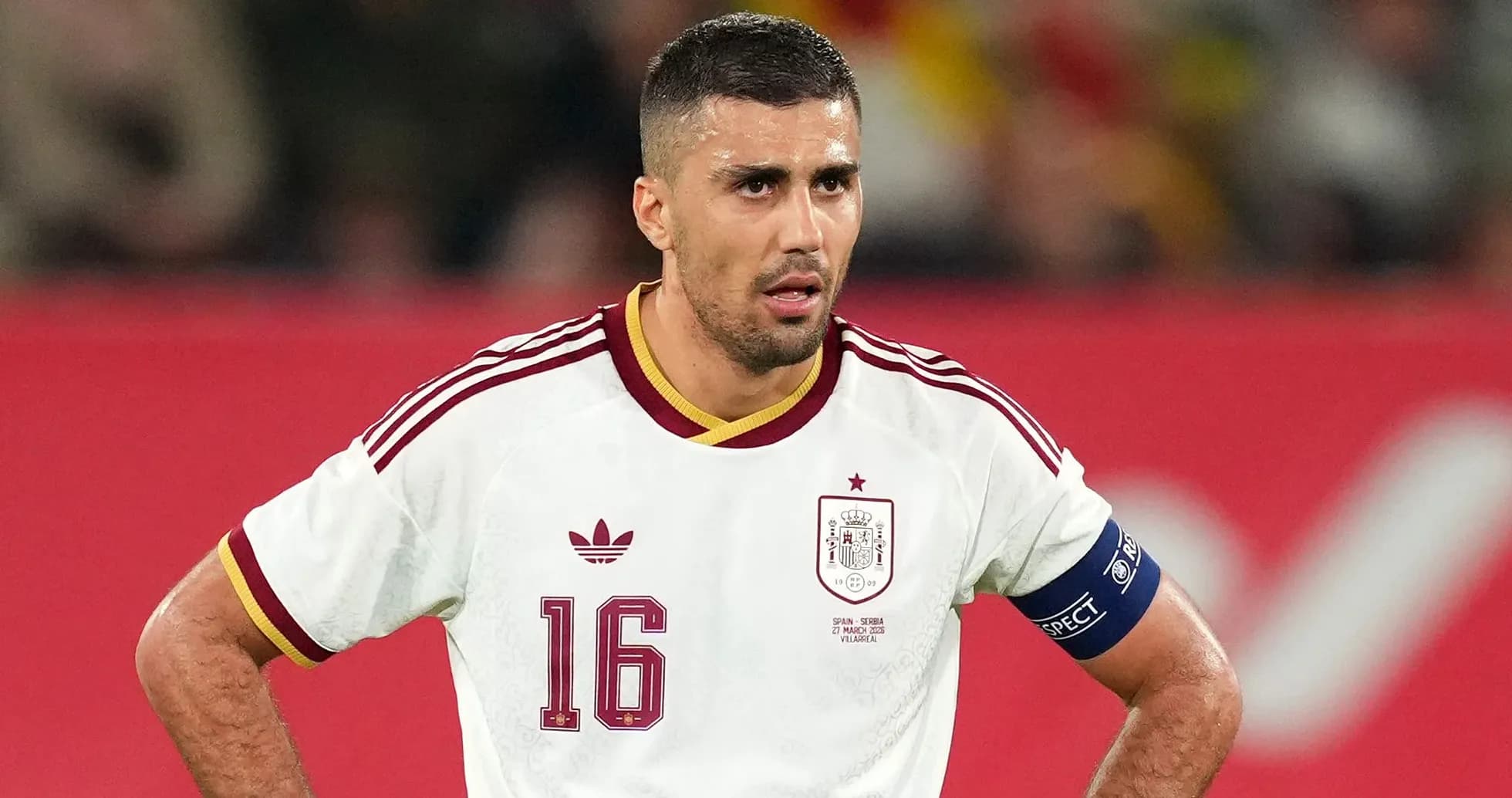
Three days after Spain’s flat 0-0 stalemate with Cape Verde in their 2026 World Cup opener, the Spain coach was confronted with a growing narrative: that Rodri, the metronome of Manchester City and his national side, is actually holding La Roja back. Too slow. Too safe. Too heavy a hand on the tempo.
De la Fuente’s response was instant — and fierce.
“Highly insulting”
Speaking to El Partidazo de Cope, the Spain boss bristled at the suggestion that Rodri is damaging Spain’s attacking flow or clogging their transitions.
“Good heavens, please. For you to say things like this,” he snapped, clearly irritated by the line of questioning. “Some people can say one thing or another, but in any case, I find it highly insulting to say that about the best player in the world.”
He didn’t just defend his midfielder. He elevated him.
“Rodrigo is the best player in the world, and even at 50% he's much better than most midfielders in the world. Even at 50%,” De la Fuente insisted, doubling down on his conviction. “And with us, he's a player of exceptional importance, with fantastic clarity and vision, balance. Rodrigo is a guiding light for us.”
The message was unmistakable: Rodri is non‑negotiable. One goalless draw will not shake his status at the heart of Spain’s plan.
Rodri at the centre of the storm
Spain’s failure to break down Cape Verde has already triggered familiar questions about identity and rhythm. When La Roja struggle to create or to accelerate through the thirds, the spotlight invariably falls on the deepest midfielder — the player who touches the ball most, dictates the angles, sets the pace.
This time, it is Rodri under the microscope, accused in some quarters of slowing Spain’s transitions and smothering their vertical threat. For a player widely regarded as the most complete holding midfielder in the game, the criticism has felt jarring.
De la Fuente clearly thinks it crosses a line.
In his eyes, Rodri is not a brake but a compass: the reference point who gives structure, security and a platform for risk higher up the pitch. Even when his performance dips, the coach believes his baseline level still outstrips almost everyone else in his position.
“Would they dare say that?”
De la Fuente’s defence of Rodri quickly broadened into something bigger: a complaint about how Spanish players are treated compared to other global stars.
“Would they dare say that about other players who are also considered among the best in the world? Would they dare? I don't think so,” he said, leaning into the idea that there is a double standard at play. “But since they're Spanish, and you can say things about our players that you don't say about others.”
It was a pointed remark, the kind that reveals a coach who feels his squad is being judged on a harsher scale than their rivals. The frustration is not just about one player or one performance; it is about the tone of the debate around a team still trying to grow into a tournament.
Spain now move deeper into this World Cup with their manager publicly welded to his midfield general. The questions around fluency and cutting edge will not disappear overnight, but one thing is clear: any attempt to pin Spain’s problems on Rodri will run straight into a brick wall named Luis de la Fuente.