.svg&w=384&q=75 "Naijagoal logo")

Juventus vs AC Milan: Serie A Tactical Insights
Under the Turin lights at Allianz Stadium, this was billed as an early‑season barometer between two sides with top‑four ambitions. Juventus and AC Milan both arrived in Round 3 of Serie A unbeaten, each with 7 points and a goal difference of 3, but with different ways of getting there. By full time, the 1–1 draw felt like confirmation: these are two well‑drilled, tactically distinct contenders whose margins will be razor thin all season.
I. The Big Picture – Structures, Context, Trajectories
Heading into this game, Juventus had quietly built a pragmatic base. Overall they had taken 7 points from 3 matches, with 4 goals scored and just 1 conceded. At home they had been efficient rather than explosive: 3 goals for and 1 against across 2 outings, an average of 1.5 goals scored and 0.5 conceded at Allianz. The defensive platform was clear; the question was whether Luciano Spalletti could layer enough creativity on top.
AC Milan arrived with a slightly more expansive profile. Overall they had 5 goals scored and 2 conceded from 3 matches, averaging 1.7 goals for and 0.7 against. On their travels they had already shown both edge and vulnerability: 3 away goals and 2 conceded from 2 matches, at an average of 1.5 scored and 1.0 let in. Ruben Amorim’s 3‑4‑2‑1 was committed to front‑foot football, but still calibrating its balance.
The draw keeps Milan marginally ahead in the table on rank 5, Juventus just behind in 6th, but the underlying numbers suggest a clash of styles more than a gap in quality. Juventus’ overall goal difference of 3 (4 scored, 1 conceded) and Milan’s identical overall goal difference of 3 (5 scored, 2 conceded) underline how closely matched these squads are in early 2026‑27.
II. Tactical Voids – Absences and Their Shadows
Spalletti’s options were heavily shaped by a long Juventus injury list. J. Cabal (thigh), A. Cambiaso (ankle), J. Ekhator (muscle), W. McKennie (muscle), A. Milik (inactive), P. M. Sarr (muscle), K. Thuram (knee) and K. Yildiz (foot) were all ruled out. That cluster of absentees removed potential vertical runners (McKennie, Thuram), an extra penalty‑box presence (Milik) and depth at full‑back and wide areas (Cabal, Cambiaso, Yildiz). It made Spalletti’s choice of a 4‑2‑3‑1 feel almost inevitable: protect the middle with M. Locatelli and Douglas Luiz, and trust a fluid band of three behind R. Kolo Muani to improvise.
For Milan, the absentee list was shorter but still meaningful. M. Gabbia’s ankle injury trimmed centre‑back depth in a system that lives or dies by its back three. With a 3‑4‑2‑1 used in all 3 league matches so far, Amorim was committed to the shape; M. Gila, K. De Winter and S. Pavlovic had to shoulder heavy minutes and responsibility without a natural rotation option.
Disciplinary profiles also cast a shadow. Juventus’ yellow cards this season have been scattered but with a notable late‑game edge: 40.00% of their bookings coming between 46–60 minutes, and another 20.00% in the 76–90 window, plus 20.00% in added time between 91–105. That pattern hints at a side that ramps up intensity after the break and occasionally pays for it. Milan, by contrast, have clustered their yellows almost entirely after half‑time too, with 20.00% in each of the 46–60, 61–75 and 76–90 ranges, and a striking 40.00% from 91–105. In other words, both teams tend to live on the disciplinary edge late on, a detail that shaped how cautiously the final quarter‑hour was played.
III. Key Matchups – Hunter vs Shield, Engine Room Battles
The “Hunter vs Shield” narrative for Juventus centred less on an individual and more on a collective pattern. Overall, Juventus had failed to score in 0 matches this campaign and were averaging 1.3 goals per game in total, with 2 clean sheets already. The front four of F. Conceicao, N. Gonzalez, K. Alajbegovic and Kolo Muani had to probe a Milan defence that, overall, had conceded just 2 goals and kept 1 clean sheet. On their travels, Milan’s back line was giving up 1.0 goal per game, suggesting there was space to be found if Juventus could sustain pressure.
For Milan, the “Hunter” label was shared by A. Cissé and A. Rabiot from the wider season context, but at Allianz it was G. Ramos spearheading the 3‑4‑2‑1. The trio of Rabiot and A. Saelemaekers behind him, supported by wing‑backs D. Moreira and P. Estupinan, were tasked with prying open a Juventus defence that, overall, had conceded only 1 goal at an average of 0.3 per game. At home, Juventus’ defensive record was even more miserly: just 1 goal conceded in 2 matches, a testament to the central pairing of Bremer and J. Lucumi in front of G. Vicario.
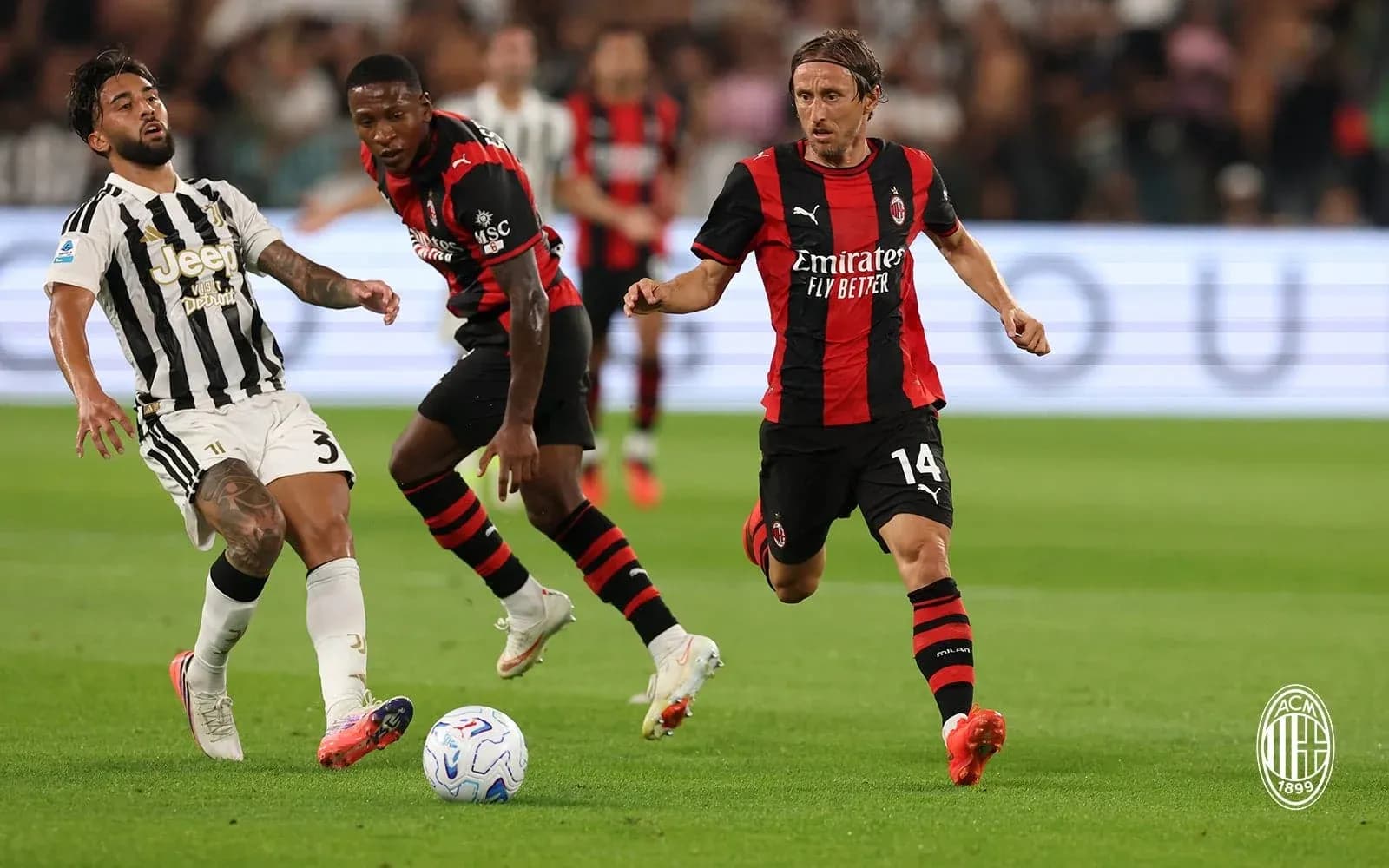
In the engine room, the duel was fascinating. Locatelli and Douglas Luiz formed a double pivot designed to suffocate Milan’s central creativity. On the other side, L. Modric and Y. Musah were Milan’s metronomes, with Rabiot drifting inside from his nominal advanced role. Rabiot’s broader season numbers – 1 goal, 1 assist, 70 passes at 80% accuracy, plus 2 tackles and 1 block – underline how he bridges phases: he can both break lines and track runners. Juventus’ main creative wildcard from the bench was T. Koopmeiners, whose 1 goal and 1 assist in just 46 minutes this season, plus 88% passing accuracy, make him an impact specialist rather than a structural pillar.
Out wide, the duel between Juventus’ full‑backs and Milan’s wing‑backs was decisive in the tactical story. Z. Celik and P. Kalulu had to judge when to step high against Moreira and Estupinan without leaving Bremer and Lucumi exposed two‑versus‑three against Milan’s front triangle. That tension dictated long stretches of the match’s rhythm: whenever Juventus’ full‑backs were pinned deep, Milan’s 3‑4‑2‑1 looked like a 3‑2‑5 in possession; when Juventus managed to spring Conceicao and Gonzalez early, Milan’s back three were forced to retreat, flattening their midfield.
IV. Statistical Prognosis – What This Draw Tells Us
Following this result, the numbers still paint Juventus as the more defensively secure side and Milan as marginally the more expansive. Juventus’ overall record of 2 wins and 1 draw with no defeats, 4 scored and 1 conceded, suggests their xG profile is likely to be modest in attack but strong in defence. Milan’s 5 goals for and 2 against across 3 matches, with identical unbeaten form, points to a slightly higher attacking xG and a defence that, especially away, will occasionally bend.
Neither side has taken or missed a penalty this season; with both penalty totals at 0 and no penalties missed, there is no spot‑kick edge to lean on. Instead, the prognosis rests on open‑play patterns. Juventus’ preference for a 4‑2‑3‑1 (used twice already) gives them a clear identity: compact middle, controlled tempo, and selective surges. Milan’s unwavering commitment to the 3‑4‑2‑1 over all 3 fixtures speaks to a coach who believes in structural repetition.
From a tactical preview perspective for their next clashes, the lesson is simple. Juventus can trust their defensive solidity and incremental attacking improvements, especially at home where they average 1.5 goals scored and 0.5 conceded. Milan, on their travels, will continue to create at a rate of 1.5 goals per match but must guard against late‑game disciplinary spikes and transitional exposure.
This 1–1 at Allianz Stadium did not separate them; it simply set the stage. Over the long Serie A season, the side that better manages those late‑game yellow‑card surges and extracts more from its creative depth – players like Koopmeiners for Juventus, S. Chukwueze and Cissé for Milan – is likely to edge the race their shared numbers currently describe as a dead heat.