.svg&w=384&q=75 "Naijagoal logo")

Joshua Brenet's Journey from Curaçao to World Cup Opener Against Germany
The road from Curaçao to a World Cup opener against Germany is long enough. Joshua Brenet has taken the scenic, chaotic route.
Curaçao, still part of the Kingdom of the Netherlands but fiercely its own, has become a quiet engine of Dutch football. Generations have moved to the Netherlands, and their children now carry the national team’s hopes. FIFA only recognised Curaçao in 2010, yet the current World Cup squad is packed with players steeped in European football.
Of the 26, just one was actually born on the island. Tahith Chong. The winger who once broke through at Manchester United, played 16 competitive games there, then stalled during a six-month spell at Werder Bremen in 2021. He now turns out for Sheffield United and headlines a group with deep German ties.
Six Curaçao players have worn Bundesliga or German club colours. Chong at Bremen. Gervane Kastaneer at 1. FC Kaiserslautern. Riechedly Bazoer at VfL Wolfsburg. Roshon van Eijma at Preußen Münster. Jürgen Locadia and Joshua Brenet at TSG Hoffenheim.
It is Brenet whose story loops back most sharply to Sunday night.
From Nagelsmann’s bet to Hoffenheim outcast
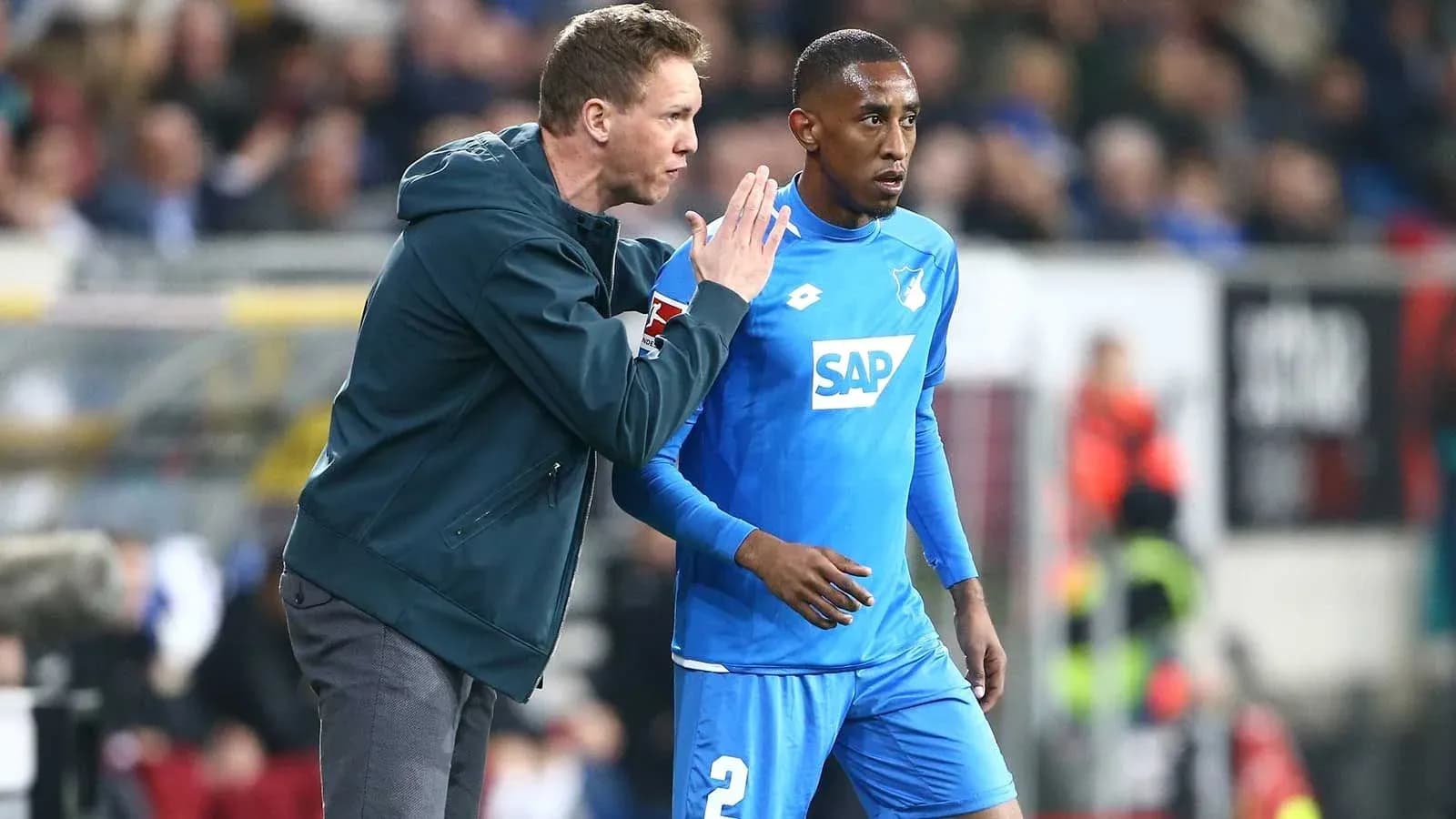
When Hoffenheim paid €3.5 million to take Brenet from PSV Eindhoven in 2018, it looked like a smart, targeted move. Julian Nagelsmann pushed for him. The right-back arrived as a three-time Eredivisie champion with two senior caps for the Netherlands, seemingly ready to step into a bigger stage.
He never really got onto it.
Brenet watched the first Bundesliga games after his transfer from the bench. Then came the moment that defined his time at TSG. Ahead of Hoffenheim’s first-ever Champions League match, against Shakhtar Donetsk, he skipped a video session. Nagelsmann responded by dropping him from the squad entirely.
The door reopened, but only a crack. Nagelsmann brought him back into the group, yet Brenet’s appearances were scattered, his influence minimal. When Alfred Schreuder took over – now, ironically, Nagelsmann’s assistant with Germany – Brenet disappeared from the plans altogether. Under Sebastian Hoeneß, the fall became brutal: down to the reserves in the Regionalliga Südwest, Germany’s fourth tier.
The pattern off the pitch matched the slide on it. Repeated disciplinary problems, chronic lateness, a reputation that quickly turned toxic. Hoffenheim struggled to find any buyer. Only in 2022 did he finally move on, leaving for Twente Enschede on a free.
Revival, then self-destruction
On the field at Twente, Brenet reminded people why top clubs had once chased him. Energy down the right, goals, assists, a player reborn.
Off the field, he unravelled again.
In January 2023, police caught him driving without a licence. Twice. In two weeks. He had already lost that licence in 2020 after a drink-driving offence.
“He clearly has no regard for authority. It seems to me as though he is continuing to play football after receiving a red card,” the presiding judge said, handing down a one-month prison sentence in 2024. Three years earlier, in 2021, Brenet had already received a suspended sentence, including a fine and community service, for domestic violence.
The prison term for driving without a licence was later converted to community service on appeal. Twente’s verdict was harsher. Contract terminated.
His career lurched again. Al-Rayyan in Qatar, six appearances in the 2024/25 season. A move to Livingston FC in Scotland last autumn. Then Kayserispor in Turkey for the second half of the campaign. A restless tour of clubs and countries, chasing minutes and a fresh start.
A new flag, an old reunion
Curaçao offered something different: belonging.
Despite his long history with Dutch youth teams and a senior debut for Oranje in the 2016 World Cup qualifiers, FIFA approved his switch to represent the country of his parents. Since his debut for Curaçao in 2024, he has scored six goals in 17 appearances – an impressive return for a right-back.
In the final warm-up match against Aruba, he started on that familiar flank and scored again. The timing could not be better. On Sunday at 7 pm, the 32-year-old will line up for Curaçao’s first World Cup game, staring across at Germany.
On the opposite bench: Julian Nagelsmann and Alfred Schreuder, the coaches who once pushed him, punished him, and ultimately moved on without him.
For Curaçao, it is a landmark night. For Brenet, it is something more pointed. After years of missteps, demotions, and courtrooms, he walks back into the glare of the elite game with a different badge on his chest and a very old story in front of him.
How often does a career this wayward circle back to the same faces, on the biggest stage of all?