.svg&w=384&q=75 "Naijagoal logo")

India Faces Jamaica in Unity Cup 2026 Semi-Final
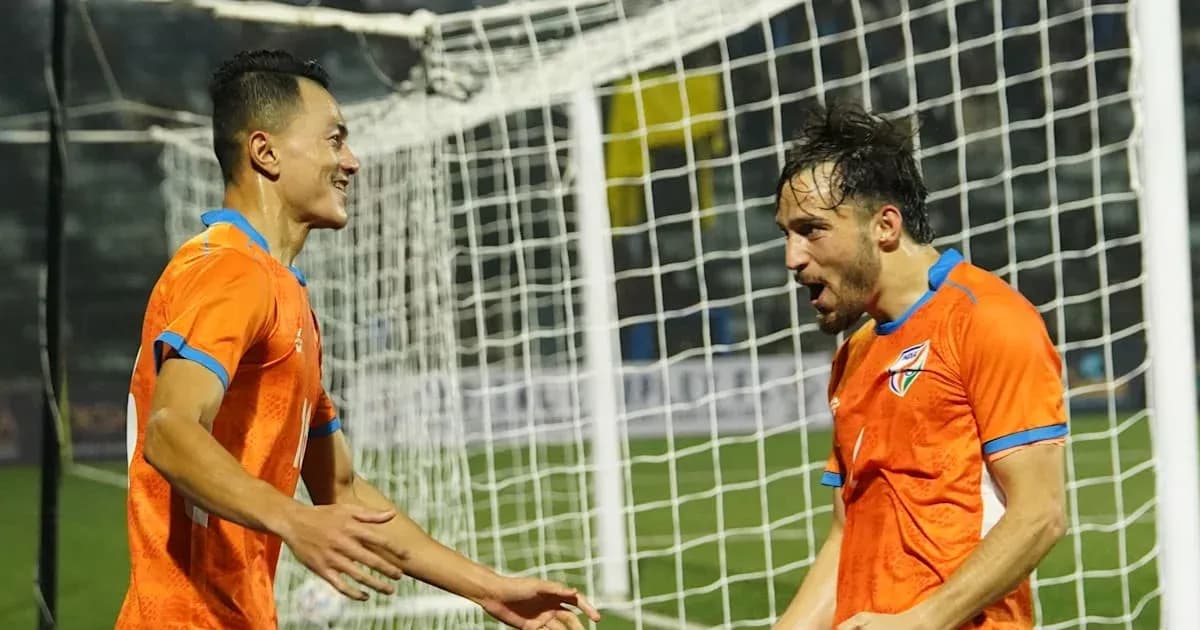
A thinned‑out India will walk into London this week with more questions than comfort, but with a rare chance to leave a mark on British soil.
The Unity Cup 2026, kicking off on Wednesday at The Valley – home of Charlton Athletic – brings India back to the UK for the first time since 2002. It is a long wait for a short, sharp test.
And it starts brutally.
Ranked 136th in the world, India face Jamaica, the world No. 71, in the second semi-final in the early hours of Thursday. Kick-off is at 12:00 AM IST on May 28, a graveyard slot back home but a prime window for a team trying to prove it still has a pulse after a turbulent build-up.
A four-team shootout in London
The format is simple. Four teams. Two semi-finals. Win and you play the final. Lose and you fight for third place.
Nigeria, sitting at 26th in the FIFA rankings and carrying the weight of African pedigree, open against Zimbabwe (ranked 130th) at 12:00 AM IST on May 27. Twenty-four hours later, Jamaica and India follow at the same time and venue.
The winners meet in the final on May 30. The others return to The Valley earlier that day for the third-place play-off. Kick-off times for those games are yet to be confirmed.
It is a compact, no-excuses tournament. Ninety minutes to stay alive. Ninety minutes to slide into the shadows.
India arrive light – painfully light
Khalid Jamil has not had the luxury of choice.
India have travelled with just 18 players after Mohun Bagan Super Giant pulled seven of their men out of the national camp midway through preparations, a decision that has ripped the spine out of this squad.
The absentees are significant: midfielders Lalengmawia Ralte, Sahal Abdul Samad and Anirudh Thapa; goalkeeper Vishal Kaith; defender Abhishek Singh Tekcham; and forwards Manvir Singh and Liston Colaco. Add Ashique Kuruniyan’s injury to that list and the gaps in the middle of the park grow wider.
Midfield, always a delicate area for India, now looks alarmingly thin. Jamil is left with only three specialist options: Jeakson Singh Thounaojam, Noufal PN and Ricky Shabong. Of those, Noufal and Ricky are still waiting for their first senior international cap.
They will not be eased in. If they play, they walk straight into a semi-final against a physically powerful Jamaican side on neutral ground.
Old heads, new hopes
There is at least some steel in the spine.
Gurpreet Singh Sandhu, the most experienced goalkeeper in the squad, is in London and likely to anchor India from the back. In front of him, Sandesh Jhingan brings years of international experience and the kind of vocal authority this patched-up side will desperately need.
The defensive unit around them blends familiarity and opportunity: Rahul Bheke, Nikhil Poojary, Roshan Singh Naorem, Akash Mishra, Bijoy Varghese and Pramveer. The structure might have to be conservative, but the personnel know the grind of Indian football well enough.
Up front, India will look to Ryan Williams and Lallianzuala Chhangte to carry the threat. Chhangte’s direct running and eye for goal give Jamil a clear outlet, while Williams adds mobility and work rate across the line.
Edmund Lalrindika arrives with a spring in his step after an ISL-winning campaign with East Bengal. Few players in this squad have more momentum behind them right now, and Jamil will hope that club form translates quickly into national impact. Rahim Ali and Farukh Choudhary round out the forward options.
The full squad reads lean but clear: three goalkeepers – Gurpreet Singh Sandhu, Hrithik Tiwari, Albino Gomes; seven defenders – Rahul Bheke, Nikhil Poojary, Roshan Singh Naorem, Sandesh Jhingan, Akash Mishra, Bijoy Varghese, Pramveer; three midfielders – Jeakson Singh Thounaojam, Noufal PN, Ricky Shabong; and five forwards – Ryan Williams, Edmund Lalrindika, Lallianzuala Chhangte, Rahim Ali, Farukh Choudhary.
Eighteen names. Not one spare story.
Watching from home
For fans in India, the only way to follow this return to British soil is online. All Unity Cup 2026 matches will be streamed live on FanCode. There will be no television broadcast in the country.
So the picture is set.
A historic venue in London. A short, sharp tournament. Nigeria and Zimbabwe on one side of the draw, Jamaica and a depleted India on the other. No safety net, no extended camp, no full-strength squad.
Just a late-night kick-off and a chance, however slim, to turn a disrupted preparation into a statement on foreign turf.