.svg&w=384&q=75 "Naijagoal logo")
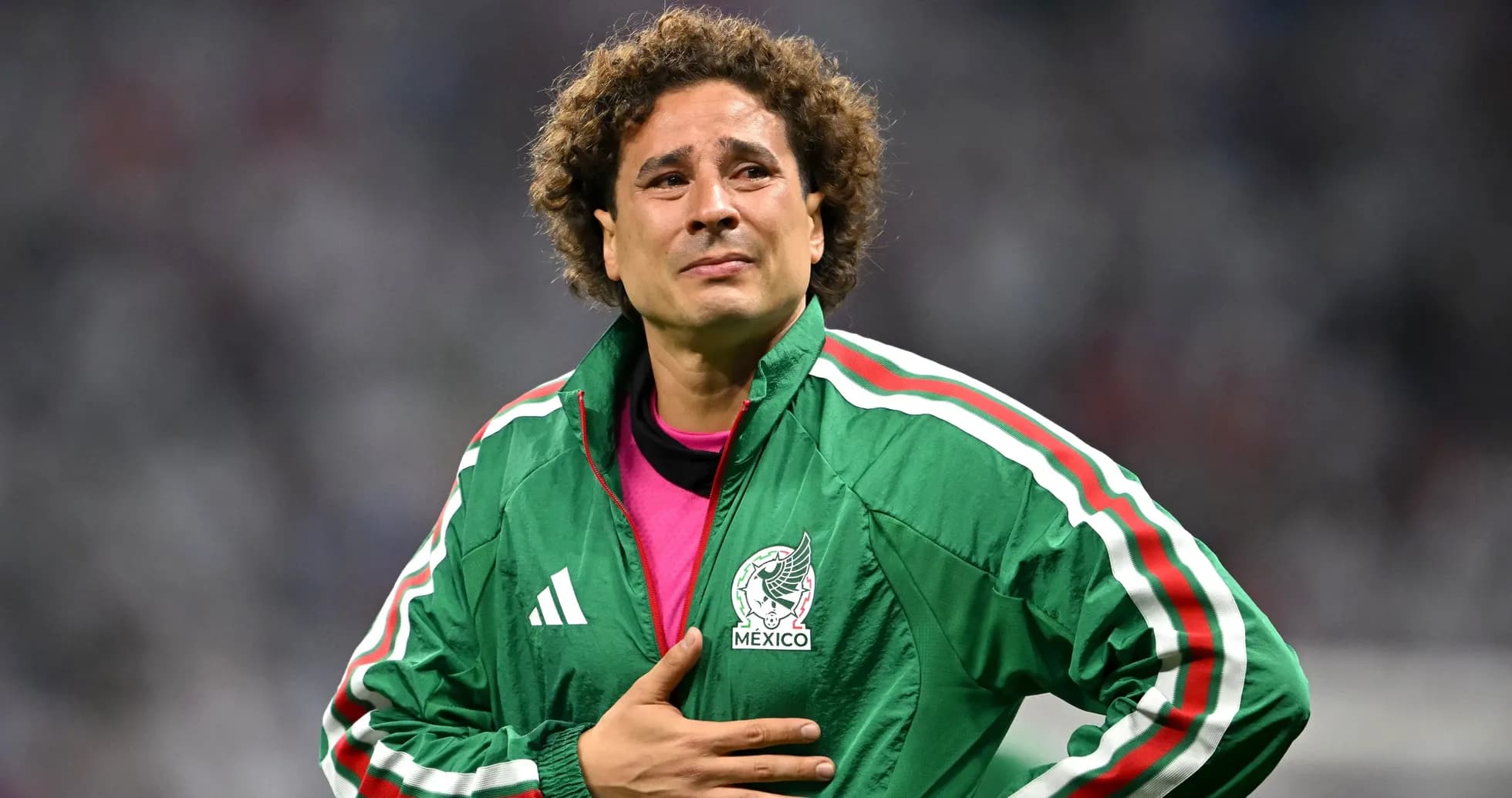

Guillermo Ochoa Retires: A Legacy of Six World Cups
Guillermo Ochoa has finally done what Mexico never quite believed he would. He has walked away.
On Tuesday, one of the country’s greatest goalkeepers announced his retirement from elite football, ending a career that stretched across continents, generations, and six World Cups. For years he had pointed to 2026 as the finish line. Supporters clung to the idea that he might squeeze out one last contract, one more season, one more miracle save.
The suspense is over.
“I gave it my all; I left everything on the field for my clubs and the national team, and today I hang up my gloves,” Ochoa wrote in a heartfelt social media post. “Being a goalkeeper means knowing you might wait 90 minutes for a single moment when everything depends on you. And when that moment arrives, you cannot hesitate.”
That sentence could sit under almost any photograph of him in a Mexico shirt.
Six World Cups, one enduring symbol
Ochoa’s longevity borders on the absurd. Six World Cups. It is a number that places him in a tiny, rarefied group, sharing the stage only with global icons Ronaldo and Messi. At first, he was just a kid along for the ride, the promising understudy soaking in the atmosphere. Eventually he became something else entirely: the man behind the gloves in three straight tournaments — Brazil 2014, Russia 2018, Qatar 2022 — where his performances often outshone the teams in front of him.
For Mexico, he became a constant. Coaches changed, generations turned over, expectations rose and crashed. Ochoa stayed. The hair, the headband, the outstretched hand clawing away what should have been certain goals — those images stitched themselves into the country’s footballing memory.
His farewell message carried the weight of that journey.
“I never imagined how far a dream could take me. Today, I can only look back with pride and say: Thank you,” he wrote. “I take with me the affection of millions and the peace of mind that comes with knowing I gave everything for Mexico.”
A final bow at home
By the time the 2026 World Cup arrived, Ochoa was no longer the undisputed starter. Raul Rangel had taken the gloves, and the veteran accepted a supporting role. Yet Javier Aguirre, a manager who understands the emotional architecture of Mexican football as well as anyone, knew this story needed the right final chapter.
So he scripted it.
In Mexico’s last group-stage match against Czechia, with the result secure and the clock ticking down, Aguirre turned to his bench. Ochoa came on for the final 13 minutes, a substitution that felt less like a tactical tweak and more like a curtain call. The roar that rolled around the Estadio Azteca was not just noise; it was a collective memory made sound.
At the whistle, Ochoa walked to his posts — the same goal frames that had watched him grow from a teenager into a national emblem — and kissed them. Then he dropped to his knees as teammates surrounded him in a tight, emotional embrace. For a moment, the stadium seemed to hold its breath.
The crowd eventually filtered out. The lights began to dim. Yet Ochoa stayed. He wandered to the centre circle, alone with the grass and the ghosts of his own career, and took in a final, private farewell to the pitch where it had all begun.
From Mexico City dreamer to European pioneer
The numbers on his honours list will never fully explain the impact, but they tell their own story.
Ochoa debuted in the top flight for Club América in February 2004, a young goalkeeper with quick feet, quicker hands, and a fearlessness that made older forwards uncomfortable. Within a year he had a league title, lifting the 2005 Clausura with América and cementing his place as the club’s next great figure between the posts.
Seven seasons in yellow and blue turned him into a star at home. Then came the leap that changed his career and Mexican football history. In 2011, Ochoa joined French side Ajaccio, becoming the first Mexico-born goalkeeper to play in Europe. It was a move loaded with risk — a mid-table Ligue 1 side, a new language, a different football culture — but he embraced it.
His European years became a winding odyssey. Spells at Malaga and Granada in Spain, a successful stretch at Standard Liege in Belgium — where he added the Belgian Cup to his cabinet — and later adventures with Salernitana, AVS Futebol, and AEL Limassol. Each stop added another layer to his reputation as a globetrotting, battle-tested No. 1.
The journey even looped back on itself. Between 2019 and 2022, Ochoa returned to Club América for a high-profile three-year stint. The homecoming was not sentimental window dressing; he played as if he had something to prove, reasserting his status as a club legend and reminding Mexico why he had become its default answer in goal for so long.
A career that outlived eras
He retires with a trophy cabinet that may not glisten with dozens of league titles but glows with significance: domestic success with América, silverware in Europe with Standard Liege, and a World Cup legacy that outlived entire tactical eras.
For two decades, Ochoa’s job was to stand in the most unforgiving place on the pitch and wait for the one moment that could define a night, a tournament, a career. He met those moments head-on, gloves raised.
Now the gloves are off, for good. The question is no longer whether he will play one more World Cup, one more season, one more game.
The question is who dares step into that space and try to replace what he became for Mexico.