.svg&w=384&q=75 "Naijagoal logo")

Group J: Messi's Last World Cup and the Ambitious Contenders
Anyone predicting a smooth parade for Argentina in Group J would do well to rewind to 2022. They led Saudi Arabia at half-time in their opener, looked serene, and then were flipped on their heads in one of the World Cup’s great shocks. They did not score before the break again in the group stage, edging past Mexico and Poland only after the interval.
That scar sits in the background now as Lionel Messi heads into what will almost certainly be his final World Cup. Around him, three ambitious stories swirl: Algeria back from the wilderness, Austria reborn under Ralf Rangnick, and Jordan stepping into the light for the first time.
This is not a procession. It’s a stress test.
Algeria: Mahrez’s Second Act
After missing the last two tournaments, Algeria return with the memory of 2014 still sharp: taking Germany to extra time in the last 16, a night that felt like a statement of what they could be. Twelve years on, they arrive with similar intent and a coach used to making heavyweights uncomfortable.
Vladimir Petkovic has walked this road before. With Switzerland, he reached the Nations League finals in 2018/19 and the Euro 2020 quarter-finals, eliminating Turkiye and France before losing to Spain on penalties. He knows how to build a side that stays in games, then punishes mistakes.
This Algeria has teeth. Mohamed Amoura lit up qualifying with 10 goals, seven more than anyone else in their group, including a hat-trick against Mozambique. At Wolfsburg, he opened the season with eight goals in 19 league matches, then went cold with an 11-game drought. Petkovic will hope the slump has cleared from his system by the time the anthem plays.
There is top-level experience scattered through the squad. Houssem Aouar, once capped by France, now pulls strings from midfield. Amine Gouiri returns from injury having scored twice in a 7-0 friendly demolition of Guatemala in Genoa. Nabil Bentaleb brings a steadier, battle-tested presence from Lille.
At the back, Luca Zidane carries not only the name but the experience of watching a World Cup-winning father navigate this stage. The Granada goalkeeper arrives after recovering from a broken jaw and chin, a grim injury that might have ended his tournament before it began. Instead, he lands in North America with a point to prove.
On the flanks, Anis Hadj Moussa comes off a stellar season with Feyenoord: 14 goals and seven assists, numbers that demand attention. Rayan Ait-Nouri’s year at Manchester City was more complicated – a fast start, two domestic cup winner’s medals, then an ankle injury and AFCON duties that shunted him to the margins before Pep Guardiola handed him a run of starts in late winter.
And then there is the captain.
Riyad Mahrez, now at Al-Ahli in the Saudi Pro League, stands eight goals short of becoming Algeria’s all-time leading scorer. He already has 38 goals and 43 assists in 113 caps, a career draped in medals: AFCON champion in 2019, the heartbeat of Leicester City’s miracle Premier League title in 2016, African Footballer of the Year that same season, and part of Manchester City’s 2023 treble.
He still turns up when the stakes rise. At the 2025 AFCON, he scored three times in two games as Algeria cruised through the group stage with a perfect record. At 35, he remains the reference point, the man everyone else looks at when the game tilts.
Algeria’s group-stage finale against Austria feels loaded. With Jordan the clear underdog and eight third-placed teams advancing, that clash could decide who walks straight into the knockouts. On balance, Petkovic’s organisation and Mahrez’s enduring influence should be enough to carry Les Fennecs through to the last 16 for only the second time in their history.
Argentina: One Last Push with Messi at the Helm
No team has retained the World Cup since Brazil in 1962. Argentina arrive determined to tear that line from the record books.
Lionel Scaloni has already redrawn Argentina’s modern history. Copa America 2021. World Cup 2022. Copa America 2024. He is the only coach in the country’s history to win both the World Cup and the Copa America, and the man who finally ended a 36-year wait for that third star.
The spine of the Qatar champions remains. Emiliano Martinez still owns the gloves, still the penalty-box showman who bent the 2022 final to his will. Cristian Romero and Lisandro Martinez anchor a defence that mixes aggression with control.
In midfield, the blend looks as strong as anything in the tournament: Rodrigo De Paul’s relentless energy and snarl, Alexis Mac Allister’s intelligence and timing, Enzo Fernandez’s range and authority. Together, they give Argentina a platform few can match.
Up front, Scaloni has options. Julian Alvarez can play wide, through the middle, or buzzing around a central striker. Lautaro Martinez leads the line, a pure No 9 who thrives on service and chaos.
There are changes. Angel Di Maria has stepped away from the international stage, taking with him one of the defining figures of the 2022 triumph. Franco Mastantuono, the teenage Real Madrid midfielder who drew intense attention during qualifying, did not make the final squad – the boldest omission of all.
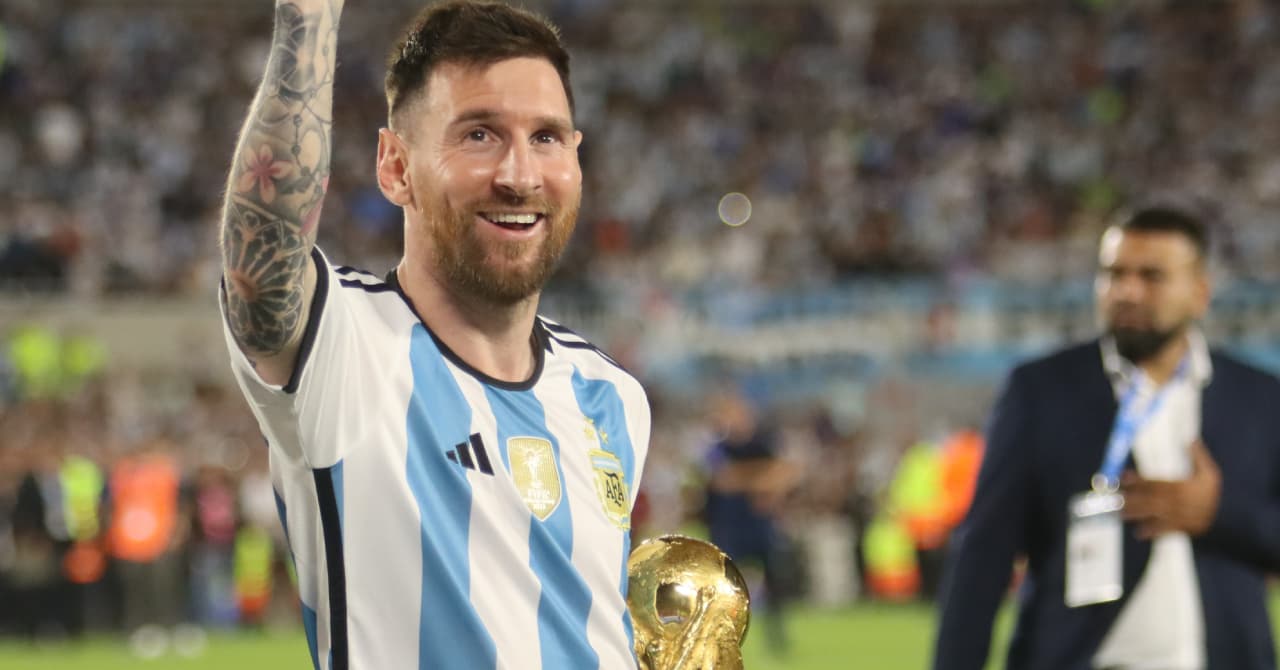
And then there is the one concern that really matters: Messi’s fitness. The Inter Miami forward picked up a hamstring problem in May. Scaloni kept his language calm, describing the early reports as “not that bad”, and the expectation is that Messi will be ready for the opener against Algeria in Kansas City.
His presence transcends the usual pre-tournament narratives. At 38, he walks into a record sixth World Cup. Nobody seriously believes there will be a seventh. He finished CONMEBOL qualifying as top scorer with eight goals, still the central figure, still the player everything orbits around.
Argentina should control this group. The real examination will come later, under knockout lights, with history pressing in from every side. But Group J offers its own tension: the memory of Saudi Arabia, the weight of a farewell, and the knowledge that one bad afternoon can turn a coronation tour into a scramble.
Austria: Rangnick’s Relentless Machine
Austria have waited 28 years to return to a World Cup. They arrive not as makeweights, but as the kind of awkward, well-drilled opponent nobody wants in their section.
Ralf Rangnick is the architect. Since taking charge, he has overhauled the national team’s identity, imposing an aggressive, pressing style that mirrors the philosophy he helped spread through the Red Bull network.
The results are already on the board. At Euro 2024, Austria reached the last 16 after finishing above France and the Netherlands in their group. World Cup qualification followed, and this squad might be the deepest they have assembled since finishing third in 1954.
The core is built on Bundesliga know-how. Fourteen of the 26-man squad play in Germany, including a midfield trio at RB Leipzig that feels purpose-built for Rangnick’s demands. Christoph Baumgartner, Xaver Schlager and Nicolas Seiwald have all been shaped by the Red Bull system, all comfortable in high-intensity, high-press football.
Marcel Sabitzer arrives from Borussia Dortmund with 95 caps and a catalogue of big nights behind him. Konrad Laimer, a starter at Bayern Munich, provides the running power and tactical discipline in wide midfield areas that make the press bite.
David Alaba, now 33, wears the armband, the natural leader at the back and the emotional anchor of the group. At the other end of the spectrum, Carney Chukwuemeka has committed his international future to Austria over England, while 20-year-old Paul Wanner of PSV Eindhoven is another young talent who could use this stage to announce himself.
Marko Arnautovic, 36 and Austria’s all-time leading scorer with 47 goals from 132 caps, travels as vice-captain. He knows this is probably his last major tournament. He will not want to leave quietly.
The form player, though, is Baumgartner. The Leipzig midfielder has just delivered the best season of his career: 13 goals and 10 assists in the Bundesliga, numbers that place him among the most productive central midfielders in Germany. His timing between the lines, his late surges into the box, his calm in tight spaces – all of it makes him a constant threat.
Austria’s path is clear. The opener against Jordan in Santa Clara gives them a chance to set the tone. Take three points there and they can attack the Algeria showdown with confidence, knowing a place alongside Argentina in the top two is within reach.
Jordan: A First Step into the Unknown
For Jordan, every moment in Group J will be historic. This is their first World Cup. They arrive not as tourists, but as a team that fought its way through a demanding Asian qualifying path.
Al-Nashama finished second in their AFC third-round group, behind South Korea but ahead of Iraq, Oman, Palestine and Kuwait. That is not a soft route. It hardened them.
Coach Jamal Sellami, Moroccan by birth and background, has already tasted international success. He won domestic honours in Morocco’s top flight and led the local-national team to the 2018 African Nations Championship title. He has spoken openly of trying to mirror what his compatriots did in Qatar, when Morocco became the first African and Arab nation to reach a World Cup semi-final.
Jordan will not lack cohesion. Thirteen of the 26 players are based in the domestic league, a core that trains together, understands each other’s tendencies and does not need weeks to find rhythm. At a tournament where many sides only click in the third group game, that familiarity can matter.
They do, however, carry a painful absence. Striker Yazan Al-Naimat suffered an ACL injury in December and misses out, stripping the squad of a key attacking option.
Defensively, captain Ehsan Haddad leads from the back at Al-Hussein. Yazan Al-Arab, one of the few players based outside the Middle East, brings experience from FC Seoul and a different kind of exposure to high-intensity football.
The spotlight, inevitably, falls on Mousa Al-Tamari. The Rennes forward is widely regarded as the best player Jordan has produced, the first Jordanian to play in Ligue 1 and a figure whose style has earned him the nickname “Jordanian Messi” at home. This tournament is his stage.
If Jordan are to shock anyone in this group, Al-Tamari will almost certainly be at the heart of it – driving at defenders, drawing fouls, creating the one clear chance that changes everything.
Their schedule offers a narrow opening. Austria in Santa Clara is their most realistic shot at a result. A point there would echo far beyond the group table. Anything taken from Algeria would be historic. And then comes Argentina at AT&T Stadium in Dallas, the biggest night Jordanian football has ever known, regardless of what the standings say.
Group J carries a heavyweight, two hardened contenders and a debutant with nothing to lose. Messi’s last World Cup, Mahrez’s chase for one more deep run, Rangnick’s machine, Al-Tamari’s dream.
Someone will leave North America feeling they missed their moment. The question is who blinks first.