.svg&w=384&q=75 "Naijagoal logo")

Leagues Cup Drama: Messi's Emotional Return and Miami's Exit
The Leagues Cup rarely runs in a straight line. It sprawls across weeks, spits out tangled tiebreakers and leaves coaches doing math on the touchline. It’s exhilarating. It’s confusing. Right now, it’s both at full volume.
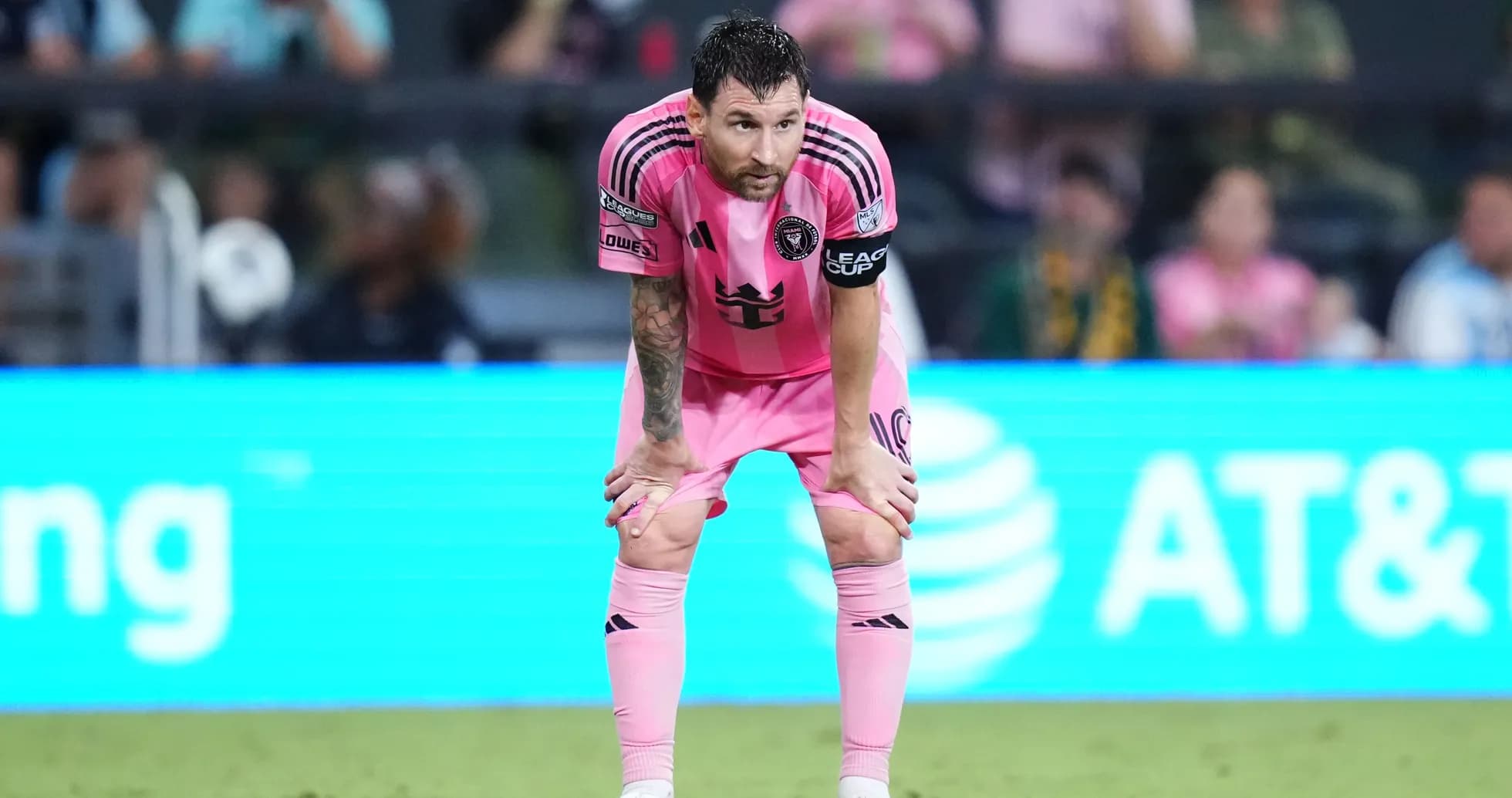
And in the middle of the noise, Lionel Messi walked back onto a pitch he wasn’t sure he’d see again so soon.
Messi returns, Miami crash out
Inter Miami entered Wednesday with a simple brief that felt anything but: beat Leon, and beat them heavily. Goal difference mattered. Momentum mattered. The aura of being the favorites mattered.
Leon didn’t care.
The Mexican side arrived with two wins already in the bank, having handled Orlando and Nashville. They were sharp, organized, and playing with the freedom of a team that knew exactly who it was. Miami were the opposite: short-handed, short on rhythm, and leaning on a player who hadn’t trained all week.
Messi’s return was as sudden as it was emotional. After the passing of his father, the Argentine had publicly wondered if he could keep playing. Less than half a day later, he showed up at the stadium, laced his boots and told Inter Miami he was ready.
When he came on, the script looked set. Miami were 1-0 up, chasing more goals to rescue their Leagues Cup campaign. The crowd lifted. The game tilted. The Herons had their talisman back.
Then it all unraveled.
Leon punched back, Miami’s defensive structure fell apart, and a 1-0 lead turned into a 3-2 defeat. Messi buzzed around, probing, combining, trying to drag his team over the line. It wasn’t enough. The supposed favorites are out, and the tournament has just lost its biggest star.
Step back, though, and a pattern is emerging: Liga MX’s heavyweights are starting to look better positioned than their MLS rivals. Leon are rolling. Club America, Cruz Azul and Toluca all look dangerous. Monterrey, if they survive the cut, will be a problem for anyone. This is as competitive as the Leagues Cup has felt in years — and the balance of power is shifting south.
Cincinnati’s nightmare turn
No one can accuse FC Cincinnati of getting an easy ride. The seeding system is designed to manufacture big matchups, and Cincinnati got exactly that. For two games, they handled it brilliantly.
Pachuca and Pumas were swept aside by a combined score of 5-1. Evander, fresh off the World Cup break and playing some of the sharpest football of his career, had a hand in a goal in both matches. The plan was working. The schedule looked harsh on paper, but on the field, Cincinnati were cruising.
Tuesday night should have been another step forward. Instead, it turned into a collapse that could define their tournament.
Evander struck just before halftime, and the home side tightened their grip. They controlled territory, controlled tempo, and looked in complete command. Then the 79th minute arrived.
Veteran goalkeeper Evan Louro spilled a shot he should have handled. Florian Monzon pounced. One mistake. One goal. The mood inside the stadium flipped.
Five minutes later, it got worse. Louro misjudged another effort, almost a carbon copy of the first error. Monzon punished him again. Two near-identical mistakes, five brutal minutes, and Cincinnati’s campaign suddenly hung by a thread.
A lifeline almost appeared in stoppage time. The referee pointed to the spot, VAR stepped in, and after a long review, the penalty was wiped away. No redemption, no late drama. Cincinnati now need a chain reaction of upsets elsewhere just to have a realistic shot at the last eight.
Crew survive, Navas shines
Across Ohio, the tension was just as thick, but the ending far kinder to the home side.
Pumas arrived in Columbus already eliminated, with nothing tangible to play for. Pride can be a dangerous motivator, though, and they nearly turned the Crew’s night into a disaster.
Columbus struck early, Tarun Karumanchi finishing after just nine minutes to settle nerves and set the tone. It should have been the platform for a routine night. Instead, Pumas dug in and found a way back.
On the stroke of halftime, Alvaro Angulo leveled. The stadium tightened. The stakes sharpened. With eight points looking like the magic number for progression, every touch in the second half carried weight.
Then Keylor Navas took over.
The veteran goalkeeper produced three big saves after the break, each one more deflating for the Crew than the last. Columbus pushed, Pumas bent but refused to break, and the game staggered into penalties.
The shootout felt like a referendum on Columbus’ entire campaign. Pumas blinked first, then again. They missed twice, and Nicolas Hagen came up with a key save on another effort. The Crew edged it. Officially, it goes down as a 2-2 draw. Emotionally, it felt like a win that might end up defining their run.
Liga MX splits into contenders and casualties
While MLS clubs have lurched between statement wins and costly slips, Liga MX’s picture is cleaner — and harsher.
By the end of Matchday 2, ten Mexican sides were already out, many of them on the wrong end of heavy scorelines. The bottom half has been brutalized. The top end, though, looks ruthless.
Leon, Club America and Cruz Azul have all but stamped their passports to the last eight. Toluca are right there with them. These are teams with depth, identity and a knack for handling knockout chaos.
Monterrey added their name to that list of serious threats on Wednesday night, even if their fate is not entirely in their own hands. Rayados needed a regulation-time win over a heavily rotated Nashville side just to stay alive. For 90 minutes, it looked like they might be denied.
Then Hugo Cuypers, a familiar face to MLS watchers, stepped up in stoppage time.
The Belgian forward met a cross with a crisp volley, arrowing it home for a 2-1 victory. One swing, one moment of quality, and Monterrey’s hopes stayed alive. They still need help from other results, but beating one of MLS’s strongest teams on their own patch sends a clear message: if Rayados sneak through, they won’t be making up the numbers.
Charlotte punished at the death
Charlotte’s night against Pachuca was supposed to be straightforward. Not easy, but manageable.
This wasn’t Tigres, or Club America, or Cruz Azul. Pachuca sit a rung below that elite group — a solid, mid-table Liga MX outfit built around the savvy of Salomon Rondon, but without the star power of the league’s true giants. With nothing on the line for them in terms of progression, the Mexican side were playing for pride and rhythm.
Charlotte, by contrast, were playing for their tournament lives.
On paper, they had enough. The defense has been reliable. The addition of Allan Saint-Maximin promised a jolt of creativity, even if the attack as a whole still lacks bite. A draw, at the very least, felt attainable against a mid-tier opponent with no real stakes.
On the pitch, they never really got going.
Charlotte offered little threat, failed to impose themselves, and allowed Pachuca to hang around. The longer it stayed goalless, the more dangerous it felt. You could sense the sting coming.
It arrived in the 91st minute.
A messy sequence, a defensive line that simply fell apart, and Alan Bautista was left with the simplest of finishes. He rolled the ball home, nothing spectacular, everything decisive. One lapse, one late goal, and Charlotte’s campaign may have ended right there.
The bracket is still shifting, the permutations still multiplying, but one truth is already clear: the Leagues Cup has teeth this year. MLS giants have stumbled, Liga MX contenders are circling, and the tournament has just lost its brightest star.
The question now is simple: who’s actually built to survive this chaos?