.svg&w=384&q=75 "Naijagoal logo")

Genoa vs Como: Serie A Round 3 Review
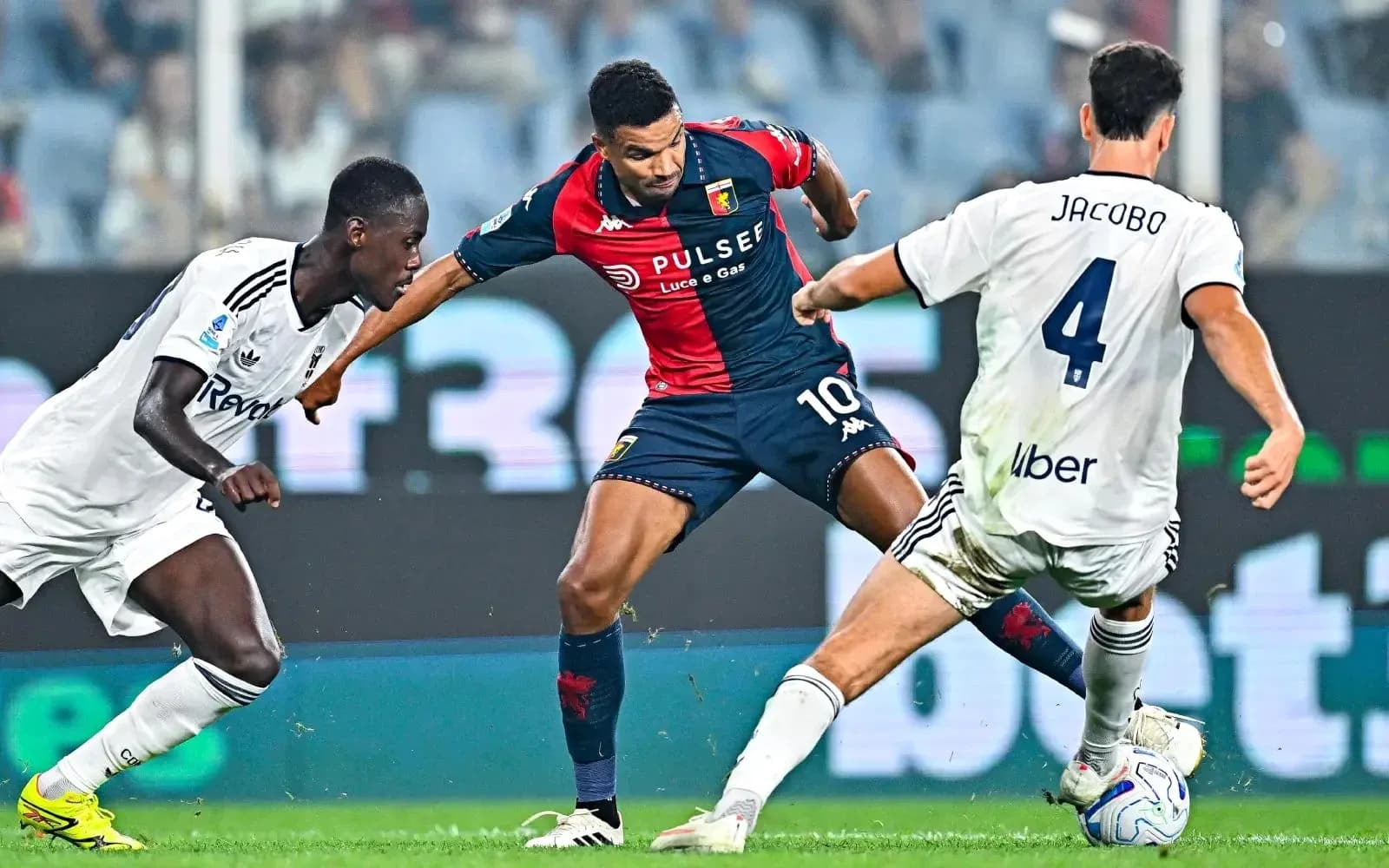
Under the floodlights of Stadio Luigi Ferraris, Round 3 of the 2026 Serie A season delivered a brutal reality check for Genoa and a statement win for Como. The 4–1 away victory, sealed inside 90 unforgiving minutes under referee M. Guida, crystallised two teams moving in opposite directions: Genoa sinking to 19th with three defeats from three, and Como rising to 3rd, unbeaten and brimming with ideas.
I. The Big Picture – Diverging trajectories
Following this result, Genoa’s early-season profile is stark. Overall they have played 3, lost 3, scored just 1 and conceded 7. The goal difference of -6 underlines a side that is fragile at both ends. At home, the numbers are even more alarming: 2 matches, 0 points, 1 goal for and 6 against, an average of 0.5 goals scored and 3.0 conceded at Luigi Ferraris. The 1–4 here matches their heaviest home defeat in this campaign.
Como, by contrast, are building something quietly ruthless on their travels. All 3 of their league matches so far have been away from home, yielding 2 wins and 1 draw, with 7 goals scored and 3 conceded. Their overall and away scoring average stands at 2.3 goals per game, against just 1.0 conceded. A 1–4 away win is already noted as their biggest victory of the season; this night in Genoa fit that pattern perfectly.
Tactically, the formations told a story before a ball was kicked. Daniele De Rossi went with a 3-4-1-2, a system that demands aggressive wing-backs and flawless coordination in the back three. Cesc Fàbregas stayed loyal to Como’s 4-2-3-1, a shape that has underpinned all three of their lineups this season, giving structure to their counter-attacks and clarity in possession.
II. Tactical Voids – Absences and discipline
Genoa came into the fixture already compromised. C. Drameh was unavailable, listed as inactive, while E. Havel (thigh injury) and L. Venturino (knee injury) were also missing. None are central stars in the current statistical landscape, but for a squad trying to bed in complex back-three structures, every absent training body matters. The lack of depth behind the defensive and midfield lines forced De Rossi to lean heavily on a core group.
Como had their own absentee in J. Addai, sidelined with an Achilles tendon injury. Fàbregas, however, could still field a full complement of creative and athletic profiles across his 4-2-3-1, and the bench was rich with defensive and midfield alternatives.
Discipline has become a structural issue for Genoa. League-wide, they already show a worrying spread of yellow cards across the 0–15, 31–45, 61–75 and 91–105 minute windows, each accounting for 16.67% of their cautions, with a further 33.33% falling into unspecified added time. On the individual front, Leo Østigård leads Serie A’s yellow-card charts with 3 in 3 appearances, while Alexsandro Amorim and D. Sow have 1 each. This constant drip of bookings erodes Genoa’s ability to defend aggressively and compress space late on; players are often one mistimed challenge away from disaster.
Como’s disciplinary footprint is lighter. Their only recorded yellow in the league comes in the 46–60 minute range, a sign of a side that can increase intensity after the break without descending into chaos. Even their creative heartbeat, M. Baturina, carries just a single yellow card alongside his attacking output.
III. Key Matchups – Hunter vs Shield, Engine Room battles
The “Hunter vs Shield” narrative in this fixture revolved around Como’s attacking trio of Assane Diao, Baturina and T. Douvikas against Genoa’s embattled back line led by Østigård.
Douvikas has 2 league goals from 9 shots (5 on target), thriving as a penalty-box forward who also engages in 33 duels, winning 16. Against a Genoa defence that has already conceded 7 overall and 6 at home, his presence constantly pinned the central three. Østigård, for his part, is statistically robust – 4 tackles, 4 blocked shots and 4 interceptions with 90% passing accuracy – but his workload is unsustainable. When your primary centre-back is also the league’s most-booked player, the “shield” is both essential and permanently at risk.
Behind Douvikas, Baturina and Diao formed the creative spear. Baturina, already with 2 goals and 1 assist in 3 appearances, is among Serie A’s top scorers and top assisters. His 90 passes at 87% accuracy and 3 key passes speak to a conductor who can both feed and finish. Diao, with 2 goals, 1 assist, 7 shots and 12 dribble attempts (6 successful), offers vertical menace between the lines. Genoa’s midfield box of Sow, Morten Frendrup, Johan Vásquez and Tommaso Baldanzi struggled to compress those spaces consistently in a 3-4-1-2 that often became a 5-3-2 under pressure.
On the other side, Genoa’s “Hunter” role fell to Lorenzo Colombo and M. Osmajić, supported by Baldanzi as the nominal 10. Colombo’s season so far shows 0 goals but 1 assist, 2 shots and 4 key passes. He is working, dropping and linking, but the lack of total scoring threat (Genoa have only 1 goal overall and have failed to score in 2 of their 3 matches) means opposition back fours can hold a higher line and squeeze Baldanzi’s pockets of space.
In the “Engine Room” duel, Como’s double pivot of M. Perrone and L. da Cunha offered balance and tempo, while Genoa leaned on Sow’s control and Frendrup’s energy. Sow’s 91 passes at 91% accuracy suggest a player capable of stabilising possession, but with Genoa conceding an average of 2.3 goals overall and 3.0 at home, his influence has been more about firefighting than dictating.
IV. Statistical Prognosis – Where this leaves both squads
Following this result, the numbers sketch out two tactical realities.
Genoa are a side whose structure is not yet matching its ambition. Overall averages of 0.3 goals scored and 2.3 conceded, combined with 0 clean sheets and 2 matches without scoring, reveal a team that cannot yet control either penalty area. Their reliance on a back three and wing-backs like Stefano Sabelli to provide width leaves space for opponents to attack transitions, particularly when the midfield is already stretched and carrying cards.
Como, conversely, are built on a clear, repeatable model. Their 4-2-3-1 has been used in all 3 league matches, delivering 2.3 goals scored and only 1.0 conceded overall and away. They have not yet kept a clean sheet, but their attacking ceiling is high enough to outscore that vulnerability. With Baturina, Diao and Douvikas all on 2 league goals, and Yan Couto contributing 1 assist from right-back alongside 160 passes at 89% accuracy, the creative burden is well distributed.
From a predictive standpoint, the xG story would almost certainly favour Como’s sustained chance creation and shooting volume over Genoa’s sporadic forays. Even without explicit xG values, the shot profiles, passing metrics and goal returns point towards a Como side whose attacking patterns are repeatable and whose defensive record, while not perfect, is structurally sound.
For Genoa, the path forward demands recalibration: either tightening the back three with more conservative wing-back positioning or shifting shape to protect central spaces and reduce the exposure of Østigård and his partners. For Como, this match felt less like an upset and more like confirmation: Fàbregas has crafted an away-day machine, and unless opponents can disrupt Baturina’s rhythm and Diao’s vertical runs, many more back threes will be pulled apart as ruthlessly as Genoa’s was at Luigi Ferraris.