.svg&w=384&q=75 "Naijagoal logo")

Fenerbahçe vs AS Roma: UEFA Champions League Match Analysis
Under the lights of Chobani Stadium Fenerbahce Sukru Saracoglu, this League Stage opener in the UEFA Champions League brought together two sides at very different points in their European rhythm. Fenerbahçe arrived with a six‑match unbeaten run in this campaign behind them, while AS Roma stepped into continental competition with a clean statistical slate, their European story for 2026 only beginning to be written.
For Fenerbahçe, the draw extends a quietly impressive continental body of work. Heading into this game, they had played 6 matches in total, winning 4 and drawing 2, with no defeats. At home, they had played 3, winning 2 and drawing 1; on their travels, they had also played 3, with 2 wins and 1 draw. Their attacking profile is balanced: 8 goals in total this campaign, split evenly with 4 at home and 4 away. The scoring rhythm is steady rather than explosive, with an average of 1.3 goals in total per match, mirrored exactly by 1.3 at home and 1.3 away.
Defensively, their numbers underline why they have been so hard to beat. They had conceded only 3 goals in total before this fixture, with 1 at home and 2 on their travels. The defensive averages are even more telling: 0.5 goals conceded in total per match, with 0.3 at home and 0.7 away. Overall, that gives them a total goal difference of +5 (8 scored minus 3 conceded), a platform that has carried them into the League Stage with quiet authority. Three clean sheets in total – 2 at home and 1 away – reinforce the sense of a side comfortable in tight games, and crucially, they had failed to score in none of their 6 matches.
Roma, by contrast, came into Istanbul with no European data in this campaign: 0 matches played in total, 0 at home, 0 on their travels, and no goals scored or conceded. Their rank of 17th in the standings, like Fenerbahçe’s 20th, is a placeholder rather than a verdict. The tactical preview, therefore, is less about what Roma have done in this Champions League season, and more about what their lineup and coach Gian Piero Gasperini suggest they intend to be.
The tactical voids for both sides are significant, particularly for Fenerbahçe. İsmail Kartal had to navigate a long absentee list. M. Asensio missed out with a muscle injury, depriving Fenerbahçe of a high‑end creative and finishing option between the lines. J. Oosterwolde’s Achilles tendon injury and M. Bah’s knee injury for Roma removed athleticism and defensive versatility from both squads. For Fenerbahçe, the disciplinary shadow of M. Guendouzi’s red card suspension also mattered: without his energy and aggression in midfield, Kartal turned more heavily to N. Kanté and İ. Yüksek to set the tone in the center.
The broader disciplinary profile of Fenerbahçe this campaign hints at where tempers and risks flare. Their yellow cards cluster late: 30.77% of their bookings have come between 31–45 minutes, another 30.77% between 76–90, and a striking 38.46% in the 91–105 window. This is a side that plays on the edge when fatigue and pressure rise, a factor that would matter against a Roma team known under Gasperini for provoking duels and second balls. Red cards have not been a statistical trend in this Champions League run, but Guendouzi’s absence shows how a single dismissal can still shape selection.
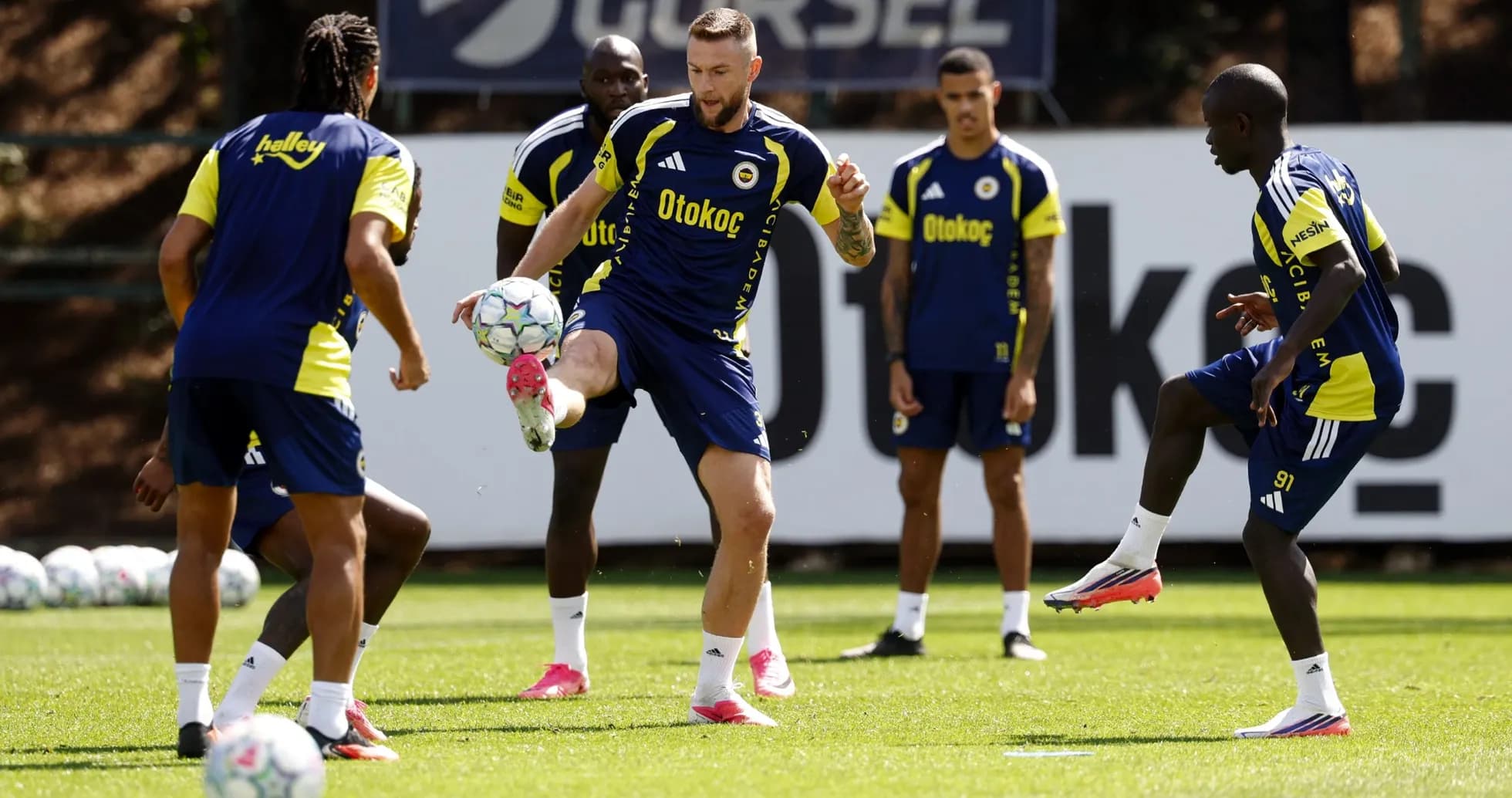
On the pitch, the lineups told a story of contrast. Fenerbahçe lined up in a 4‑3‑3, but that sits atop a season built largely on a 4‑2‑3‑1 structure (used in all 6 of their previous matches). Ederson anchored them in goal, with a back four of M. Müldür, M. Škriniar, N. Aké, and A. Brown. In front, Kanté, İ. Yüksek, and B. Elmaz formed a compact midfield triangle, tasked with screening transitions and feeding a dynamic front three of M. Greenwood, V. Muriqi, and K. Aktürkoğlu.
Roma’s 3‑4‑2‑1 was pure Gasperini: M. Svilar behind a back three of G. Mancini, E. Ndicka, and Hermoso; a hard‑running band of four with D. Rensch wide right, B. Cristante and M. Koné central, and Wesley on the left; then the creative double‑ten pairing of P. Dybala and M. Soulé behind D. Malen. It is a shape designed to overload central zones, press high, and spring quickly into the half‑spaces – the very channels Fenerbahçe’s full‑backs like to attack.
The “Hunter vs Shield” duel centered on Fenerbahçe’s attacking spearheads against Roma’s untested European back line. Talisca, though not starting here, loomed over the tie as the competition’s leading scorer for Fenerbahçe: 4 goals in total from 6 appearances, with 23 shots and 13 on target. His penalty record in this campaign is perfect – 2 scored from 2 attempts, with no misses – and his presence in the squad forces opponents to respect Fenerbahçe’s set‑piece and spot‑kick threat. On the night, Muriqi’s physicality and Greenwood’s movement had to carry that mantle, supported by the creative craft of K. Aktürkoğlu, who already had 2 assists in total and 12 key passes in this Champions League run.
In the “Engine Room” matchup, Kanté and İ. Yüksek were tasked with disrupting Roma’s rhythm against Cristante and Koné. Fenerbahçe’s midfielders needed to protect their late‑game discipline, given how often their yellows arrive after the 76th minute, while still stepping out to press Dybala and Soulé between the lines. Roma, without L. Pellegrini’s guile, leaned even more heavily on Dybala as the primary conduit, with Malen threatening the space behind Škriniar and Aké.
Statistically, the prognosis before a ball was kicked tilted slightly toward Fenerbahçe. Their total average of 1.3 goals scored and only 0.5 conceded, plus a total goal difference of +5 and three clean sheets, painted the picture of a side that manages games well, especially at home where they concede just 0.3 on average. Roma’s blank European canvas meant their defensive solidity and attacking potency were unknowns rather than guarantees.
The 1–1 full‑time scoreline ultimately reflected a meeting of two coherent ideas rather than a mismatch. Fenerbahçe’s structured, numerically sound game model met Roma’s fluid, three‑at‑the‑back aggression, and neither could fully impose itself. For Kartal, the draw extends an unbeaten European sequence and confirms that his side’s defensive metrics translate against higher‑caliber opposition. For Gasperini, it is a first data point: Roma can come to one of the continent’s more hostile grounds, absorb pressure, and leave with something tangible.
As the League Stage unfolds, this match feels less like a conclusion and more like a prologue – a night where the numbers behind Fenerbahçe’s rise and Roma’s tactical reshaping began to intersect on Europe’s biggest stage.