.svg&w=384&q=75 "Naijagoal logo")

Enzo Fernández and the Topo Gigio Celebration in World Cup 2026 Final
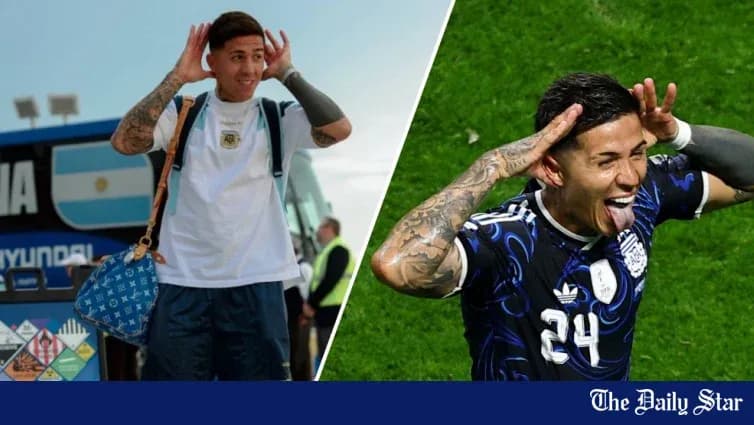
Enzo Fernández stepped onto the airport tarmac in Kansas City and did it again. Hands cupped behind his ears, chin up, eyes hard. The “Topo Gigio” pose that has followed him all the way through this World Cup, as present as his goals, his tackles, his running.
This time it wasn’t after a strike into the top corner or a midfield masterclass. It was before boarding Argentina’s flight to New York on Friday, ahead of the FIFA World Cup 2026 final against Spain at MetLife Stadium (Monday, 1am Bangladesh Time). A gesture, not a goal. But the message still travelled.
Thunderstorms meant the world champions didn’t land in New York until around midnight. No matter. By then, images of Fernández’s celebration had already ricocheted across phones and feeds, a symbolic prelude to the last act of Argentina’s title defence.
A mouse, a myth, a message
For the rest of the world, it might just look like a player telling the crowd: “I can’t hear you.” In Argentina, it’s something else entirely.
The “Topo Gigio” celebration traces its name back to a puppet mouse created in 1958 by Italian artist Maria Perego. The character, wide-eyed and soft-voiced, became a television phenomenon across Latin America through the 1980s and 1990s. Children copied the pose. Hands behind the ears. Innocent. Playful.
Football turned it into something sharper.
On April 8, 2001, Boca Juniors idol Juan Román Riquelme scored against River Plate in the Superclásico and walked straight towards the presidential box. Facing then-club president Mauricio Macri, Riquelme raised his hands to his ears in the now-iconic stance. He was locked in a contract dispute with the club’s hierarchy at the time, and the image burned itself into Argentine football history.
Riquelme later said the celebration was for his daughter. The country saw defiance. Rebellion in slow motion, captured in a still frame.
From there, the gesture moved from one generation to the next. It became a signal, not just a celebration. A way of speaking without saying a word.
Messi, Van Gaal and a World Cup reborn
The “Topo Gigio” resurfaced on the biggest stage in Qatar in 2022.
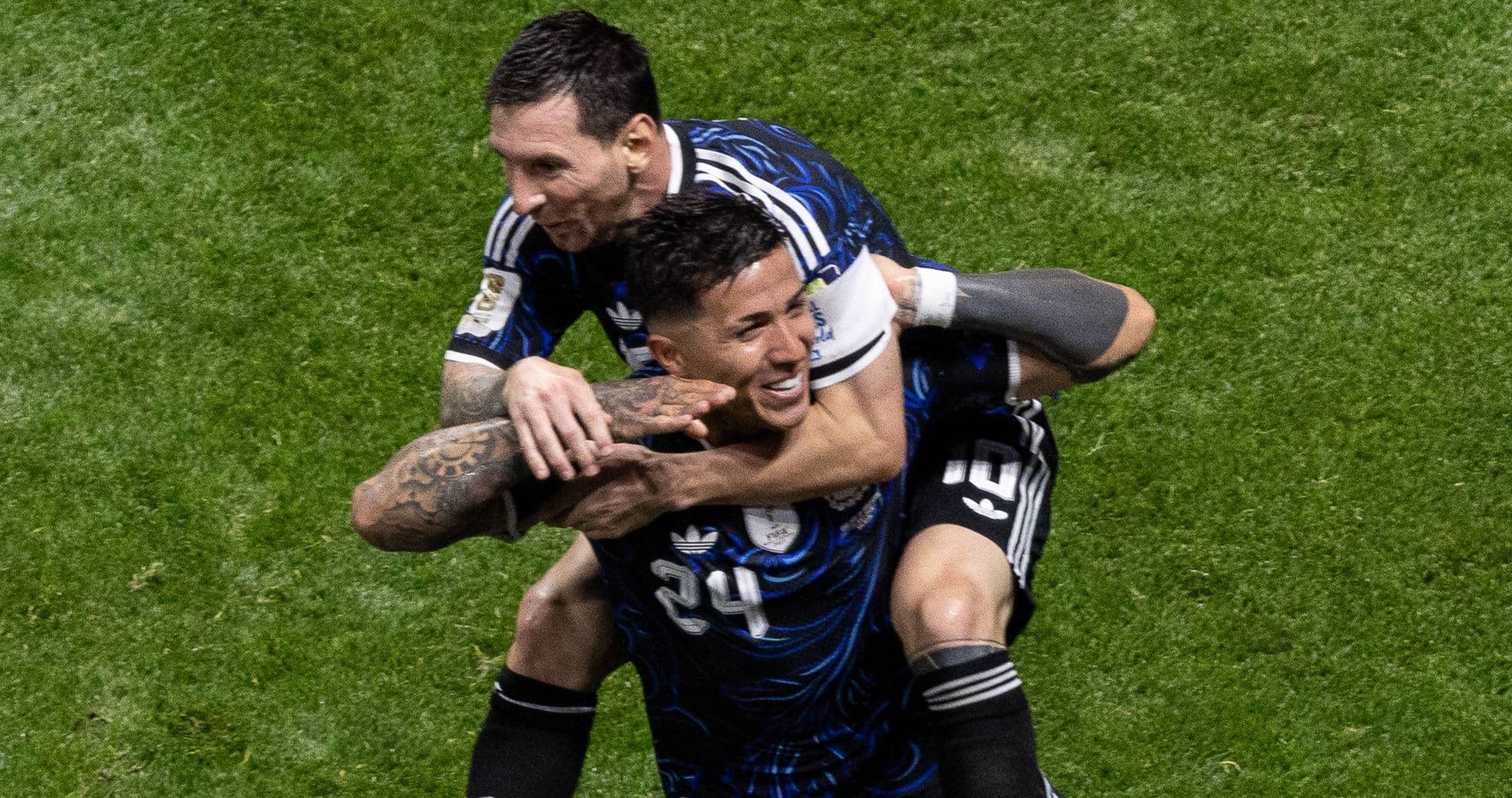
After Argentina’s stormy World Cup quarter-final win over the Netherlands, Lionel Messi used the pose in front of Dutch coach Louis van Gaal. The match had been bitter, emotional, fractious. Messi’s celebration, hands behind his ears, was widely read as a direct answer to Van Gaal’s pre-match comments and the tension that had simmered all night.
In that moment, a children’s TV mouse, a Boca legend and the greatest player of all time were suddenly part of the same storyline. A tiny gesture, loaded with decades of Argentine football culture.
Fernández writes his own chapter
Now it’s Enzo Fernández’s turn.
In the World Cup semi-final against England, with one of international football’s fiercest rivalries crackling all around him, the Chelsea midfielder found the net and went straight to the “Topo Gigio.” No words. Just the pose, framed by the noise and the stakes.
It was not an empty tribute. It was a deliberate choice in a charged atmosphere, a nod to the past and a challenge to the present. Another layer on a celebration that has evolved from TV screens to terraces, from Boca to the national team, from domestic disputes to World Cup drama.
By repeating the gesture again before flying out of Kansas City, Fernández underlined that it now belongs to him too. Not stolen from Riquelme or Messi, but folded into his own story as Argentina chase yet another world title.
Calm before the final storm
Before leaving Kansas City, Lionel Scaloni kept things light. Argentina went through a gentle training session, a final tune-up rather than a full-blooded rehearsal. No need to reinvent anything now. This is a group that knows its patterns, its roles, its rituals.
They boarded the plane late, arrived later still, greeted by a city that will turn into a cauldron when Spain stand opposite them at MetLife Stadium.
Some players speak through press conferences and interviews. Others let their football do the talking. Fernández has chosen something in between: a celebration that carries 20 years of Argentine football memory into one fleeting movement.
On Monday in New York, if he scores again and those hands go back behind his ears, the noise around this World Cup final might just hit a different level.