.svg&w=384&q=75 "Naijagoal logo")

Egypt's Historic World Cup Knockout Victory
Egypt’s night of history in Dallas did not end on the pitch. It spilled into the streets of Cairo, across the Arab world, and into the ruins and tents of Gaza.
At Dallas Stadium, under the strain and noise of a World Cup knockout tie, Egypt finally broke through a barrier that had stood for generations. A 1-1 draw after extra time against Australia in a tense round of 32 clash gave way to a penalty shootout, and with it, a moment their football history had never known: a World Cup knockout victory.
They had to suffer for it. Of course they did.
Egypt hold their nerve from the spot
The game crawled into penalties after 120 minutes that veered between cagey and chaotic. When the whistle went, the pressure shifted from open play to the lonely walk from the halfway line.
Australia blinked first.
Harry Souttar missed from 12 yards. Lucas Herrington followed. Egypt did not. One by one, they stepped up and hit their marks, until Hossam Abdelmaguid rolled in the decisive kick, calm where so many have crumbled.
4-2 on penalties. History sealed with a side-foot finish.
As Abdelmaguid’s shot rippled the net, Egyptian players scattered in all directions, some sprinting to the corner, others collapsing where they stood. On the touchline, Hossam Hassan knew exactly where this night belonged.
A victory with a dedication
When the noise eased just enough for words, the Egypt coach made his message clear.
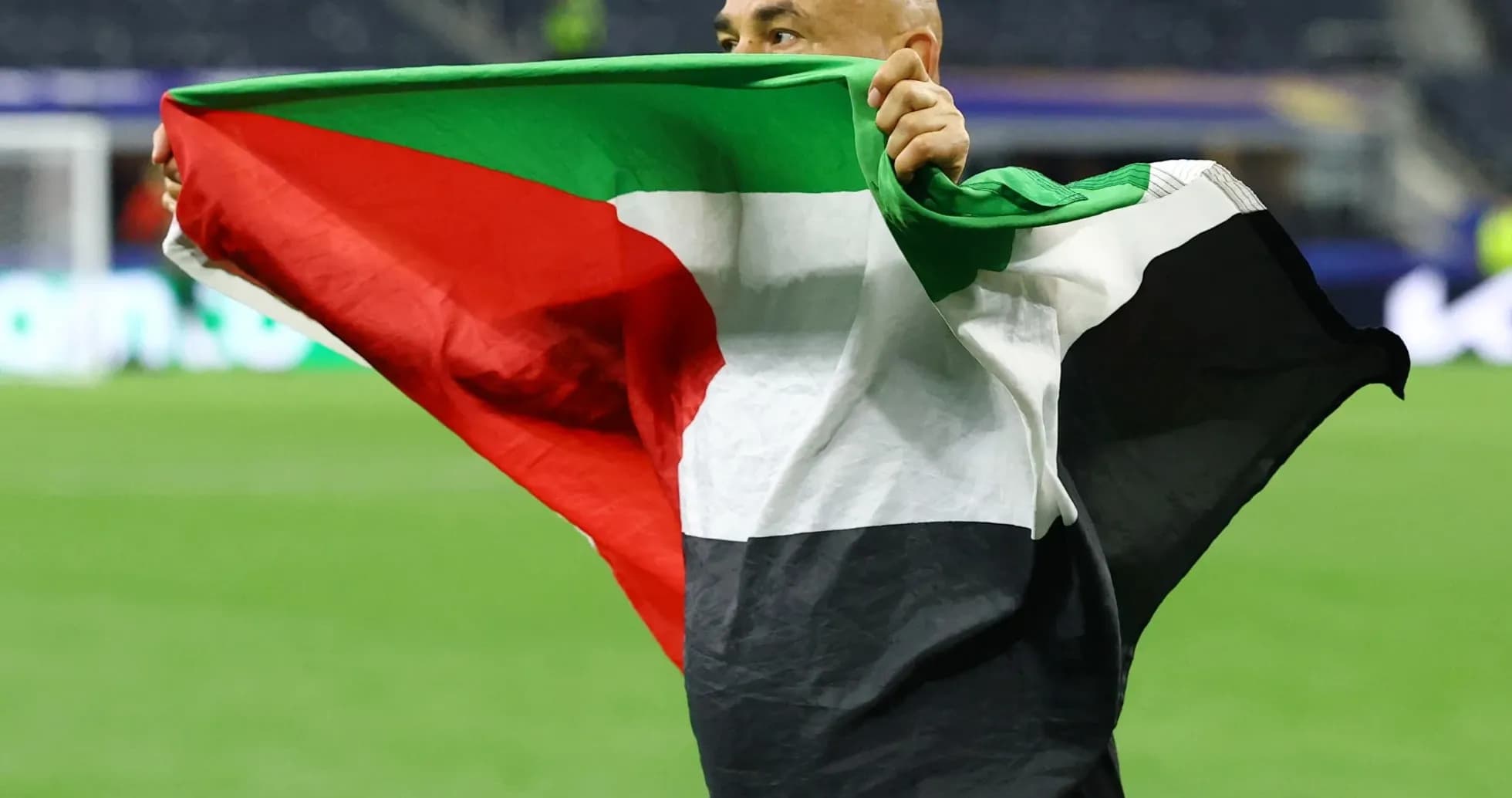
“May God grant them [the Palestinians] victory, may God have mercy on their martyrs,” he told reporters. “I’m saying to them: I’m dedicating this victory to the Egyptian people and Palestinian people, those kind and honourable people.”
It was not just a line for the cameras. Hassan walked onto the pitch carrying both the Egyptian and Palestinian flags, a deliberate, visual statement on a global stage. Around him, his players dropped to the turf in prostration, a collective gesture of gratitude and release at the end of a gruelling night.
This was Egypt’s first-ever World Cup knockout match. Their first-ever World Cup knockout win. And Hassan chose to share it.
A goal, an own goal, and 120 minutes of tension
The drama had started early. Emam Ashour rose in the 13th minute to head Egypt into the lead, a sharp, well-timed finish that settled early nerves and briefly opened the game.
From there, the match tightened. Australia pushed higher, Egypt sat a touch deeper, and the contest became a grind.
Ten minutes into the second half, the pressure told in the harshest way for Mohamed Hany. Trying to deal with danger in his own box, he turned the ball into his own net, levelling the scores and flipping the mood. From control to anxiety in a single touch.
The equaliser dragged the tie into a long, draining stalemate. Chances came and went, legs grew heavy, and both sides stared down the possibility of a shootout that would define their tournament. When extra time ended without a breakthrough, fate moved to the spot.
Egypt did not flinch.
Gaza watches, and celebrates
Hundreds of miles away, in Gaza, the game played out against a very different backdrop.
“For the first time, I’m following the World Cup with this much excitement,” Gaza-based Tamer Nahed wrote on X. He described thousands pouring out of tents and shattered homes to watch Egypt’s match, seizing a rare fragment of joy.
“I was so happy to see Egypt win a little while ago, but the most beautiful sight was here … thousands of people came out of their tents and from among their destroyed homes to watch the match.
“Faces lit up with smiles, cheers filled the air, and it felt as if everyone had decided to give themselves a moment of life despite everything surrounding them,” he wrote.
Social media footage from the besieged strip showed crowds huddled around screens framed by bombed buildings and makeshift shelters. Children with Egyptian flags painted on their faces shouted at every attack, every save, every penalty. When Abdelmaguid’s winner went in, the celebrations in Gaza echoed those in Cairo and Dallas.
Egypt’s win became more than a football result. It became a shared escape.
Tension off the pitch
The day had already been fraught long before kick-off.
Hours before the match, members of the Egypt squad were involved in an altercation with police officers at the team hotel in Dallas, a confrontation that quickly went viral on social media. According to the Egypt national team, a Dallas police officer pushed team director Ibrahim Hassan and player Trezeguet as they tried to take a photo with a fan.
The Dallas Police Department later said the situation had been resolved at the scene. No lingering fallout, no formal escalation — but the images added another layer of tension to an already charged occasion.
By the time the players walked out under the stadium lights, they had already lived through one confrontation. The second, against Australia, would define their night.
Argentina or Cape Verde await
The reward for surviving all of it is a last-16 tie against Argentina or Cape Verde. A giant of the game or one of the tournament’s upstarts. Very different challenges, same stage.
Egypt travel there with something new in their luggage: proof that they can handle the weight of a World Cup knockout game, ride out the swings, and still find clarity from the spot.
On a hot night in Dallas, they carved out a piece of history, carried two flags, and sent their celebrations far beyond the stadium walls.
The question now is simple: having finally broken through, how far can this team go?