.svg&w=384&q=75 "Naijagoal logo")

Ben Arthurs Returns to Irish Premiership After Doping Ban
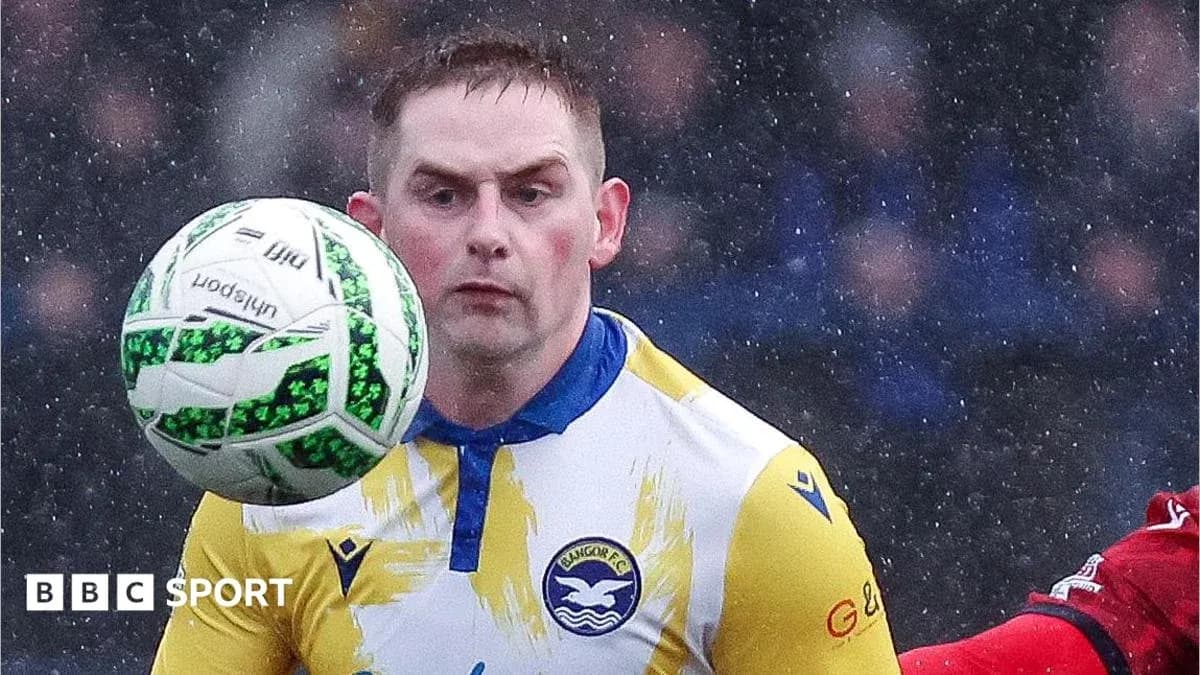
Ben Arthurs will walk back into the Irish Premiership this month with a three–month doping ban behind him and a spotlight firmly fixed on what comes next.
The Bangor striker has completed his suspension after an anti-doping test detected a banned substance in the wake of the club’s defeat by Glentoran on 10 March. The 28-year-old was quietly removed from the picture in April, when the County Down side announced his suspension but said they were “unable to provide further details” while an investigation unfolded.
Those details are now starkly clear.
UK Anti-Doping [UKAD] confirmed on Thursday that analysis of Arthurs’ sample produced an adverse analytical finding for benzoylecgonine, a metabolite of cocaine.
The test followed the 4-0 loss to Glentoran, a routine league fixture that has since taken on a very different significance for Bangor’s second-highest goalscorer of all time.
Under UKAD regulations, a three-month ban is available where an athlete can prove the substance was taken out of competition and not to boost performance. Arthurs admitted he had ingested cocaine “for recreational purposes within a social setting”, and an independent expert concluded the drug use most likely occurred before the day of the game.
That assessment opened the door to the reduced sanction. With a provisional suspension backdated to 7 April, the forward has now served his time.
The punishment is over. The scrutiny is not.
Arthurs has already rejoined pre-season training and is eligible to play when Bangor host Cliftonville at Clandeboye Park on 15 August, the opening day of the 2026-27 Irish Premiership campaign. It will mark the start of his ninth season at the club, a remarkable stint that has seen him climb to second on Bangor’s all-time scoring charts and turn into a cornerstone of Lee Feeney’s side.
Now he returns to a league that has changed around him. Doping control only arrived in the Irish Premiership and Women’s Premiership in 2024, introduced in a joint-funded move by the Irish Football Association [IFA] and the Northern Ireland Football League [NIFL]. Arthurs’ case becomes one of the first high-profile tests of that new regime, a reminder that the system is not just in place but active.
BBC NI approached the IFA and NIFL for comment. Their responses, when they come, will help shape the tone of a debate that is just beginning: how does a league still adjusting to formal anti-doping controls deal with one of its established strikers returning from a cocaine ban to lead the line on opening day?