.svg&w=384&q=75 "Naijagoal logo")

Belgium's Tactical Comeback Against Senegal in World Cup Thriller
Belgium’s 3-2 extra‑time win over Senegal at Lumen Field in this World Cup Round of 32 tie was a tactical arm‑wrestle that swung dramatically after the hour mark. Senegal twice built leads and generated the higher xG (3.54 to Belgium’s 1.8), but Belgium’s structural tweaks, bench impact and late‑game control of territory eventually overrode the underlying chance quality. Over 120 minutes, Belgium’s 52% possession and 699 passes were less about sterile control and more about patiently prising open a compact 4-3-3 block that initially looked in command.
First Half
The first half was defined by Senegal’s clarity without the ball. Bouna Thiaw Pape’s 4-3-3 pressed selectively, allowing Belgium’s centre-backs to have the ball but jumping aggressively on the first vertical pass into midfield. Habib Diarra, Iliman Ndiaye and Ismaïla Sarr curved their pressing runs to block access into Kevin De Bruyne and Hans Vanaken, forcing Belgium wide and into slower circulation. When Belgium’s full-backs advanced, Senegal’s wingers tracked diligently, creating a temporary back five and compressing space around the box.
On the ball, Senegal attacked with direct, vertical patterns. Idrissa Gana Gueye anchored the midfield, allowing Diarra and Pape Gueye to run beyond the first line. The opener at 25' from Habib Diarra encapsulated this: a quick progression through midfield into the half-spaces, exploiting the gap between Belgium’s full-back and centre-back. Belgium’s 4-2-3-1, with Youri Tielemans and Vanaken as the double pivot, struggled to control those interior runs; neither could consistently screen the zone in front of Brandon Mechele and Arthur Theate, leaving Thibaut Courtois (Belgium) exposed to high‑value looks despite Senegal taking only 19 total shots, equal to Belgium.
Rudi Garcia’s initial setup leaned heavily on De Bruyne as a central playmaker behind Charles De Ketelaere, with Jérémy Doku and Leandro Trossard as wide threats. But the spacing was imperfect: De Ketelaere often dropped into the same pockets as De Bruyne, clogging the central lane, while Tielemans was pinned deeper to help the build-up. Belgium’s 11 shots inside the box suggested they reached good zones, but many came late; before the interval, they were largely restricted to shots from outside or from poor angles, with Senegal’s back four defending the edge of the area compactly.
Turning Point
The turning point came around the 46'–63' substitution window. At 46', Romelu Lukaku (IN) came on for Charles De Ketelaere (OUT), giving Belgium a true penalty‑box reference and immediately altering Senegal’s defensive decisions. The centre-backs could no longer step out freely on De Bruyne; any attempt to follow him left Lukaku isolated 1v1. Senegal’s second goal at 51', Ismaïla Sarr finishing from a Moussa Niakhaté assist, briefly suggested Belgium’s tweaks might be too late, but they actually set the stage for the comeback.
At 56', Garcia doubled down on verticality and ball progression: Nicolas Raskin (IN) came on for Kevin De Bruyne (OUT), and Dodi Lukebakio (IN) for Jérémy Doku (OUT). Raskin’s profile as a more mobile, box‑to‑box midfielder allowed Belgium to push an extra body into higher zones, while Lukebakio offered more direct running in behind compared to Doku’s 1v1 dribbling from a standing start. The net effect was to raise the tempo and increase the number of runs beyond Lukaku, stretching Senegal’s back line horizontally and vertically.
Senegal responded with their own midfield reshuffle: Lamine Camara (IN) for Pape Gueye (OUT) at 66', and later Pape Matar Sarr (IN) for Habib Diarra (OUT) at 73'. These moves aimed to refresh the press and maintain intensity in the central corridor. However, Belgium’s increased possession volume — 699 passes at 86% accuracy versus Senegal’s 639 at 84% — gradually wore down the African champions. The Belgian full-backs, especially Maxim De Cuyper before Thomas Meunier (IN) replaced him at 78', pushed higher, pinning Senegal’s wingers and forcing Sadio Mané and Ndiaye deeper to help, which blunted Senegal’s counter-attacking threat.
Goals
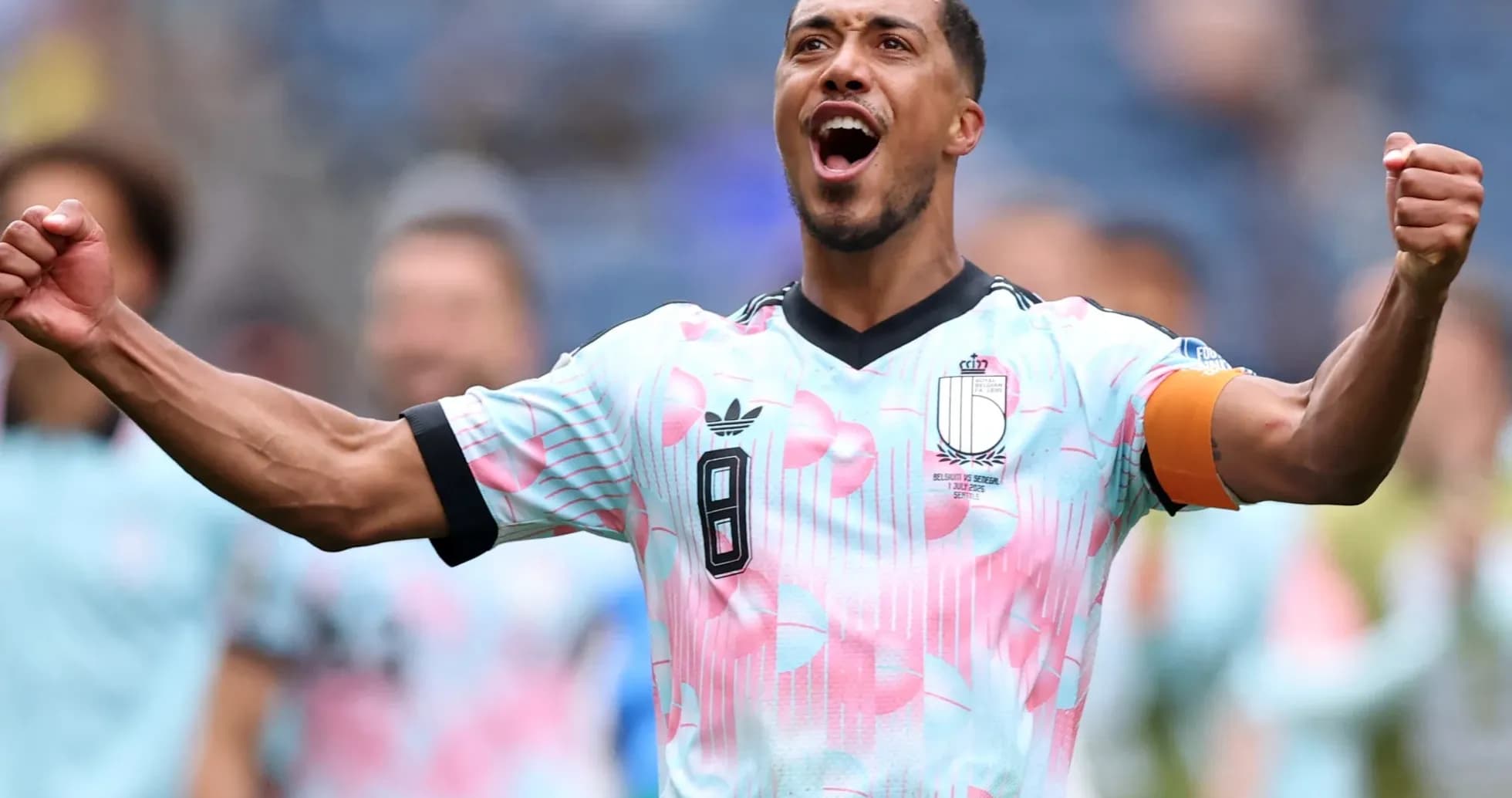
The goals that dragged Belgium back were textbook examples of the new structure. At 86', Lukaku converted from a Meunier assist, a move that flowed from sustained wide pressure and a quality cross into the zone Lukaku now occupied almost exclusively. Three minutes later, at 89', Tielemans arrived from deep to finish from a Trossard assist, illustrating how the rebalanced midfield gave him license to time late box entries instead of sitting permanently in the first build-up line. Those two actions turned a 0-2 deficit into 2-2 and reflected Belgium’s shift from a more positional, patient approach to a direct, penalty‑area‑focused assault.
Extra Time
Extra time accentuated Belgium’s territorial dominance. Amadou Onana (IN) for Trossard (OUT) at 109' added physical presence and ball-winning in midfield, allowing Tielemans to remain a high, second‑wave threat. Senegal, having already introduced Nicolas Jackson, El Hadji Malick Diouf and Bara Sapoko Ndiaye for key starters, lost some of their early-game cohesion. Their xG advantage (3.54 to 1.8) shows they still carved out dangerous situations, but their attacks became more individual and transitional rather than structured, making them harder to sustain across 120 minutes.
Goalkeeper performance aligned with the shot profile. Thibaut Courtois (Belgium) and Mory Diaw (Senegal) each made 3 saves, but both posted negative goals prevented (-0.61 each), indicating that the quality of chances they faced slightly exceeded the goals conceded. In tactical terms, that underlines how both defensive blocks allowed too many clear sights of goal in key moments: Belgium when their double pivot failed to track runners in the first hour, Senegal when they were forced deeper and could not contest crosses and cutbacks with the same intensity late on.
The decisive moment came at 120+5', when Tielemans converted from the spot after a penalty that had been confirmed by VAR at 120'. That sequence encapsulated the match’s tactical arc: Belgium camped in Senegal’s defensive third, recycling possession, forcing defensive errors under fatigue, and ultimately turning structural and territorial control into a high‑probability chance at the death.
From a statistical verdict, the game was an outlier in terms of outcome versus chance quality. Senegal’s higher xG, identical total shots (19-19), and equal shots on target (5-5) suggest they created the more dangerous looks overall, largely in transition and through early vertical attacks. Yet Belgium’s superior possession, passing volume and late‑game field tilt proved decisive. Their 22 fouls to Senegal’s 12 and one yellow card each (Brandon Mechele and Lamine Camara, both for “Foul”) also reflect a contest where Belgium increasingly took tactical fouls to protect against counters, while Senegal’s discipline frayed slightly as they tried to disrupt Belgium’s rhythm.
In sum, this was a match where in‑game tactical adaptation — the introduction of Lukaku, the reshaped midfield around Tielemans, and the aggressive full-back usage — allowed Belgium to overturn an xG deficit and survive a dangerous Senegal side over 120 attritional minutes.