.svg&w=384&q=75 "Naijagoal logo")
Bayern München vs PSG: UEFA Champions League Semi-Final Analysis
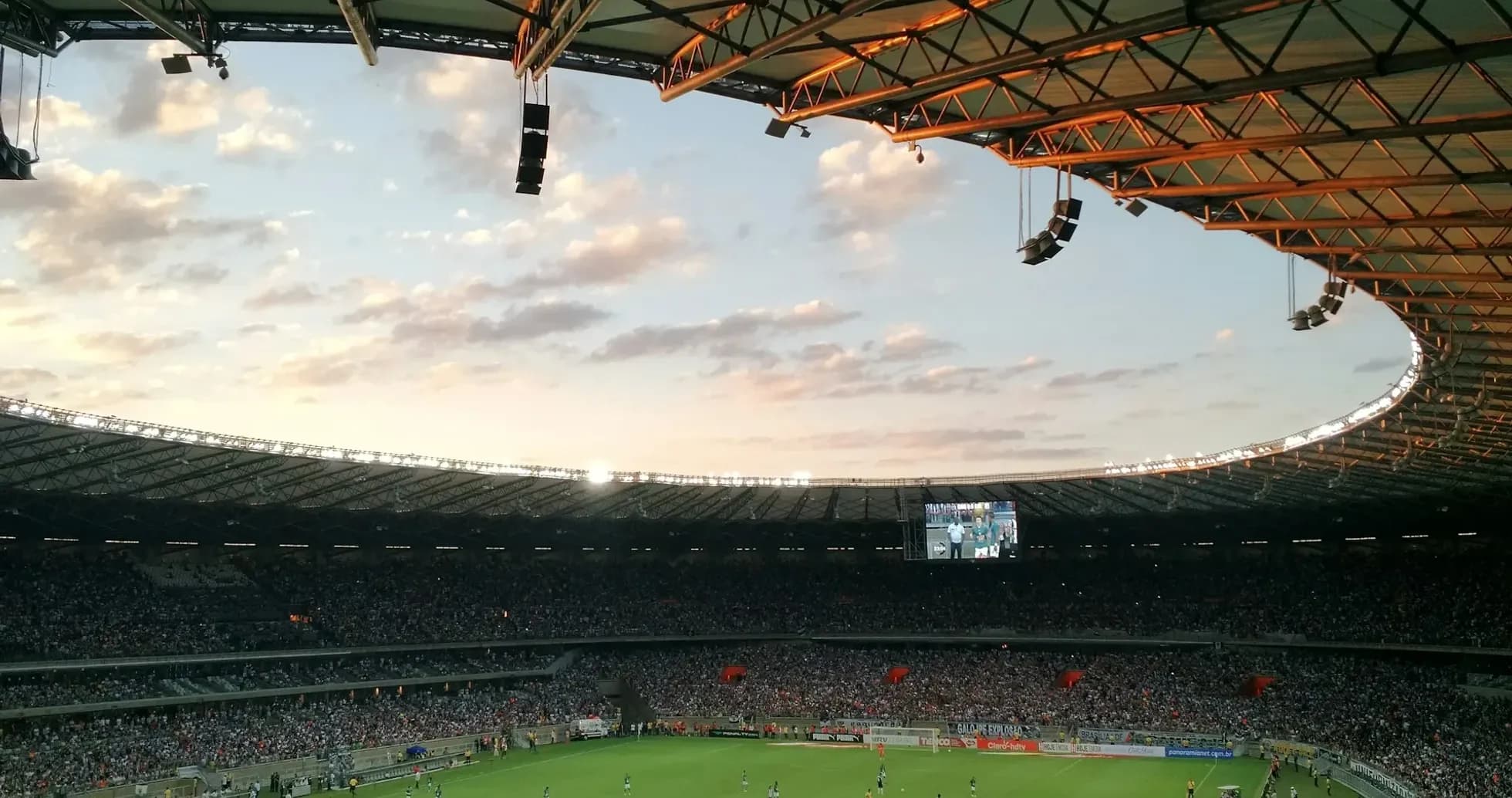
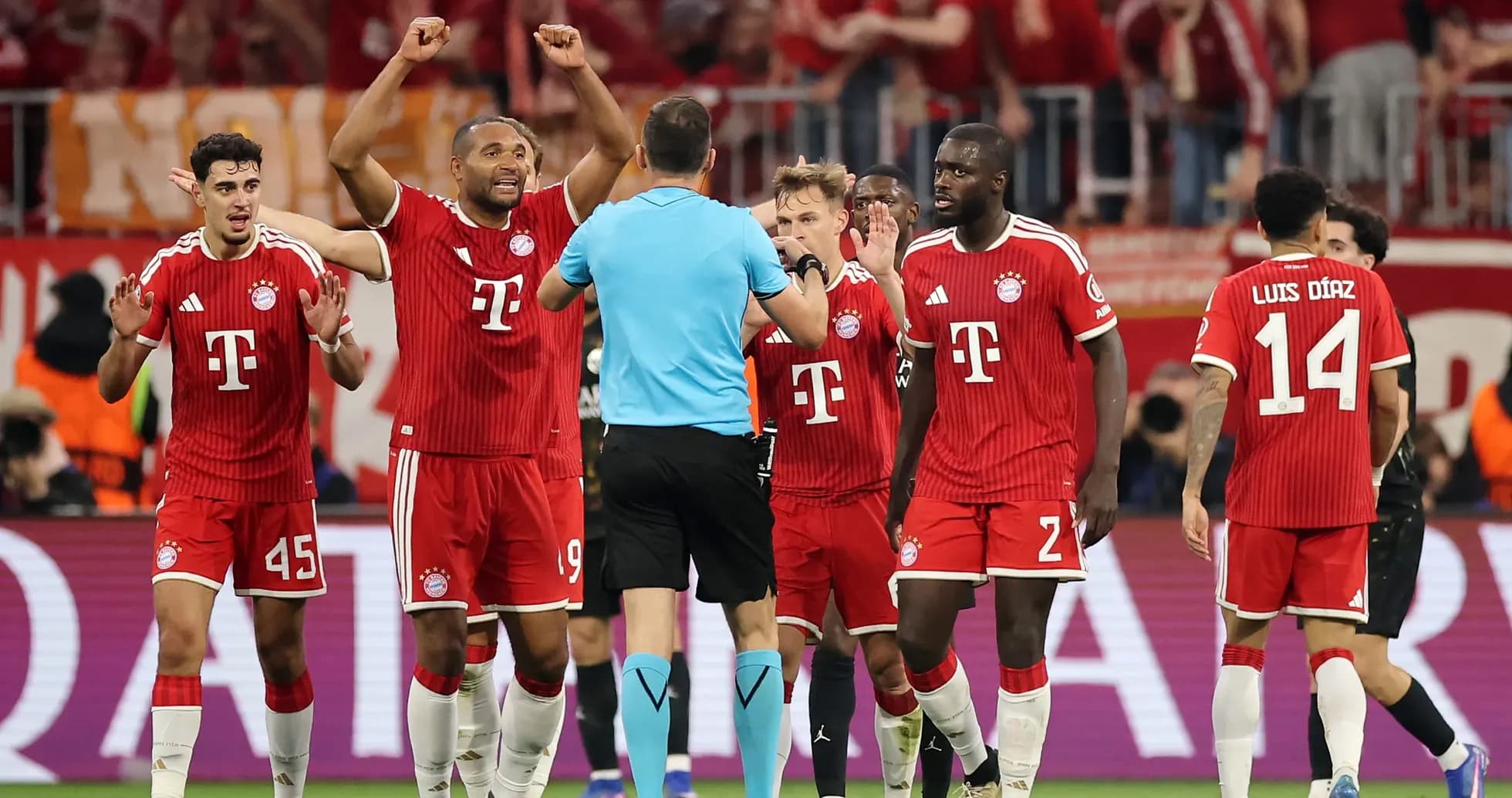
Under the floodlights of the Allianz Arena, a 1–1 draw between Bayern München and Paris Saint Germain has left this UEFA Champions League semi-final perfectly poised. Following this result, it feels less like a conclusion and more like the midpoint of a two-part drama: Bayern’s ruthless home machine against PSG’s increasingly complete, possession-heavy side.
I. The Big Picture – Two Superpowers, One Fine Margin
Bayern arrived in this tie with the statistical profile of a juggernaut. Overall this campaign they had played 14 Champions League fixtures, winning 11 and losing only 2. At home they had been close to flawless: 7 matches, 6 wins, 1 draw, 0 defeats, scoring 21 and conceding 7. That yields an average of 3.0 goals scored at home and 1.0 conceded, a goal difference of +14 in this competition’s standings (22 goals for, 8 against).
PSG, ranked 11th in the Champions League table snapshot with 14 points and a goal difference of +10 (21 goals for, 11 against), travelled to Munich with a more balanced but still potent profile. On their travels in Europe they had played 8, winning 5, drawing 2, losing just 1, scoring 19 and conceding 8. That away average of 2.4 goals scored and 1.0 conceded underlines how far they have evolved from the brittle travellers of previous years.
Tactically, this was a collision of clear identities: Vincent Kompany’s Bayern in their preferred 4‑2‑3‑1, and Enrique Luis’s PSG in a well-drilled 4‑3‑3. The 1–1 scoreline reflects a contest where both systems imposed themselves in phases but neither could quite break the other.
II. Tactical Voids – Absences and the Edges of Control
Both squads came into this semi-final carrying scars. Bayern were without S. Gnabry, M. Cardozo, C. Kiala, W. Mike and B. Ndiaye, stripping some depth from the wide and attacking rotations. The absence of Gnabry in particular removed one of the competition’s leading creators (5 assists in 11 appearances) and forced Kompany to lean heavily on L. Díaz and M. Olise as his primary wing threats.
PSG’s void was structural rather than merely rotational: A. Hakimi, one of the Champions League’s top assist providers with 6, missed out through a thigh injury. His capacity to overlap, underlap and deliver from deep had been a key outlet in their 4‑3‑3, so Enrique turned instead to W. Zaire‑Emery as a nominal right-back, reshaping the right flank from a pure attacking corridor into a more conservative, hybrid lane.
Disciplinary trends also hung over the tie. Bayern’s season card profile shows a pronounced late-game spike: 37.04% of their yellow cards arrive between 76–90 minutes, with red cards split between 46–60 and 61–75. PSG, meanwhile, also lean into late chaos, with 42.86% of their yellows in the 76–90 window and red cards clustered around 31–45 and 91–105. Even without a specific bookings log for this match, the broader pattern was visible: as legs tired and lines stretched, both midfields became more cynical, tactical fouls replacing the early composure.
III. Key Matchups – Hunter vs Shield, Engine Room vs Enforcer
Hunter vs Shield: H. Kane vs PSG’s Defensive Core
Harry Kane entered this semi-final as the competition’s most ruthless finisher: 14 goals and 2 assists in 13 appearances, from 36 shots (25 on target). Bayern’s entire Champions League attack is built around his penalty-box gravity. With Bayern averaging 3.1 goals overall and never failing to score in any of their 14 fixtures, Kane’s presence is both a tactical reference point and a psychological anchor.
Against him stood a PSG back line marshalled by Marquinhos and W. Pacho, with N. Mendes and Zaire‑Emery as full-backs. PSG’s away record in this campaign – 8 goals conceded in 8 away games, an average of 1.0 per match – showed a unit that bends but rarely breaks. In Munich, they focused on compressing the central lane, forcing Kane to receive with his back to goal and relying on Vitinha and J. Neves to screen passes from J. Kimmich and A. Pavlovic into the English striker’s feet.
Kane still found moments – he always does – but PSG limited his clean looks, turning him more into a wall-pass focal point for J. Musiala and Olise than a constant finisher. The “Hunter vs Shield” battle ended in a stalemate, but the underlying duel continues into the return leg: Bayern’s certainty that Kane will get chances, against PSG’s belief that their 1.0 away-goals-against average is no accident.
Engine Room: Kimmich & Pavlovic vs Vitinha & Neves
If the front lines provided the headlines, the semi-final’s real script was written in midfield. Joshua Kimmich, one of the competition’s most complete controllers (1,117 passes at 90% accuracy, 30 key passes, 15 tackles and 9 interceptions), anchored Bayern’s double pivot alongside the more vertical A. Pavlovic. Their task was to build through PSG’s first press and feed a line of Musiala, Olise and Díaz.
Opposite them, Vitinha orchestrated PSG’s possession game with 1,553 passes at 93% accuracy, 23 key passes and 25 tackles. Supported by J. Neves and F. Ruiz, he formed a triangle that repeatedly tried to pull Bayern’s block out of shape. Vitinha’s duel with Kimmich was pure high-end chess: both men dropping deep to escape pressure, both using disguised passes to break lines, both stepping in to counter-press when possession was lost.
In the half-spaces, the matchups were even more volatile. On Bayern’s left, L. Díaz – 7 goals and 3 assists this campaign – attacked Zaire‑Emery’s flank, forcing the young defender into repeated recovery runs. On PSG’s left, K. Kvaratskhelia, with 10 goals and 6 assists, targeted K. Laimer and J. Tah, constantly driving inside to combine with O. Dembele and D. Doué. Each wing was a mirror: elite 1v1 dribblers against full-backs who are also among their sides’ leading yellow-card collectors (Laimer with 4 yellows, Kimmich with 4).
IV. Statistical Prognosis – Margins, xG Logic and the Road Ahead
Even without explicit xG values in the data, the underlying numbers sketch a clear tactical prognosis for the second leg.
Bayern’s offensive profile is that of a team that will create: 43 goals overall in 14 games, with averages of 3.0 at home and 3.1 away, and not a single match where they failed to score. Their penalty record is pristine this season – 4 penalties taken, 4 scored, 0 missed – even if Kane himself has 1 miss in his personal tally. That blend of volume and efficiency suggests that in Paris, Bayern will generate enough chances for xG to lean in their favour again.
PSG, however, are not the reactive side of old. They have 44 goals overall in 16 games, with 3.1 at home and 2.4 on their travels, and a defensive record that mirrors Bayern’s in averages: 1.4 goals conceded overall, 1.0 away. They have also kept 3 clean sheets away from home, compared to Bayern’s 0 away clean sheets. In a finely balanced tie, that defensive resilience on their travels, combined with Vitinha’s control and Kvaratskhelia’s dual role as top scorer and top assist provider, gives them a platform to manage game states.
Following this 1–1 in Munich, the tactical forecast is of a second leg where Bayern chase volume and PSG chase control. Expect Bayern’s attacking peaks – driven by Kane, Musiala, Olise and Díaz – to test PSG’s low-block discipline, while PSG’s own front three look to exploit transition moments against a Bayern side that concedes 1.9 goals on their travels.
In pure statistical terms, the margins are razor-thin. In narrative terms, this semi-final feels exactly as it should: a heavyweight contest in which every duel, every late tackle in that volatile 76–90 minute window, and every decision from Kompany and Enrique could tilt the xG – and the destiny of the tie – by the smallest but most decisive of degrees.