.svg&w=384&q=75 "Naijagoal logo")

Barcelona Signs Kerolin: A Record-Breaking Transfer
Barcelona push transfer boundaries again. This time, for Kerolin.
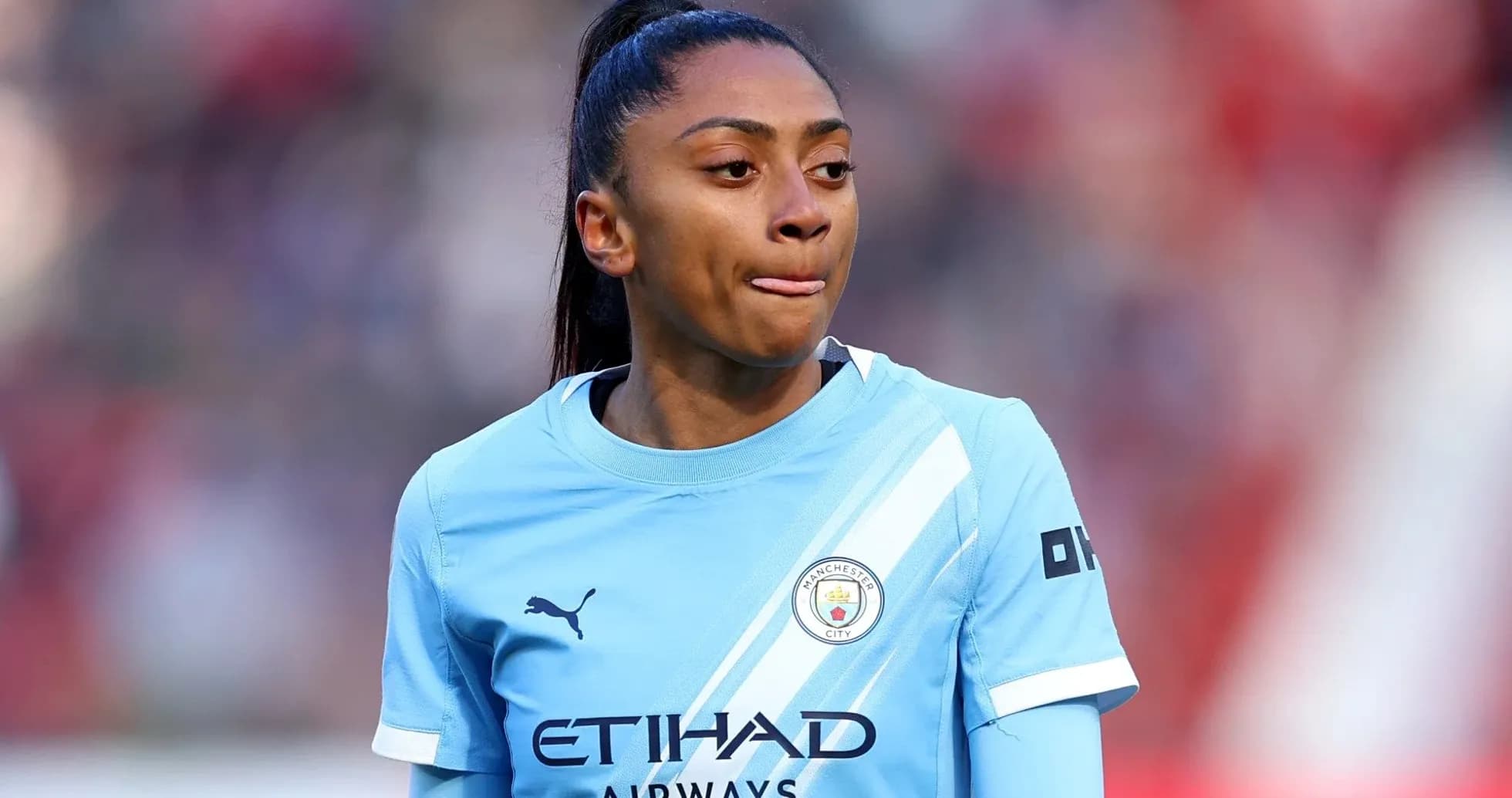
The European champions have reached an agreement to sign the Brazil international from Manchester City in a deal that rips up their own transfer records and rewrites the women’s market once more. As first reported by journalist Victoria Leite, Barcelona had already seen two bids knocked back, the second eclipsing the fee paid for Keira Walsh in 2022 – the £400,000 move that stood as the club’s benchmark on the women’s side.
This time, they have gone far beyond that line.
A deal that shakes the market
Kerolin’s contract at City carried a release clause north of €1 million, a figure that initially looked too steep for Barcelona’s strained finances. Reports in Spain suggested the Catalan club were unable or unwilling to trigger it, and the move seemed destined to stall.
Then the tone changed. As both clubs worked to “find common ground and finalise the transfer”, Leite revealed that a full agreement had been struck. The price: around €1.5m (£1.28m/$1.7m).
That fee catapults Kerolin into the elite bracket of the women’s game, behind only Grace Geyoro of London City Lionesses and potentially Chelsea’s Alyssa Thompson in the list of the most expensive women’s transfers in history. For a player still only 26, it is a statement – from Barcelona, from City, and from a market that refuses to slow down.
Kerolin will sign a four-year deal in Catalunya this week. Barcelona get their game-changer. City cash in on an asset they were under no pressure to sell.
City lose a star – but not their depth
On the pitch, Manchester City are losing one of the most decisive forwards in the WSL. Kerolin delivered 14 direct goal contributions last season, a tally bettered only by Khadija Shaw, Alessia Russo and Vivianne Miedema as City finally reclaimed the Women’s Super League title after a decade.
That output came in her first full season at the club. She had only arrived from North Carolina Courage in January 2025, yet settled instantly into the pace and physicality of the English game. Under contract until 2028, she looked like a pillar of City’s next era, not a player heading for the exit.
So why sell now? The numbers tell their own story. A fee of around €1.5m for a player with two years left on her deal and her prime ahead of her is hard to refuse, especially for a squad already overflowing with attacking talent.
Shaw, Miedema, Mary Fowler, Lauren Hemp, Aoba Fujino and Iman Beney already give Gareth Taylor a forward line most coaches would envy. City have also moved to bring in Beth Mead this summer, adding yet another England international to the mix. If they decide they need a direct replacement for Kerolin, the window is still open and the funds will be there.
City lose a star, not their structure.
Barcelona’s rebuild needs a spark
In Barcelona, the context is very different. The champions of Europe remain stacked with talent, but this summer has stripped away some of the club’s most iconic attacking figures.
Alexia Putellas, two-time Ballon d’Or winner and the face of the project, has joined London City Lionesses. Salma Paralluelo, the hero of the Champions League final with two goals, walked away on a free transfer despite being offered a new deal. Those departures have left a hole that goes beyond pure numbers.
There is still quality in abundance. Claudia Pina, Ewa Pajor, Kika Nazareth and Caroline Graham Hansen – fresh from signing a new contract – form a forward unit most clubs would build an entire project around. Behind them, Sydney Schertenleib and Vicky Lopez continue to grow, hinting at a future that looks as bright as the present.
Yet the pattern of recent windows has been clear: Barcelona have leaned heavily into youth, into potential, into the long game. To stay at the top, they also need players who can decide a Champions League semi-final on their own.
Kerolin fits that brief. She has proved she can carry responsibility at the highest level, create and finish, and adapt to different systems and leagues. For a team that has just lost two of its most decisive attacking weapons, her arrival is not a luxury. It is a necessity.
The price of staying on top
The fee, though, hangs over everything.
Women’s football has seen transfer fees rise sharply in a short space of time, and a figure of €1.5m for a 26-year-old Brazil international with two years left on her contract is the logical next step in that curve. The logic on the pitch is obvious.
Off it, Barcelona’s situation is more complicated. Financial Fair Play restrictions have stalked the club for several seasons. Only last summer, a string of first-team regulars had to leave to keep the books in line, while a wave of academy prospects were sold to raise funds. Every big outlay now carries a cost somewhere else.
That is where the tension sits. Barcelona have major contract decisions looming. Patri Guijarro, widely regarded as one of the best holding midfielders in the world, is tied down only until 2027 and is already drawing interest from Lyon and top English clubs. Pajor, the focal point of the attack, is entering the final year of her deal. Esmee Brugts, one of the brightest young players in Europe, is in the same position.
Barcelona have just watched Putellas, Paralluelo, Mapi Leon and Ona Batlle all leave for free. They cannot afford a repeat next summer. Any move for Kerolin has to be balanced against the need to secure the futures of the spine of the squad.
So the club walks a tightrope: spend big now to protect its status at the summit, while ensuring enough flexibility to lock down the core of the next cycle.
Kerolin’s signing answers one urgent question in attack. The real test will be whether Barcelona can now find the money – and the resolve – to keep the rest of their stars from following Putellas and Paralluelo out of the door.