.svg&w=384&q=75 "Naijagoal logo")

Australia Faces Frustration Against Egypt in First Half
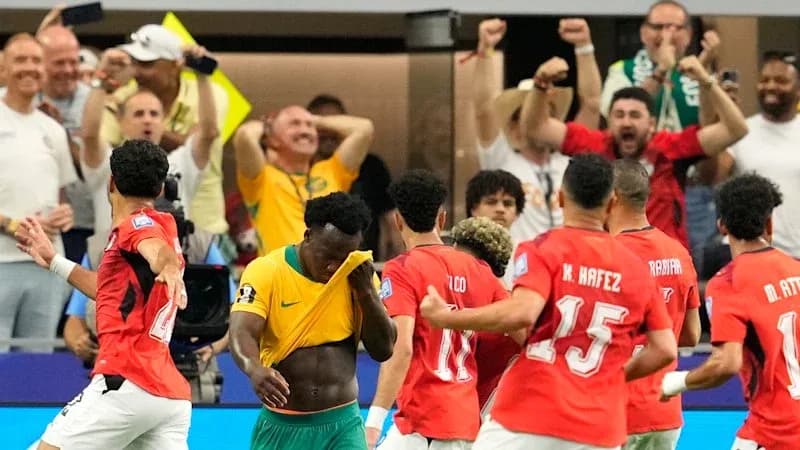
Australia went into the break a goal down to Egypt and with a growing list of grievances – some self‑inflicted, some pointed squarely at the referee.
In a half heavy on effort and light on composure, the Socceroos were punished by a single lapse at a set piece and then left chasing a game Egypt seemed content to slow to walking pace whenever possible.
Cheap goal, costly lesson
The Australian camp’s frustration was clear. They felt a key Egyptian challenge should have brought a booking, with the referee initially playing advantage but never returning to brandish a card. The sense of injustice simmered, yet the more damaging irritation came from their own defending.
Egypt’s opener came from exactly the sort of situation Australia usually relish. A dead ball, a line to hold, big bodies to attack it. Instead, they switched off. The line stepped late, an attacker stayed onside, and a “cheap goal from a set piece” – the kind this side normally “pride” themselves on repelling – left them chasing.
From that moment, Egypt had something to protect. They dropped in, broke up the rhythm, and leaned hard on the dark arts. Time-wasting, rolling around, making the most of contact. It was infuriating, but also a backhanded compliment: they knew Australia carried the greater attacking threat.
Australia carry the punch, Egypt kill the pace
Despite the scoreline, the more dangerous side in open play looked like Australia. When they strung together “five, six, seven passes”, patterns appeared. Pockets opened. Egypt’s compact shape started to fray.
Behich sparked one of the best moves of the half, driving at Hany deep in Egypt’s defensive third. The attack eventually recycled to Circati, whose long throw caused chaos. Irvine and Souttar both challenged, the ball flicked on by Herrington, and Irankunda calmly fed Behich for a low strike that forced the goalkeeper into a sharp save at his right post.
Moments later, Irankunda nearly turned another half-chance into an equaliser. The teenager’s energy and directness gave Egypt persistent problems, his runs and early deliveries stretching a back line that preferred everything slow and in front of them.
Egypt, though, remained dangerous in moments. Salah, managing his hamstring and clearly short of full throttle, still found ways to threaten. He drifted off Souttar’s shoulder, timing his runs with that familiar stealth, and only Herrington’s alert defending stopped one promising break turning into something far more serious. Salah then stood over a free kick after Ashour drew a foul from an errant Bos arm, sliding a clever short ball to Attia, whose long-range drive demanded a solid defensive block at the back post.
A brutal blow for Bos
Australia’s night darkened further with the sight of Jordan Bos on the turf and not getting back up. One of the team’s most dynamic outlets, Bos eventually rose only with the help of two trainers, unable to put weight on his left foot as he was carried off.
It felt like more than just a substitution. It stripped Australia of a key runner, a player who can break lines with one surge and tilt the pitch in their favour. Any tactical reshuffle at half-time would now have to account for that loss as well as the scoreboard.
Referee in the spotlight, chances at both ends
Controversy lingered inside the box too. Australia appealed for handball when a weak header from close range struck Rabia, the ball appearing to make contact with his arm as he challenged. The defender’s arm position and the ricochet sparked immediate protests. The referee, Nestor, simply tapped his own arm and waved play on.
While that unfolded, Volpato was dragged down by Havez at the back post, another incident that might have drawn a whistle on another night. Again, nothing. The sense that decisions were tilting the wrong way only deepened.
Five minutes of added time were announced, a number that felt miserly given the three‑minute hydration break, the goal, the stoppages, and Egypt’s persistent gamesmanship. Australia pushed through the extra minutes, still the side more likely to score, still one pass or one touch away from turning pressure into something tangible.
Egypt, though, had exactly what they wanted: a lead, a stop-start tempo, and a referee seemingly happy to let the clock bleed.
The game remained there for Australia, still “gettable” as the interval arrived. But the margin for error had vanished. One more moment of slack defending, one more missed chance, and that cheap goal from a set piece could end up defining far more than just a frustrating first half.