.svg&w=384&q=75 "Naijagoal logo")

Alisson's Future: Liverpool's Goalkeeping Dilemma
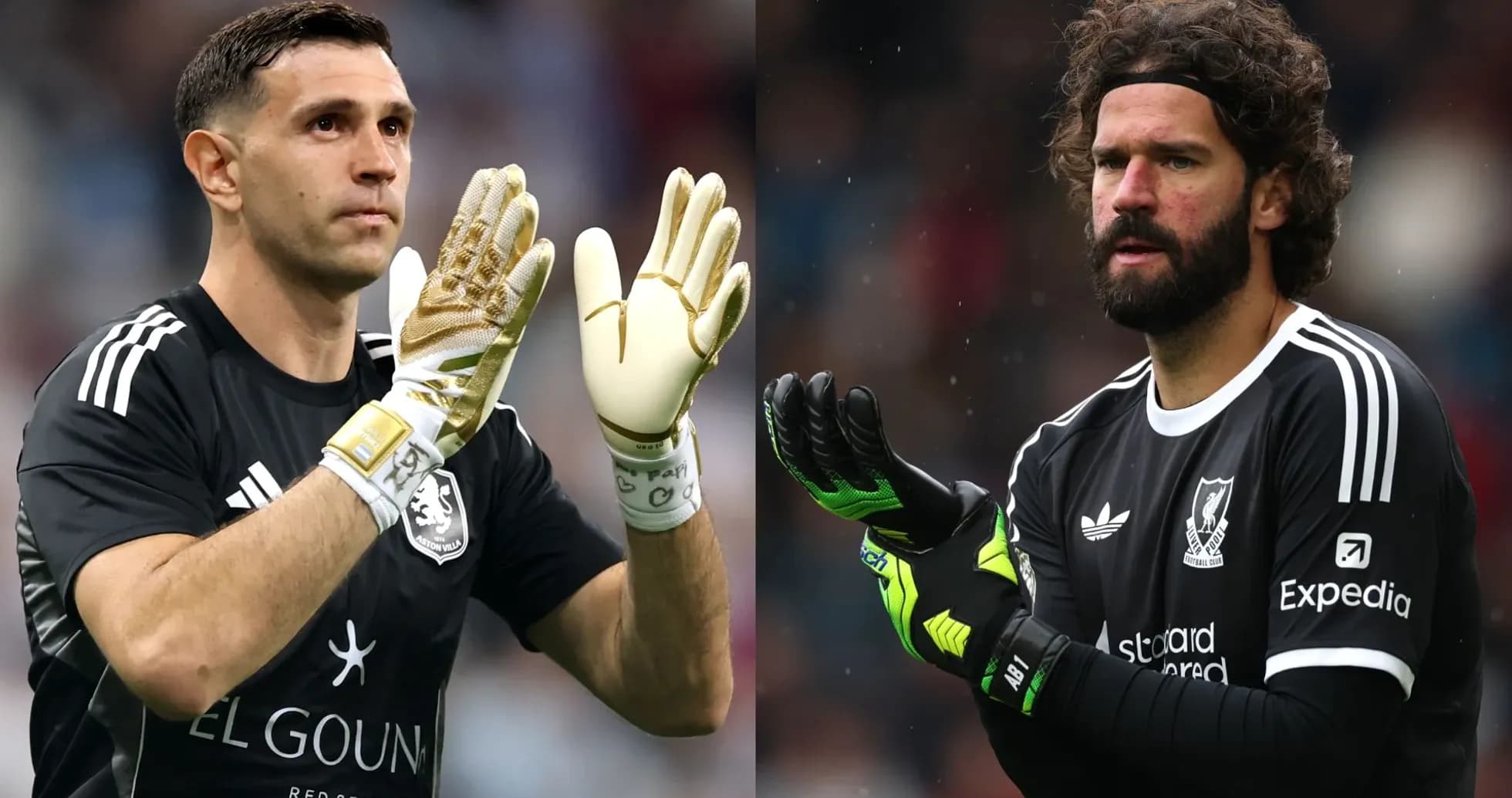
For six years, Liverpool have looked at the No.1 position and felt nothing but calm. That calm has a name: Alisson.
Since arriving from Roma in 2018, the Brazilian has been the anchor behind Jurgen Klopp’s high-wire act, the final piece that turned chaos into control and near-misses into medals. A problem position on Merseyside became a position of strength the moment he walked through the door.
Three hundred and thirty-three games later, his legacy is already written in silver and gold. Two Premier League titles. A Champions League. An FA Cup. A League Cup. A highlight reel of outrageous saves and a standard of goalkeeping Liverpool had been chasing for years.
Now comes the uncomfortable part.
Alisson is 33, with only 12 months left on his contract. That ticking clock has inevitably sparked talk that Liverpool might cash in while they still can, with interest reported from heavyweight clubs in Italy. For a side trying to navigate a post-Klopp world under Arne Slot, the idea of losing their defensive cornerstone at this moment feels like a particularly cruel twist.
Brad Friedel, a former Liverpool goalkeeper and lifelong admirer of the Brazilian, did not sugarcoat the scale of the problem when speaking to GOAL in association with MrQ. Asked whether Alisson’s exit would hit harder than the looming departure of 257-goal icon Mohamed Salah, his answer cut straight to the heart of the Slot era.
“From Arne Slot’s perspective, possibly, because I don’t think Arne Slot and Salah were seeing eye to eye. That was starting to become a little bit like oil and water,” Friedel said. “So maybe from that perspective. But what Salah’s done over the last decade has been truly remarkable, and he will be a huge loss.”
Then came the real warning.
“Alisson would be one of the hardest goalkeepers to replace in global football if he were to go. I think it’d be very difficult for Liverpool to replace him.”
This is not sentimental nostalgia. It is a cold assessment from someone who knows the position, the club, and the pressure. Friedel spoke not just as a pundit but as a supporter who has watched Alisson redefine what Liverpool can be without the ball.
“I would hate to see him go, professionally speaking, and as a Liverpool supporter, I would be particularly devastated if he left because of how good he’s been for the club. He never brought the club into disrepute. Held his hand up if he made a mistake, which was not many mistakes. He is one of the best 1v1 goalkeepers that has ever played the game.”
That last line matters. The modern Liverpool model, whether under Klopp or Slot, demands a goalkeeper who can live on the edge, who can stand alone in vast spaces and still win the duel. Alisson has made that art look routine. It is anything but.
“I think those types of goalkeepers, even as they decline in their age, even with maybe a couple of injuries, are still better than almost everyone in the world,” Friedel added. “I think that replacing him would be tough, really tough.”
Tough is one word. Risky is another. If Liverpool do sell, they are not just swapping one goalkeeper for another. They are gambling with the psychological backbone of the team.
So who on earth comes next?
As the transfer window creaks open, names inevitably surface. One of them is James Trafford, the 23-year-old England international whose path at Manchester City is blocked by Gianluigi Donnarumma. On paper, Trafford fits a familiar Liverpool profile: young, talented, and potentially transformative.
Friedel, though, sounded a note of caution when Trafford’s name was put to him.
“Possibly, but you need someone with a skin of leather, you need someone who’s going to be able to play in all the big matches,” he said. “You need someone who expects to win the Champions League, not just play in it. Expects to win the Champions League, win the Premier League, win the FA Cup, and win the League Cup. It’s a different type of mentality that you need when you’re a goalkeeper at these top clubs.”
That word again: mentality. Not just shot-stopping, not just distribution, but the sheer weight of expectation. At Liverpool, the goalkeeper does not simply protect the goal; he underpins the ambition.
“And it’s not easy to find, you know, and Trafford’s a really good goalkeeper. I like him a lot, but that’s also a lot to load onto him,” Friedel continued.
His alternative suggestion carried a different profile entirely.
“Maybe the likes of an Emi Martínez, someone like that, that can take all the games all the time, any criticism, any plaudits, and they know how to deal with it. There aren’t many out there that you can just pinpoint and say: ‘He’s our guy’. That’s a hard decision.”
That is the crux of Liverpool’s dilemma. Do they trust a younger option to grow into the role under immense scrutiny, or do they go for a battle-hardened figure who has already lived through the storms? Either way, they are operating in a market where truly elite goalkeepers are scarce and fiercely protected.
Alisson has made himself irreplaceable in everything but contract length. His future now forces Liverpool to answer a brutal question: do they cling to one of the best in the world for as long as possible and risk losing him for nothing, or do they cash in and attempt the most delicate rebuild of all?
For a club that rebuilt its entire identity on the back of stability between the posts, the next move in this saga will say a lot about how bold – or how desperate – the new era is prepared to be.