.svg&w=384&q=75 "Naijagoal logo")

World Cup Week: Nerves, Nostalgia and Messi's Last Chance
The football has stopped for 63 hours, but the sport hasn’t drawn breath. It never does.
Across continents, in pubs, living rooms and airport lounges, the World Cup’s final week is being felt in a hundred different ways: in a father’s reckless flight booking, in a publican’s last roll of the dice, in arguments about Bruno Fernandes and Bernardo Silva, in the shadow of Lionel Messi and the ghost of Diego Maradona.
A Semi-Final Gamble to See Messi – and England
In New Jersey, the rain lashed down at MetLife Stadium when Al Daw took his mum to see England against Panama for her 70th. It felt, he said, like watching football in a prison. He still loved it. He still wanted more.
So when England reached another semi-final, he snapped. On Thursday, before the result at the weekend, he booked it all: match tickets in Atlanta for himself and his eight-year-old son, flights from Manchester via Paris, hotel by the ground. Crackers pricing. Nerves shredded. Five kids at home and another due in late July, and he still pressed “confirm”.
He watched England’s quarter-final through his fingers. Lost his voice. Now his son Digby is pinching himself at the thought of seeing England and possibly Messi’s last match for his country. That’s the pull of this tournament: irrational, expensive, irresistible. Lifetime memories, bought on a hunch.
The Pub That Might Not Survive the Party
Not everyone is riding the same high.
In Stourbridge, the Shovel Inn sits in the town where Jude Bellingham was born. It should be printing money during a World Cup semi-final. It isn’t.
Steve Hopkins has been in the pub trade for six World Cups. Most of them, he says, were fantastic for business. This one? Poor turnout. People stay at home or roll in at the last minute. Where once the bar would be packed from mid-afternoon for an 8pm kick-off, now the rush comes late, if at all.
A good night’s takings for the Shovel Inn would be around £3,000. Hopkins reckons that if he clears £1,000 on semi-final night, he’ll be doing well. Ever since Covid, he says, people’s habits have changed. He’s 64 now, has run pubs since he was 18, and he’s had enough. He’s leaving the business after the tournament.
The World Cup is still a carnival, but for some, it’s the last party before the lights go out.
Portugal’s Puzzle: How to Waste a Golden Midfield
On the pitch, other frustrations simmer.
Whatever is wrong with your team, the answer is almost never:
- Leave out Bernardo Silva
- Substitute Bruno Fernandes
Yet here we are.
Bruno is the kind of player who needs time. He keeps trying things, keeps forcing the issue. Cut his minutes by 20 and you slash the odds of him producing that one pass, that one shot, that one deflection off a defender’s heel that changes everything. Ask him to take the ball off the back four and you blunt him even more.
And still, Roberto Martínez has managed to make a midfield built around double Champions League winners, with Fernandes in front, look dour and lifeless. That takes some doing. With this Portugal squad, it’s almost remarkable to be this bad.
You look at that group and wonder what a different coach might have done.
Mourinho, Madrid and the Road Not Taken
José Mourinho always felt like he was heading for international management at some point. Portugal, with this generation, looked a natural fit. It never happened.
Instead, he is back at Real Madrid, the latest club to believe they can rewind the clock and restore the old magic. It will be box office, of course. It always is with him. But expectations are lower now, the mystique thinner.
You can’t help but imagine him with this Portugal side instead of Martínez. It is hard to believe he could have done worse.
Bellingham, Tuchel and a Storm That Won’t Last
Not every flashpoint is a crisis.
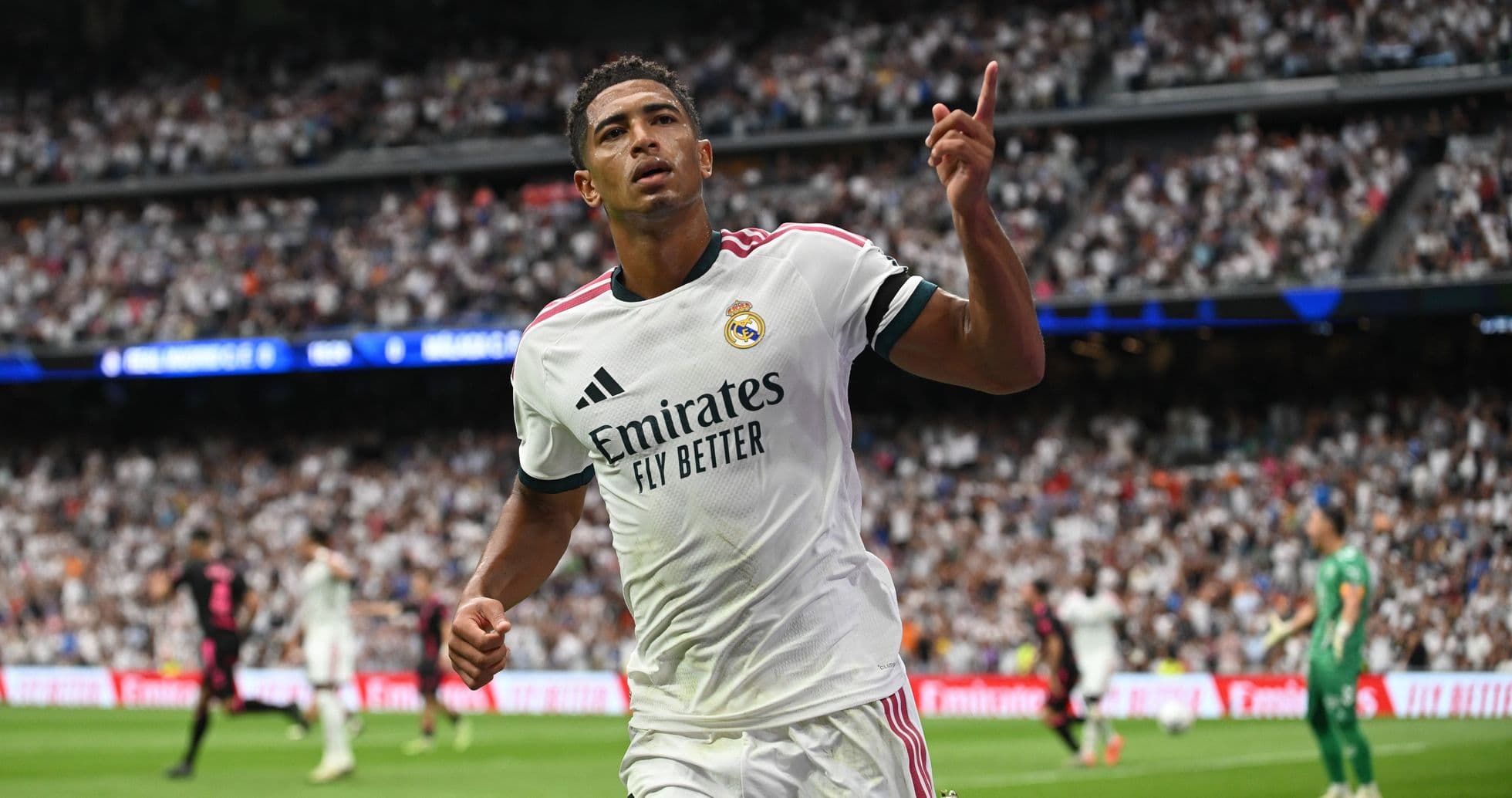
Thomas Tuchel and Jude Bellingham clashed in the heat of the moment, words were said, emotions ran high. Both are serious professionals. Both are obsessed with winning. Both need each other.
This is the kind of row that usually burns out as quickly as it flares. Relief, adrenaline, frustration – then a handshake, a meeting, a reset. If there was a rift at all, it is unlikely to last.
Stones, Messi and the Coming Test
England’s semi-final brings its own tactical anxiety.
John Stones is a fine footballer, elegant on the ball, composed in possession. As a pure defender, doubts linger. His lack of pace against Julián Álvarez and Lautaro Martínez could be a problem. Tracking Messi is another matter entirely. That demands more than positioning; it demands a kind of defensive clairvoyance. We’ll see if he has it.
On the flanks, Spence offers something different off the bench: raw pace, direct running, a willingness to dart in behind. Against Argentina, Reece James looks the likely starter at right-back, Nico O’Reilly on the left. Yet on pure form and quality, Lewis Hall and Luke Shaw would be ahead of O’Reilly – if they weren’t at home.
England have the legs to outrun most midfields. Whether their defence can survive 90 minutes, or 120, against the very best is another question entirely.
Messi, Diego and the Standard No One Else Has Matched
The semi-final also drags us back to Mexico 86, to the day Diego Maradona bent the sport to his will.
For some, Lionel Messi is the greatest of all time. His consistency and longevity are unmatched. Season after season, he has operated at a level others can only glimpse.
Yet nothing in football has ever quite touched what Maradona did in that month in Mexico, then again in the season that followed when he carried Napoli to their first scudetto. That second goal against England – the one that made Barry Davies say, “And you’ve got to say that’s magnificent” – gave one seven-year-old fan the wrong idea about what was possible. One man slaloming through an entire defence seemed normal. It wasn’t. It was Diego.
No one has done more to challenge the cliché that football is a team game.
Who Can Stop France?
France loom over this tournament like a superpower in full stride. So who can bring them down?
Spain probably have the best shot. With Rodri edging back towards his pre-injury level, they can control games in a way few others can. They still need more from Lamine Yamal, who doesn’t look fully fit, but their rhythm and intelligence in midfield give them a real chance.
England have the legs to run France into the ground in that area of the pitch, to turn the game into a physical and tactical grind. But their back line feels brittle. Over 90 minutes, or more, that fragility might tell.
Argentina? The suspicion is they simply don’t have enough in midfield to match France stride for stride. When the game accelerates, they may not be able to keep up.
A World Cup That Keeps Growing
Away from the tactics board, the shape of the tournament itself is under scrutiny.
Fifa’s push to expand to 64 teams looks, at first glance, like a cash grab. It is a cash grab. But that doesn’t automatically make it bad for football.
On paper, the gap between the 48th and 64th-ranked teams in the world is not huge. The extra nations would not necessarily drag the standard down. An expanded field also allows a return to a cleaner format: only the top two from each group go through, no more third-place lifelines, no more situations where teams stumble into the knockouts having beaten only the weakest side in the group.
Right now, we play 72 group matches just to eliminate 16 teams. A bigger tournament, oddly, might feel simpler.
The problems lie elsewhere. Qualification would become even more drawn out. Hosting would become a logistical monster: more teams, more stadiums, more training bases, more hotels, more media. Only a handful of countries might be able to cope.
There is a tension here. Expanded tournaments, in both the World Cup and the Euros, have undeniably enriched the experience. New countries, new stories, new sounds in the stands. At the same time, the game is being stretched to its limits by those who run it. Gianni Infantino’s fingerprints are everywhere, and instinctively, that makes many uneasy.
Between Matches, the Game Fills the Silence
So here we are: the first day of the final week, no football for hours yet the sport is everywhere.
In North Maluku, Indonesia, they are already living it. In London, someone is still arguing about whether Stones can handle Messi. In Stourbridge, a landlord counts the till and wonders if this semi-final will be his last big night. In Manchester, a dad and his eight-year-old are packing for Atlanta, chasing a memory they’ll talk about for the rest of their lives.
The ball is still for now. The noise isn’t.
And when the whistle finally goes again, whose story will this World Cup really belong to?