.svg&w=384&q=75 "Naijagoal logo")

Ma Ning’s World Cup Journey and Legacy
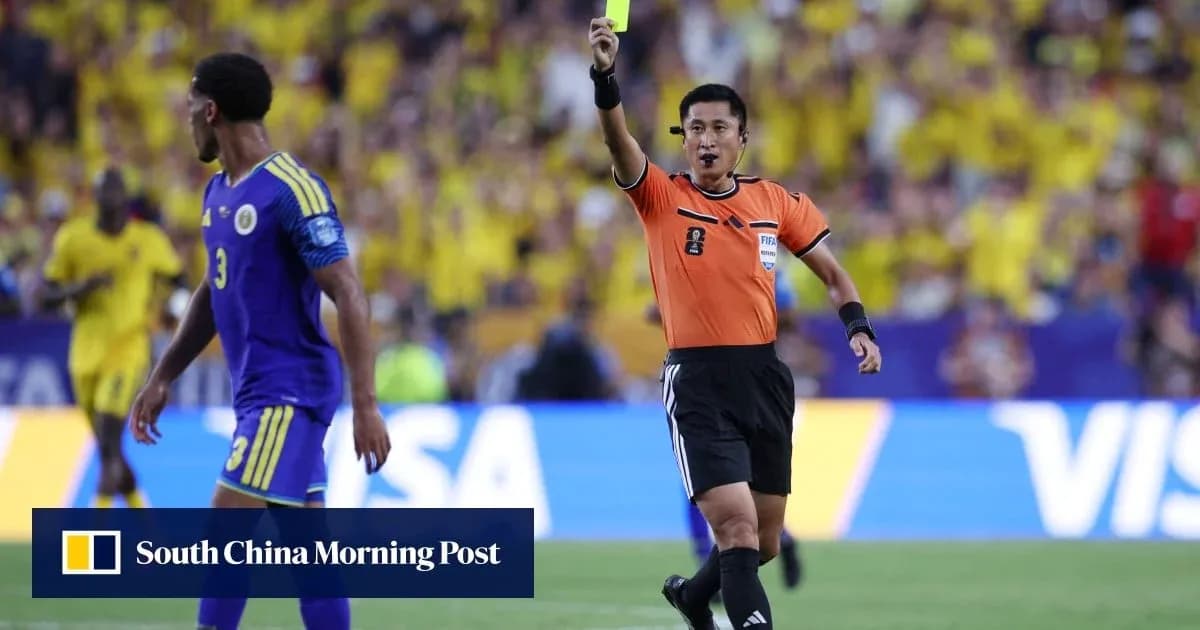
Chinese referee Ma Ning has blown his final whistle at this World Cup, slipping out of the tournament just before its decisive stages but leaving with his head high and his story laid bare.
Fifa’s final list of officials for the semi-finals and beyond did not include Ma or assistant referee Zhou Fei, confirming their exit on Sunday. Video assistant referee Fu Ming had already departed last week. With that, China’s on-field presence at this World Cup is over. No players, no coaches, and now no referees left in the global spotlight.
For Ma, 47, the end came not with controversy or drama, but with a farewell video posted on Chinese social media on Monday — part reflection, part declaration of intent.
“From the campus to the World Cup stage, from youthful ignorance to composure and calm, I have spent 20 years proving the meaning of persistence,” he said, summing up a career built far from the glamour of goals and celebrations. The line that followed carried the weight of someone who has fought against the clock and the odds: “At 47, many people say it is too late, but I always believe that as long as there is faith, we can turn the impossible into the possible.”
This was not a referee hiding behind neutrality. It was a man speaking directly to a football nation still searching for its place at the top table.
Ma made sure to pull his family into the spotlight, crediting them for the resilience that carried him through two decades on the touchline and in the eye of the storm. Their support, he said, kept him “resolute and fearless” as he chased a dream that rarely earns applause and almost always invites scrutiny.
Then he turned to the fans — the same public that once mocked him, then gradually warmed to his work.
He recalled being teased as the “card master”, a nod to his reputation for brandishing yellow and red with conviction. That nickname could have stuck as a stain. Instead, Ma framed it as part of a journey in which supporters moved from sarcasm to respect, from suspicion to understanding.
“From teasing me as the ‘card master’ to recognising my officiating standard, it is your rationality and tolerance that have shown me the most lovely side of Chinese football,” he said. “You are not only watching the games, but also truly understanding the value of refereeing.”
It was a rare, unfiltered glimpse into the emotional landscape of a referee — a role usually reduced to numbers, decisions, and the volume of the boos that follow.
China’s World Cup narrative often revolves around absence: another tournament without the men’s national team, another cycle of introspection. This time, the country’s story ran through the officials’ tunnel. Ma, Zhou Fei, and Fu Ming carried the flag in a different way, tasked not with scoring or saving, but with ensuring the game’s laws held firm on football’s biggest stage.
Their early departure from the latter rounds will sting in some quarters. The semi-finals and final are reserved for those Fifa deem the elite of the elite. Ma and his compatriots did not make that final cut.
Yet his farewell message refused to sound like an ending. It read more like a challenge — to himself, to Chinese football, and to the people who watch it, argue about it, and live inside its frustrations.
The World Cup moves on without him now, into its sharpest, most unforgiving nights. Ma Ning has gone home. The question is what Chinese football does with the mirror he just held up.