.svg&w=384&q=75 "Naijagoal logo")

World Cup Thursday: Mexico vs South Korea and Key Matchups
The World Cup rolls into a pivotal Thursday with four group-stage fixtures and a tournament already humming with subplots: a Golden Boot race fronted by Lionel Messi, history-makers from Africa and the Caribbean, and a brewing row over hydration breaks that refuses to quiet down.
The football, though, takes centre stage again.
Mexico eye hat-trick of wins over South Korea
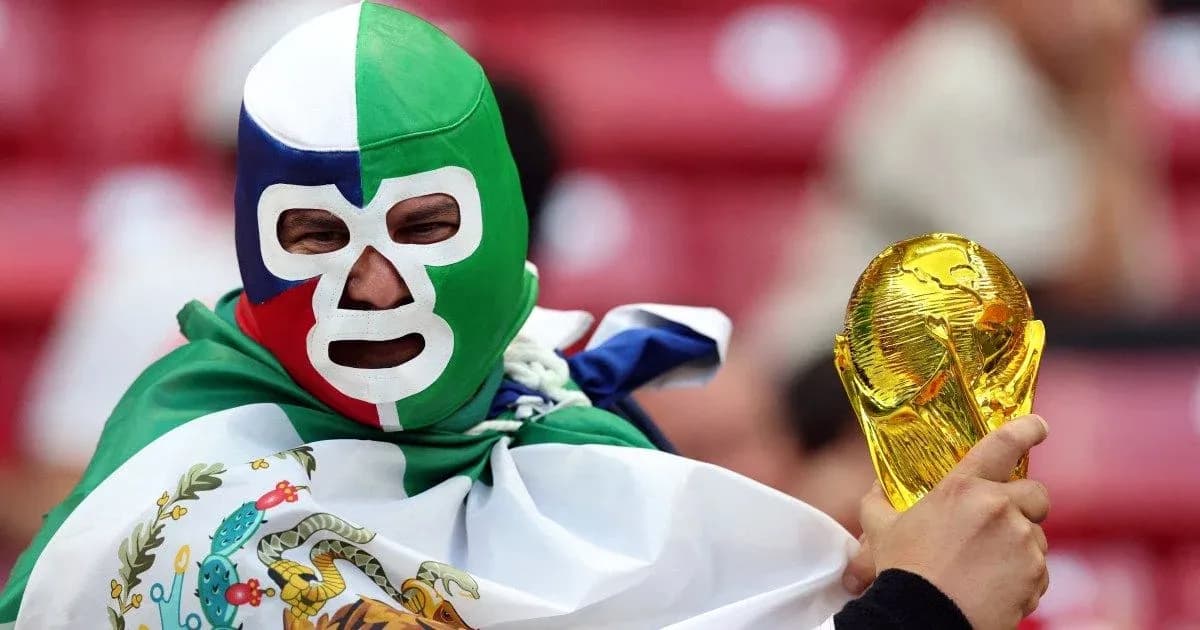
All eyes late on Thursday turn to Guadalajara, where Mexico face South Korea in a clash that already feels like a barometer for Group A ambitions.
Mexico know this opponent well and, crucially, know how to beat them. They have won both previous World Cup meetings, including that controlled 2-1 victory at Russia 2018. The numbers back them to extend that run.
Opta’s supercomputer ran the game 25,000 times. El Tri came out on top in 49.1 percent of simulations. South Korea managed 24.3 percent, while 26.6 percent ended level. Both sides opened with wins, both have one foot nudging towards the knockouts, but the weight of history and data leans green.
Kick-off at Guadalajara Stadium is 7pm local time (01:00 GMT Friday). By then, the day’s narrative could already have swung on three earlier fixtures.
Czechia warned by South Africa’s record against Europe
The action begins in Atlanta, where Czechia face a South Africa side that tends to grow when European flags line up opposite them.
They have met only once before, but South Africa’s broader World Cup record against European teams demands respect: one defeat in their last four such games and that memorable 2-1 win over France on home soil in 2010 still lingers in the collective memory.
Czechia, on the other hand, carry a scar from their only previous World Cup meeting with African opposition – a 2-0 defeat to Ghana. Even so, the models tilt their way. Opta’s projections hand the Czechs a 54.9 percent chance of victory, with South Africa at 21.8 percent.
Atlanta Stadium, noon local (16:00 GMT). A European favourite, but no guarantee.
Switzerland heavy favourites, Bosnia chasing another upset
On the other side of the continent, Switzerland meet Bosnia and Herzegovina at Los Angeles Stadium in a fixture that looks lopsided on paper but carries a quiet edge.
They have never met at a World Cup. Their only previous encounter came in a 2016 friendly in Zurich, when Bosnia walked away 2-0 winners courtesy of Edin Dzeko and Miralem Pjanic. That night, Bosnia pressed with purpose, took their chances, and silenced the home crowd.
This time, the numbers point firmly the other way. Switzerland won 61.6 percent of Opta’s simulations, with Bosnia on 17 percent and a draw in 21.4 percent. The Swiss arrive with pedigree, depth and expectation. Bosnia arrive with that memory from Zurich and the freedom of underdogs.
Kick-off is noon in Los Angeles (19:00 GMT). One side looks built for a deep run. The other knows what an upset feels like.
Canada backed to extend hosts’ dominance over Asia
Later in Vancouver, Canada face Qatar with history stacked on the hosts’ side.
Three times before, a World Cup host has faced an Asian federation team. Three times, the host has won. Mexico beat Iraq in 1986. France swept aside Saudi Arabia in 1998. Russia dismantled Saudi Arabia in 2018. The pattern is clear.
Opta’s projections say it continues. Canada win 72.9 percent of simulations. A draw lands in 16.5 percent. Qatar’s path to an upset sits at just 10.6 percent.
Vancouver Stadium, 3pm local (22:00 GMT). A country still building its football identity has a chance to plant another flag on home soil.
Messi sets the Golden Boot pace
Away from the fixture list, the tournament’s first round has already lit the fuse on the Golden Boot race.
Lionel Messi has taken early control, his hat-trick in Argentina’s opening win over Algeria pushing him to three goals and the top of the scoring charts. He is not alone in the chase, though. Seven players sit one strike behind:
- Kylian Mbappe (France)
- Erling Haaland (Norway)
- Folarin Balogun (USA)
- Kai Havertz (Germany)
- Yasin Ayari (Sweden)
- Elijah Just (New Zealand)
- Harry Kane (England)
It is a list that reads like a roll call of modern attacking styles: blistering pace, brute strength, clever movement, precision finishing. One matchday in, the race already feels ruthless.
DR Congo and Cape Verde rewrite their histories
The World Cup has always been about more than trophies. Some nights are about a single goal, a single point, a single roar.
Yoane Wissa delivered one of those nights for the Democratic Republic of the Congo. In Houston, against a Portugal side ranked fifth in the world by FIFA, the Newcastle United forward rose after half-time and headed in the DRC’s first-ever World Cup goal. It cancelled out Joao Neves’s early strike and secured a 1-1 draw that felt like a win.
For the Leopards, back on this stage for the first time in 52 years, it was a moment that echoed far beyond the stadium. Celebrations erupted in the stands and spilled across Congolese communities worldwide. One point, decades in the making.
Cape Verde found their own slice of history. On debut, they faced Spain – one of the tournament favourites – and refused to blink. A 0-0 draw, a clean sheet, and a first World Cup point against an established giant. In a single evening, the Blue Sharks transformed from unknowns to one of the stories of the opening round.
Iran’s 2-2 draw with New Zealand, after many had tipped Iran to dominate Group G’s opener, added to the sense that the established order will not have it all their own way this year.
Diaz drives Colombia’s return
In Mexico City, Colombia took their first step back towards the knockout stages they missed in Qatar.
A 3-1 win over debutants Uzbekistan was built on the brilliance of Luis Diaz. The winger first picked out Daniel Munoz for the opener, then struck Colombia’s second after the interval with the kind of conviction that has become his trademark. Uzbekistan briefly punched back through Abbosbek Fayzullaev, but Colombia steadied, reset, and closed the game out.
The victory gives them an early cushion in Group K and a platform to chase the latter rounds again.
Ronaldo’s sixth World Cup starts with a stumble
For Cristiano Ronaldo, this tournament was supposed to be about legacy. A record-equalling sixth World Cup, a final act on the biggest stage.
Instead, his opening night ended in frustration. At 41, he joined Messi as one of only two players to feature in six World Cups, but the goal he craved never came. Chances arrived in the second half. None were taken. On a night when Messi, Mbappe, Haaland and Kane all found the net in their first outings, Ronaldo walked away goalless and with Portugal held to a 1-1 draw by DR Congo.
Group K suddenly looks less straightforward. Portugal now need a response.
Hydration breaks under the microscope
One of the most contentious talking points of this World Cup has nothing to do with tactics or selection. It is the water breaks.
FIFA’s new hydration pauses, brought in to protect players from the summer heat across the US, Canada and Mexico, have split opinion. Critics argue the breaks fracture rhythm, hand coaches extra tactical windows and drag football closer to sports built around timeouts.
The flashpoint came in Houston. Curacao scored against Germany, riding a wave of adrenaline. A hydration break followed. By half-time, Germany had scored twice and would go on to win 7-1. Former England striker Alan Shearer said the stoppage “killed their momentum”. Roy Keane likened the breaks to timeouts, insisting they cut into the natural flow that defines the sport.
FIFA stands by the policy as a matter of player welfare. The debate is unlikely to cool as the heat and stakes rise.
A record African presence – and the challenges that follow
Beyond the pitch, this World Cup is quietly reshaping Africa’s relationship with the tournament.
A record six sub-Saharan African nations have qualified. South Africa’s Bafana Bafana were the first to appear, losing 2-0 to Mexico in the opener, but the continent’s traditional heavyweights are also back. Ghana’s Black Stars, quarterfinalists in 2010 and heirs to the runs of Cameroon in 1990 and Senegal in 2002, return with ambition. Senegal themselves are here again. Ivory Coast have re-emerged for their first World Cup since 2014, armed with two Africa Cup of Nations titles collected in the interim.
DR Congo and Cape Verde, though, provide two of the most intriguing threads. The Leopards are back for the first time since 1974, when the country competed as Zaire. Many of their players were born in Europe, a pattern mirrored in the Cape Verde squad. Both teams lean on a far-flung diaspora and have already justified their place: DRC with that point against Portugal, Cape Verde with their draw against Spain.
The journey has not been smooth. Travel and visa complications have dogged some teams and supporters. At one stage, many fans with African passports were told to post bonds of $15,000 to enter the United States. The policy was later dropped, but only after, critics say, it had already derailed travel plans.
One symbol from Africa’s last home World Cup has also disappeared. The vuvuzela, the plastic horn whose droning buzz defined South Africa 2010, is banned this time. The soundscape has changed, but the presence has not. With more than three million people of African birth living across the US and Canada, the continent’s six representatives can still expect a wall of noise behind them.
Teams that mirror changing nations
On the pitch, the diversity of many squads is impossible to miss.
England, France, Spain and Sweden all field teams that bring together players from different ethnic, cultural and religious backgrounds. Christian and Muslim teammates share dressing rooms and celebrations. Spain’s teenage sensation Lamine Yamal and Sweden’s Yasin Ayari are part of a growing wave of Muslim footballers thriving at the game’s summit.
For some observers, these teams offer a counterpoint to heated debates over immigration, identity and integration across parts of Europe. Eboo Patel, president of Interfaith America, captured the image: players score, offer their own prayers, then embrace as one unit. Different beliefs, one badge, one purpose.
It is a picture that feels particularly apt at a World Cup where African diasporas, European multiculturalism and South American passion collide in stadiums thousands of miles from home.
By the time Mexico and South Korea walk out in Guadalajara, the day’s earlier matches will have redrawn tables and tightened nerves. The Golden Boot race will have shifted again. The debate over water breaks will rumble on. Africa’s record contingent will keep chasing their moment.
The question now is simple: which team, which player, grabs the next slice of history before the group stage is done?