.svg&w=384&q=75 "Naijagoal logo")

World Cup Round of 16: Argentina vs Egypt and More
The World Cup has hit the point of no return. Every game now feels like a referendum on legacies, on generations, on what comes next for the sport’s biggest names and its hungriest outsiders.
On Tuesday, that spotlight swings to Atlanta and Vancouver.
Messi, Egypt and a date with history
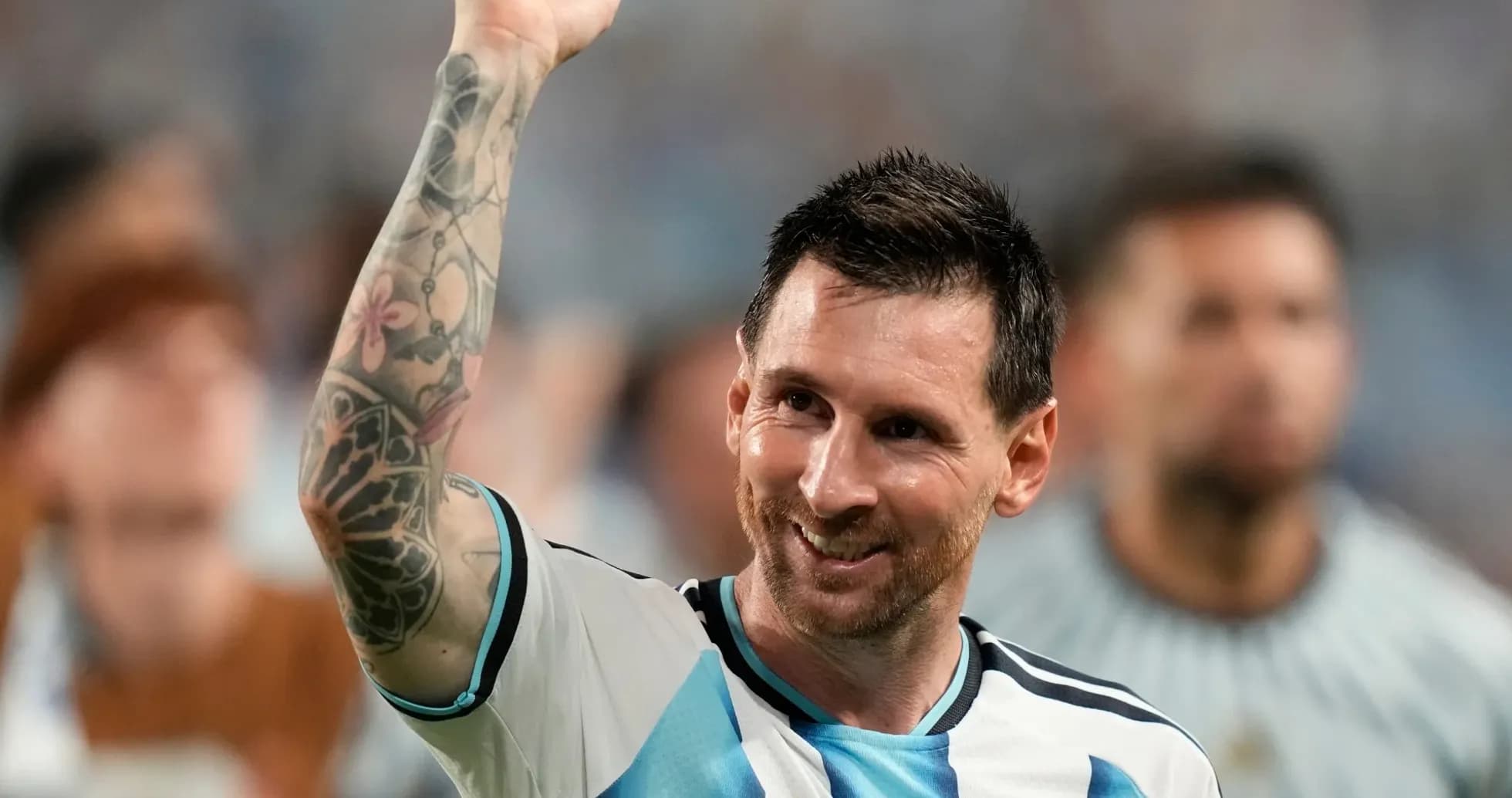
Argentina against Egypt in Atlanta is more than a round-of-16 tie. It is the reigning champions trying to keep a dynasty alive against a nation standing on the edge of its greatest football night.
The numbers say one thing. The mood, another.
Argentina walk into the Atlanta Stadium as heavy favourites. Opta’s supercomputer, after running 25,000 simulations, gives them a 69.1 percent chance of finishing the job inside 90 minutes. Egypt are handed just 12.3 percent, with 18.5 percent of outcomes heading to extra time.
History backs the holders. Argentina have made a habit of dispatching African opposition on this stage, and the last time these two sides met – a friendly in Cairo in 2008 – the South Americans cruised to a 2-0 win thanks to Sergio Aguero and Nicolas Burdisso. Lionel Messi missed that game through injury. He will not be missing this one.
Yet Egypt arrive with something Argentina cannot simulate: the sense that this is uncharted territory, that every minute is the biggest their football has ever known. They stand one match away from a first-ever World Cup quarterfinal. That kind of urgency can twist a game, even against champions.
And on the touchline, the story runs even deeper.
Hossam Hassan’s World Cup, and a message beyond football
On the eve of the biggest match of his coaching career, Egypt head coach Hossam Hassan chose to talk about something far beyond tactics or Messi’s movement.
He talked about Palestine.
Hassan, who raised a Palestinian flag after Egypt’s win over Australia in the previous round, used his pre-match press conference to deliver a raw, emotional statement on the suffering of Palestinians. He spoke for more than four minutes. When he finished, several journalists applauded.
“If there is anyone in the world who does not feel for the Palestinian people, then they are not human, whether they are Arab, European, or American,” he said.
He drew a stark comparison between the global response to civilian deaths in Gaza and the attention paid to animal welfare, arguing that it should never be normal for thousands of people to lose their lives in a single day.
So Egypt go into the biggest game in their football history with their coach using the World Cup platform as a megaphone. A team chasing a quarterfinal. A manager demanding the world looks up from the pitch.
Colombia, Switzerland and a finely balanced fight
While Messi and Egypt command the glare in Atlanta, Vancouver will stage a more quietly intriguing contest: Switzerland versus Colombia at BC Place.
Their history is sparse. Three of their last four meetings have been friendlies, the most recent in March 2007. That day belonged to Colombia, a 3-1 win sealed by goals from Edixon Perea, Jhon Viafara and Andres Chitiva for Los Cafeteros.
This time, the margins look thin again.
Opta’s model leans slightly towards the South Americans. Colombia are given a 41.9 percent chance of winning in normal time, Switzerland 28.2 percent, with 29.9 percent of simulations ending level and stretching the night.
It is the kind of matchup that can be decided by a single mistake or a single moment of courage. One team will ride that knife edge into the quarterfinals. The other will be gone, their World Cup reduced to highlights and regrets.
Ronaldo’s last World Cup bow
While some teams move forward, one era has already ended.
Cristiano Ronaldo has played his final World Cup match.
The 41-year-old’s tournament journey, which stretched across six editions and helped define an era, closed with Portugal’s exit. The defeat cut deep. So did the realisation that there would be no more World Cup nights for one of the game’s most relentless competitors.
“I’m sad to be leaving the World Cup like this,” Ronaldo said. “I gave everything I had, I did my best, and I leave with a clear conscience. It was my last World Cup, yes, but now I’ll have time to reflect and spend time with my family. I won’t make any decisions in the heat of the moment.”
He stopped short of confirming whether he has also worn the Portugal shirt for the last time, insisting he would not allow his own future to overshadow the team. Even in goodbye, he tried to pull the attention away.
The World Cup, though, will move on without him. That, more than the final scoreline, is the shift that lingers.
USA’s home dream crushed by ruthless Belgium
For the United States, this was supposed to be the World Cup that changed everything. A home tournament, a maturing core, a chance to make a deep run.
Instead, the defining images are of pain.
Christian Pulisic on the turf, clutching an injured ankle. Matt Freese frozen, hands on his head after a costly error. Chris Richards collapsed on the pitch, frustration written all over him. On the touchline, head coach Mauricio Pochettino lashing out, booting a rack and sending bottles flying.
Belgium showed no sympathy.
Charles De Ketelaere tore through the American dream, scoring twice and setting up another in a 4-1 win that sent the Red Devils into the last eight and sent the hosts out.
“It stinks,” Tyler Adams said. “This was a moment to have an opportunity to advance and really try and do something special. We fell short.”
Folarin Balogun returned after FIFA controversially lifted his red-card suspension, a boost that was supposed to steady the side. It did not. Two defensive errors in the first half opened the door for Belgium. Freese’s mistake in the second half slammed it shut on the USA’s hopes.
A home World Cup ends not with a statement, but with a lesson in what ruthlessness looks like at this level.
Mbappe, Paraguay and a fight against racism
Kylian Mbappe’s World Cup has never been only about goals. This week, it became a front line in football’s battle with racism.
After France knocked Paraguay out in the round of 16, Paraguayan senator Celeste Amarilla launched a racist tirade on X. She described Mbappe as a “colonised Cameroonian, desperately trying to pass himself off as French” and a “brute” who had not learned to write, and suggested Paraguay’s players should have slapped him after the match.
Mbappe did not let it slide.
He fired back with a statement that went beyond personal defence, calling out both Amarilla and the damage her words caused to the image of her own country.
“Madame Celeste Amarilla, you are a despicable woman and unworthy of your position. You do not represent Paraguay, that country which has sweated passion and honour throughout the competition,” he wrote.
He accused her of allowing racism to eclipse the achievements of Paraguay’s players, saying her recklessness and brazen racism had made the world forget their historic effort at this World Cup. He vowed not to allow people like her to spread hatred and racism unchecked.
Amarilla later deleted her posts and issued an open letter to Mbappe, saying she regretted using insults she herself had experienced as a mixed-race person. The damage, though, had already become part of the World Cup story.
On the pitch, France move on to face Morocco in the quarterfinals. Off it, their captain has drawn a hard line about who and what he is willing to tolerate.
The tournament now presses into its sharpest days: Argentina clinging to their crown, Egypt chasing a first quarterfinal, Colombia and Switzerland locked in a near coin-flip, France and Belgium already through, the United States and Ronaldo left to process what might have been.
The question is no longer who has the biggest name. It is who handles the weight of this moment best.