.svg&w=384&q=75 "Naijagoal logo")
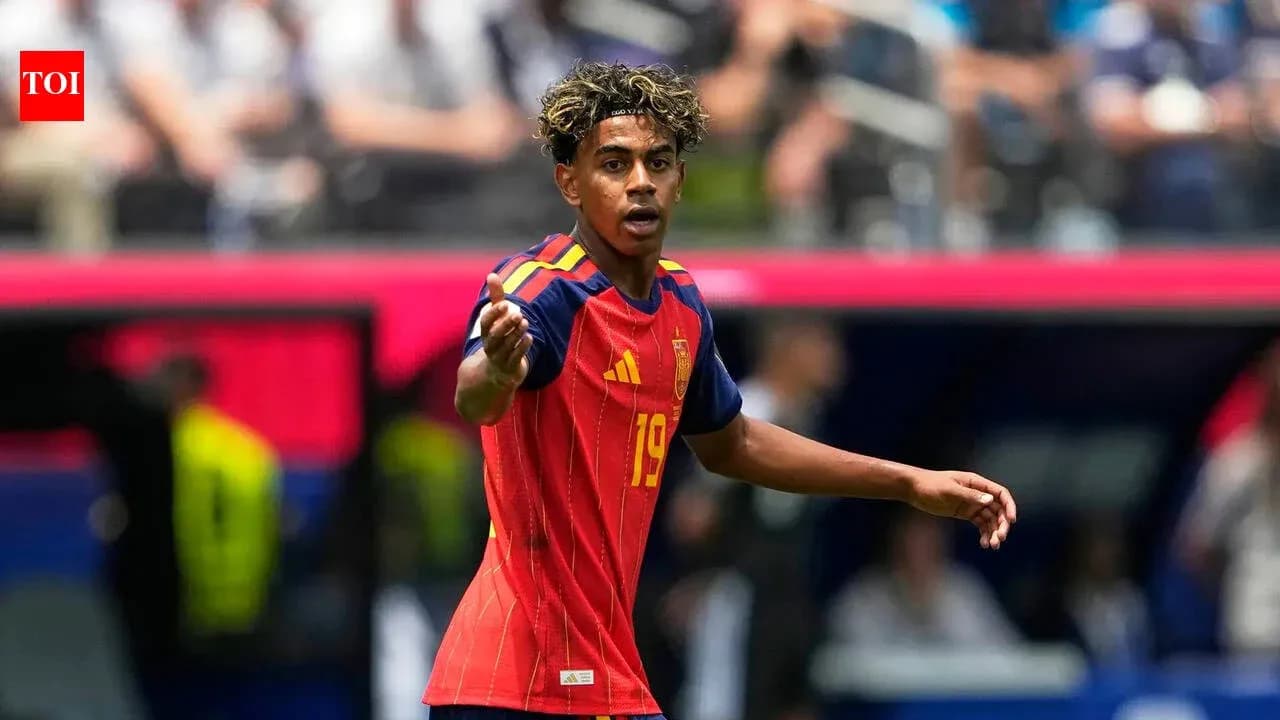

Lamine Yamal: Spain's Rising Star in World Cup Final
Lamine Yamal doesn’t linger on milestones. He steps over them.
Minutes after dragging Spain back to a World Cup final, the 19-year-old was already staring down the next stage, firing off a message that cut straight through the noise: “nuevayol vamos por ti” — “New York, we’re coming for you.” No reflection, no nostalgia. Just the next target.
Spain had just dismantled France 2-0 at AT&T Stadium in Arlington, a scoreline that felt as controlled as their performance. Within moments, Yamal’s Instagram filled with images from a night that felt like a turning point, not a destination. The semifinal, he made clear, was only the penultimate chapter.
Now La Roja head to the New York-New Jersey Stadium for Sunday’s final, where either defending champions Argentina or a resurgent England will be waiting. Whoever emerges from Atlanta, they will find a Spain side that looks as complete as any in this tournament.
Yamal leads, history follows
On the biggest stage, Yamal played with the calm of a veteran and the edge of a teenager who has never learned to be afraid.
Spain’s starting XI already carried a note of history: Yamal and Pau Cubarsi became the first pair of teenage starters ever fielded by one team in a World Cup semifinal. It sounded like a risk. It looked like a revolution.
Yamal supplied the first crack in France’s armour in the 22nd minute. He hunted down Lucas Digne, nicked the ball, and drove into the box with a sharpness that forced panic. The tackle came, the teenager went down, and the referee pointed to the spot. No theatrics, just decisive play in the area where careers are made and broken.
Mikel Oyarzabal took the responsibility from 12 yards and treated it like a training-ground routine, sending the goalkeeper the wrong way and Spain into the lead. One chance, one goal. The kind of clinical edge that wins tournaments.
From there, Luis de la Fuente’s side tightened their grip. Spain didn’t just keep the ball; they dictated the rhythm, suffocating French attempts to build any kind of sustained threat. Kylian Mbappe and Aurelien Tchouameni chased openings that rarely appeared. When they did, Spain’s back line closed them with cold efficiency.
After the interval, the pressure finally told again. Pedro Porro surged forward, linked neatly with Dani Olmo, and then slid a precise, low finish into the bottom corner. It was a goal that summed up this version of Spain: movement, combination, and a ruthless end product.
Yamal thought he had his own name on the scoresheet shortly after, ghosting in and finishing, only to see the flag go up for a marginal offside. It denied him the goal his performance deserved, but not the impact he had already stamped on the match.
France threw bodies forward, searching for a way back. Mbappe tried to accelerate the game on his own, Tchouameni drove from midfield, yet Spain barely flinched. Another clean sheet. Their sixth in seven matches at this World Cup. Numbers that speak of structure and steel, not just style.
A team transformed, a nation awakened
Inside the dressing room, the mood flipped from control to chaos. Music blared, players danced, and the Spanish national team’s official account pushed out a video inviting fans into the celebrations: shouts, songs, and what they jokingly called “forbidden moves.”
Behind the noise lay something more serious. This semifinal didn’t just send Spain to New York; it confirmed their evolution.
Earlier in the tournament, La Roja leaned heavily on their attacking flair, riding waves of creativity and individual brilliance. Against France, they added another layer: defensive discipline, game management, and an almost ruthless maturity. The balance between youth and experience finally felt perfect.
Oyarzabal, in particular, continued a remarkable personal run. His penalty marked his 18th goal in his last 20 appearances for Spain and elevated him into an elite group — only the sixth player to reach 30 international goals for the nation. In a team bursting with new faces, his reliability has become a quiet pillar.
For Spain, the final is more than a shot at a trophy. It is a chance to add a second star to the shirt, 16 years after Andres Iniesta’s extra-time winner against the Netherlands in Johannesburg crowned their only previous World Cup triumph. That night belonged to a golden generation. This one, if it comes, will belong to a new wave.
And at the heart of it stands a teenager who has already set his sights on New York, who treats a World Cup final not as a dream, but as the next assignment.
One game from glory, one night to define an era. Who dares stand in their way now?