.svg&w=384&q=75 "Naijagoal logo")

World Cup Countdown: Injuries Plague Global Stars
The World Cup in North America was supposed to be the grand showcase: Messi, Mbappé, Salah, Yamal — the full constellation on one stage. Instead, with less than a month to go, the build-up feels more like a medical bulletin than a festival of football.
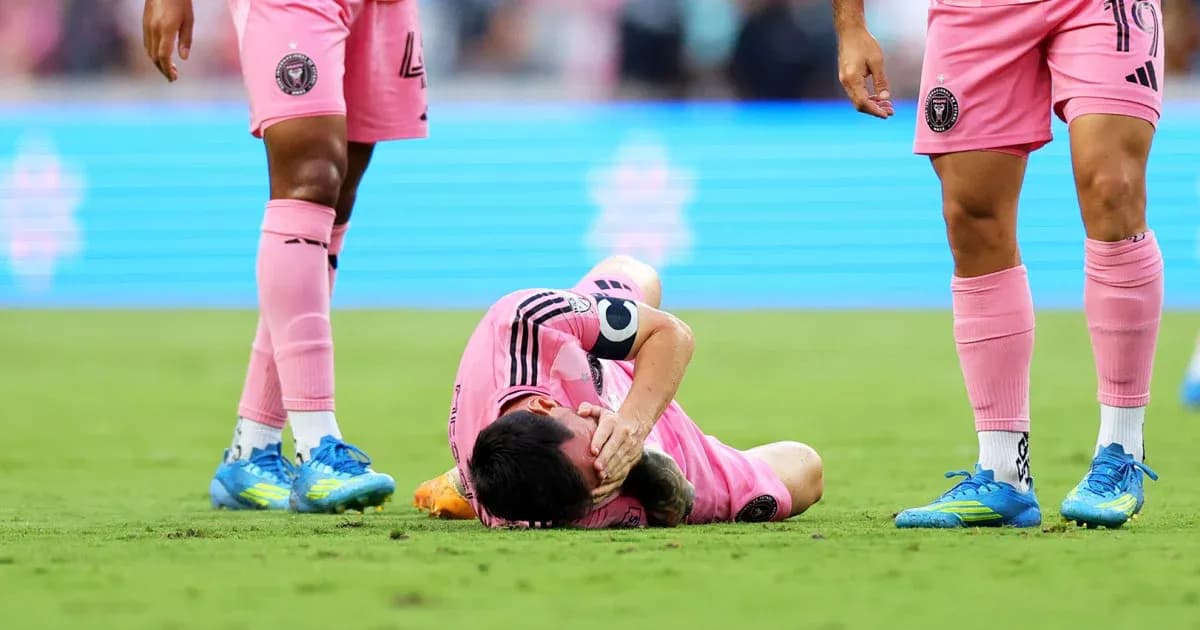
Lionel Messi is the latest flashpoint.
The Argentina captain left the field for Inter Miami on Sunday after reaching for his left hamstring, a gesture that sent a jolt through a nation and a tournament. At 36, every grimace, every stretch of that left leg carries extra weight. Miami’s game stopped for a moment; around the world, pulses quickened. Argentina’s entire plan still orbits around him.
Mbappé and Salah, at least, have cleared their own hurdles. Both recovered from recent injuries in time to be declared fit, a relief for France and Egypt and for a tournament that desperately needs its headline acts on the pitch, not in the stands.
But the list of casualties is already brutal — and growing.
Confirmed Absentees: World Cup Dreams Shattered
Some players know their World Cup is over before it begins.
France forward Hugo Ekitike suffered an Achilles injury in April. The recovery could stretch beyond six months, ruling him out of the tournament and likely the start of his Liverpool career next season. For a young striker on the brink of a major breakthrough, the timing could hardly be worse.
Brazil have been hit twice. Rodrygo and Éder Militão are both out, significant blows to a squad built on depth and star power. Militão’s hamstring problem and Rodrygo’s ACL injury remove two key weapons from a team that expects to contend every four years.
Germany’s Serge Gnabry will not make it either. An adductor injury in training with Bayern Munich has sidelined the forward, stripping Germany of a player who offers goals, experience and big-tournament pedigree.
The attrition cuts across continents:
- Argentina: Joaquín Panichelli (ACL)
- Brazil: Éder Militão (hamstring), Rodrygo (ACL)
- England: Ben White (medial ligament)
- France: Hugo Ekitike (Achilles)
- Germany: Serge Gnabry (adductor)
- Netherlands: Xavi Simons (ACL)
- United States: Cameron Carter-Vickers (Achilles), Patrick Agyemang (Achilles)
For each of them, the World Cup becomes something to watch, not play in.
Lamine Yamal and a Generation on the Edge
Not everyone on the injury list is out, but many are walking a fine line.
Spain’s teenage phenomenon Lamine Yamal missed Barcelona’s run-in with a muscle injury in his left leg. The expectation is that he will recover in time, but the warning is clear: the most exciting young forward in Europe is already being pushed to the limit before his first World Cup.
Across the Atlantic, Canada is holding its breath over Alphonso Davies. The Bayern Munich left back injured his hamstring in the Champions League semifinals against Paris Saint-Germain, a blow that came just over a month before the tournament. Canada’s attacking thrust down the left runs through him; without Davies, their entire identity shifts.
Cristian Romero is another concern for Argentina. The Tottenham defender is dealing with a knee injury, and the club has not provided a recovery timeline. Until that changes, every Argentina training report will be scanned for his name.
The United States face their own anxieties. Midfielder Johnny Cardoso sprained his right ankle in training with Atletico Madrid five weeks before the World Cup. Center back Chris Richards tore ankle ligaments playing for Crystal Palace. Both injuries land in the danger zone — close enough to the tournament that any setback could be decisive.
Champions Under Strain
The injury cloud stretches into some of the game’s most experienced figures.
Luka Modrić fractured his cheekbone last month, a grim injury for a 38-year-old who has already given more than a decade of elite service. Yet he returned for AC Milan in time, his presence stabilizing Croatia’s hopes. His face bears the scars; his game remains intact.
Joško Gvardiol, one of the best defenders of his generation, only returned to Manchester City training in early May after four months out with a broken leg. Croatia will need him close to his peak if they are to punch above their weight again on the world stage.
Morocco, one of the great stories of recent tournaments, are sweating on Achraf Hakimi. The Paris Saint-Germain full back has been sidelined with a right thigh injury, and his absence would rip a hole in the team’s entire structure. Hakimi is not just a defender; he is an outlet, a runner, a symbol of their ambition.
Algeria’s situation is different but no less tense. Goalkeeper Luca Zidane — son of Zinedine Zidane — is a doubt after suffering a facial injury in an on-field collision last month. A World Cup is a career-defining stage for any player; for a Zidane, the spotlight burns even brighter.
The Cost of a Bloated Calendar
None of this is happening in isolation.
The World Cup arrives one year after a supersized Club World Cup, with an expanded Champions League layered on top of already congested domestic schedules. Players have been warning about this for years. Coaches too.
Arsenal manager Mikel Arteta summed it up bluntly: the current demands on players are “an accident waiting to happen.” The accident is here. It is not one collision, not one bad tackle, but a pattern — muscle strains, ligament tears, overuse injuries across leagues and continents.
The World Cup in the United States, Canada and Mexico will be bigger, longer, heavier on legs that have already been asked to do too much.
A Tournament on a Tightrope
As the opening match draws closer, every training session feels like a risk. Every sprint, every 50–50 challenge in a domestic game carries the shadow of a missed World Cup.
Some, like Mbappé and Salah, have made it back in time. Others, like Ekitike, Rodrygo, Militão and Gnabry, will watch from afar. Messi, Yamal, Davies, Hakimi, Romero, Richards and Cardoso sit in the uneasy middle — not ruled out, not fully clear.
The world’s best are heading into the sport’s biggest stage with tape on their ankles, scars on their legs and miles already in their muscles.
The question now is not just who will lift the trophy, but how many of the game’s true stars will still be standing when the World Cup finally kicks off.