.svg&w=384&q=75 "Naijagoal logo")

West Ham's Return to the Championship: New Manager and Ownership Struggles
West Ham return to the Championship for the first time in 14 years with a new manager locked in, a captain committed and fresh faces through the door. On the pitch, there is genuine optimism. Off it, the club is mired in a power struggle that shows no sign of easing.
This is West Ham, after all. The drama rarely stays on the grass.
Hope on the pitch
Nuno Espirito Santo has nailed his colours to the mast, extending his stay in east London. Jarrod Bowen, now captain and the club’s standout figure, has done the same. Those decisions alone have steadied nerves after relegation.
Manor Solomon and Joel Veltman have arrived to add know-how and depth, experience for a league that punishes the naive. Mateus Fernandes has gone to Tottenham, Crysencio Summerville has moved to Al Hilal in the Saudi Pro League, yet the mood among supporters has stayed surprisingly upbeat.
Fifty thousand season tickets sold. For a club dropping into the second tier, that is a statement.
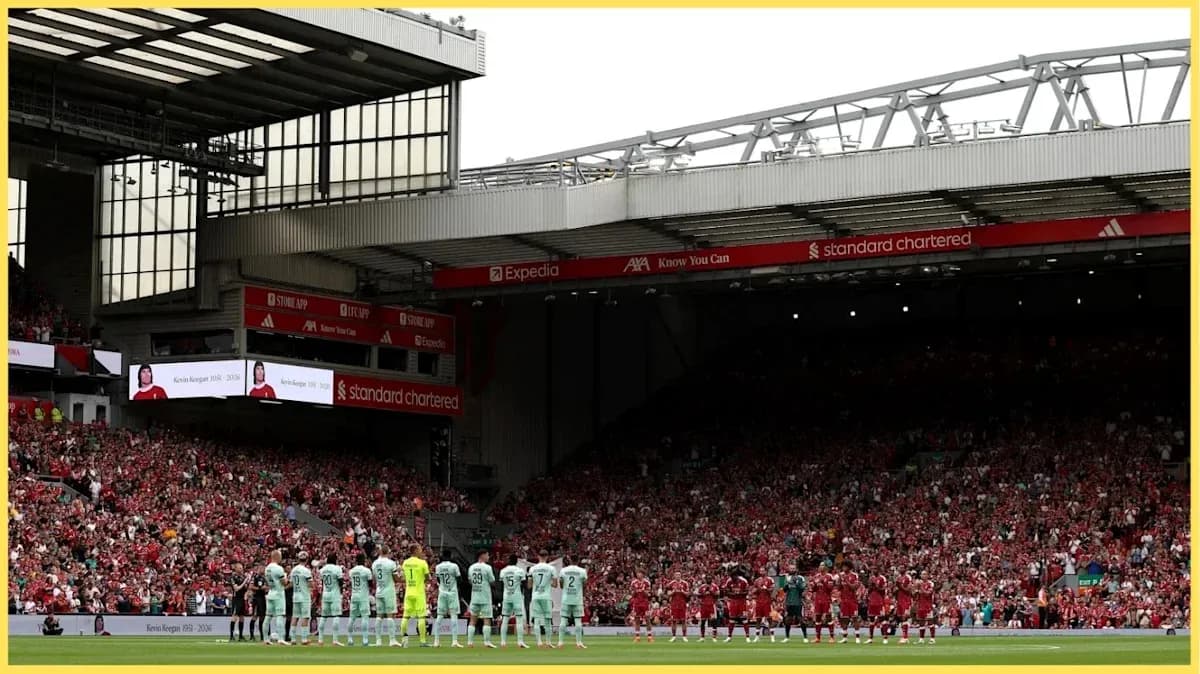
The team beat Portsmouth 3-1 in the EFL Cup in front of 53,369 at London Stadium, smashing the record attendance for the first round of the competition by more than 18,000. The fanbase is still there. Still loud. Still buying in.
But while Nuno works on shape and selection for a trip to Burnley, the real contest is unfolding in the boardroom.
A club in limbo
Two months on from David Sullivan’s resignation as co-chair, West Ham’s ownership picture is as tangled as ever.
Sullivan stepped down from his roles as co-chair and director after seven women accused him of sexually exploitative and predatory behaviour, allegations he categorically denies. He described them as “false allegations” and left to fight his corner following a joint investigation by BBC Panorama and The Times.
Despite that, he remains the club’s biggest shareholder with 38.8%. He ignored advice from London Stadium officials and pleas from fan groups to stay away from the Portsmouth tie. He came anyway.
The original idea after his resignation looked simple enough. Co-chairs Vanessa Gold and Daniel Kretinsky vowed to protect the club and, on the face of it, had a straightforward plan: increase Czech billionaire Kretinsky’s holding and make him the dominant shareholder.
In June, they even went public with it. Kretinsky, who owns 27%, and Gold, who holds 25.1%, said they had agreed a deal that would take Kretinsky up to 43%, making him West Ham’s largest shareholder. Other key shareholders – Tripp Smith, Daniel Harris and Terry Brown – were said to be on board.
The deal never closed.
Staveley enters, the plot thickens
What followed has turned a neat succession plan into a corporate tug of war.
Gold decided to sell her shares to a consortium led by Amanda Staveley, the former Newcastle United co-owner. That move ripped up the script and immediately put Kretinsky’s ambitions under threat.
He reacted with clear frustration, saying he was “considering his options”. Those options included selling just over 2% of his own stake to fellow Czech investor Jakub Havrlant, a move confirmed three days after Gold’s announcement.
On 1 August, Gold explained publicly that “the original deal and other alternatives could not be brought to fruition” and confirmed she had agreed to sell her entire shareholding to Staveley’s group.
That is where the legal and contractual knots begin to tighten.
Both Gold’s sale and Kretinsky’s share transfer are understood to fall under the same pre-emption rights arrangements, giving existing shareholders first refusal. Lawyers are now debating whether Kretinsky’s decision to sell a slice to Havrlant could be viewed as an attempt to navigate around those obligations.
On top of that, there have been suggestions that Staveley’s consortium has also made an offer for Sullivan’s 38.8%. That has not been confirmed, but the mere possibility adds another layer of intrigue.
So the club sits in limbo: a web of agreements, pre-emption rights and private negotiations, with no clear endgame in public view.
Old wounds, new battles
Sullivan has long been a lightning rod for anger among sections of the West Ham support. Alongside his late business partner and co-chair David Gold and vice-chair Baroness Karren Brady, he has never been forgiven by many for the decision to leave Upton Park in 2016 and move into the former Olympic Stadium.
Brady stepped down as vice-chair on 21 April to focus on her other business interests, another long-standing pillar of the boardroom departing the stage.
The June joint statement from Gold and Kretinsky, issued a week after Sullivan resigned, carried strong language.
“We were deeply concerned by the revelations, and our thoughts go out to those women who have fought so hard to make their voices heard,” it read. “Any abuse of power is abhorrent, and it takes great courage and determination to speak up against it.
“Our focus is now firmly on protecting the future of this football club.”
Two months on, that pledge feels distant. The ownership battle has only grown more convoluted, and supporters are left trying to work out whose version of “protection” they should trust.
Another West Ham soap opera
Right now, nobody in the public eye is spelling out the bigger picture. Sullivan, Gold, Kretinsky and Staveley have all stayed silent on their long-term strategy.
That vacuum breeds theories. Is this about control now, or value later? Is someone positioning for a full takeover, or just leverage? Fans can only guess.
“It is complicated,” admitted one long-standing supporter with detailed knowledge of the club, summing up the mood among many. Confused, unsure which camp to back, but fully aware the stakes are high.
“We had a real opportunity this summer to draw a line under what's been a pretty miserable period, get everyone pulling in the same direction and have a proper go at the season,” the supporter said. “Instead, we've got another West Ham soap opera playing out in the boardroom. It's like EastEnders.”
The Championship campaign starts at Burnley. Nuno will pick a team, Bowen will wear the armband, and 50,000 season-ticket holders will expect a response to relegation.
But until someone wins this fight for control, West Ham’s biggest story will not be written on the pitch.