.svg&w=384&q=75 "Naijagoal logo")

Vinícius Júnior Transfer Saga: Arsenal's Fantasy or Real Madrid's Leverage?
Club football hates being ignored. It has spent the summer elbowing its way back into the conversation while the Geopolitics World Cup hoovered up headlines, controversy and outrage. Now, with that circus finally packed away, the familiar machinery is humming again: whispers, leaks, “advanced talks”, agents on the phone at 2am. And, as so often when the market needs a headline act, the spotlight swings to Real Madrid.
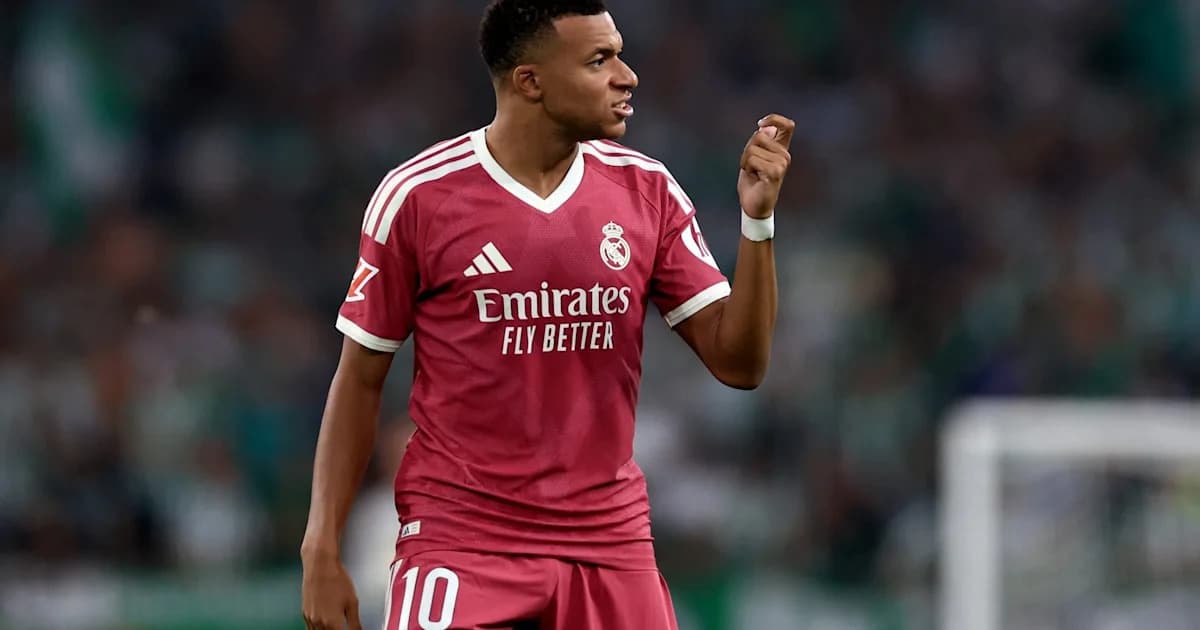
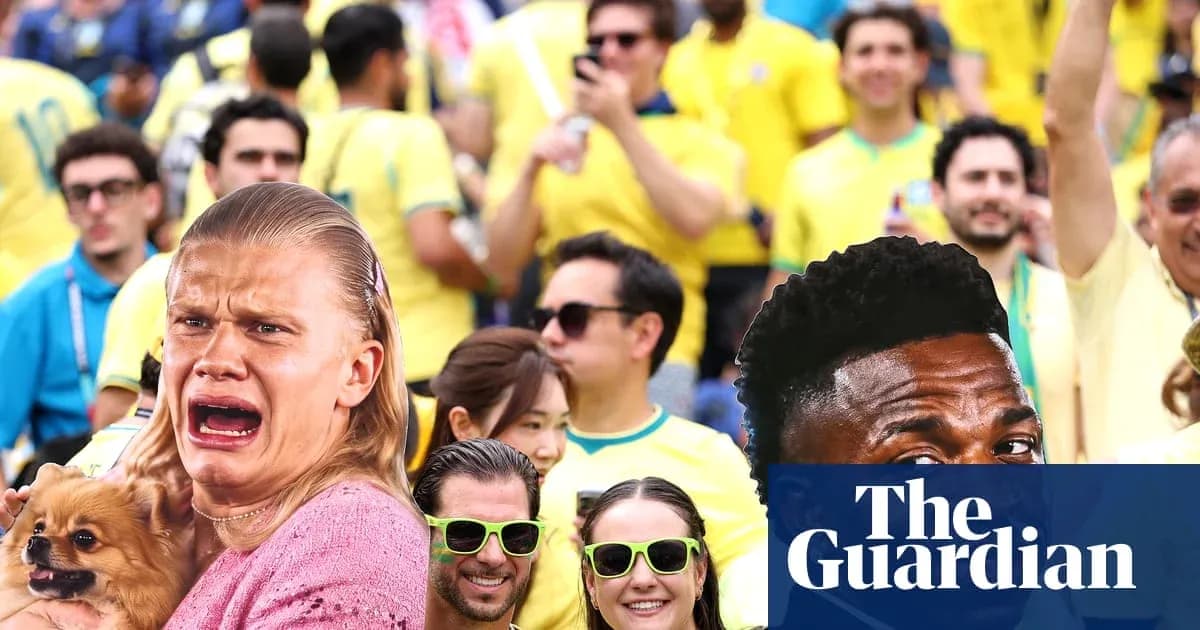
This time, the central figure is Vinícius Júnior. Of course it is.
The Brazilian, forever orbiting the Ballon d’Or conversation and forever declining to play the usual political games around it, has been dropped into the middle of a very Premier League fantasy: Vinícius to Arsenal. The mere suggestion has detonated across north London imaginations. Arsenal plus Viní. Corners whipped onto the heads of Gabriel and William Saliba. Title parades mapped out in group chats. Leandro Trossard quietly shuffled out of the dream, the new king sweeping through the doors.
Except Arsenal have already signed Christos Tzolis, the Greek winger brought in to replace the departed Belgian. So where, exactly, does this fantasy fit?
Madrid’s Leverage Game
The people who tend to be right about these things insist this is not pure fiction. There is something there. But the story comes with warning signs all over it.
Vinícius is in contract talks. His current deal runs out in a year. He reportedly earns around £400,000 a week and there is no logical universe in which he asks for less. Real Madrid have no intention of watching an asset of that scale walk away for nothing. Florentino Pérez, freshly re‑elected and as unflinching as ever, has a long history of using wealthy Premier League clubs as leverage, floating names and nudging rumours to sharpen his negotiating position.
Arsenal, for their part, are no longer shy about spending. Recent windows have proved that. Yet there remains a ceiling they have occasionally refused to smash. Last summer they turned away from the escalating Alexander Isak chase and went for Viktor Gyökeres instead. That decision worked out well enough, but Vinícius lives in a different financial and sporting galaxy. This is not a simple “pay up and take him” deal.
Still, the story persists, because Madrid’s transfer web rarely has just one strand.
Dominoes in Motion
Attached to the Vinícius chatter is Yan Diomande, the Ivorian winger who has somehow become a widely discussed name despite most people only catching glimpses of him with RB Leipzig. He is the archetype of the modern rumour: watched in clips, debated in detail, rarely seen over 90 minutes.
Everybody wants him, or so the line goes. The latest twist has Real Madrid beating PSG to his signature, a move that would, in theory, give them yet another wide option and strengthen their hand in any negotiation around Vinícius.
That, in turn, nudges another piece on the board. If PSG lose out on Diomande, what happens to Bradley Barcola? The Frenchman has already been heavily linked with Liverpool, who would not get him cheaply. One supposed Madrid deal potentially triggers another in Paris, which ripples towards Anfield.
And so Football Daily, and everyone else, gets dragged back into the same swirling miasma. Who goes where? Who blinks first? How does it all look when the window finally slams shut? Just when the game feels exhausted by speculation, it finds a way to pull you back in.
Power, Politics and a Fifa President’s Fury
While clubs posture and negotiate, Fifa’s president has been waging his own war of words. Gianni Infantino, never slow to defend his empire, published an open letter on social media aimed squarely at critics of the Geopolitics World Cup.
“You were so consumed by hate and criticism that you missed it all,” he wrote, lashing out at “hate and false rumours” spread by those “behind their pens and papers, behind their screens”. Infantino painted a picture of a flawless tournament: “no violence, no incidents, 100% safety and security, only joy and happiness”. He urged detractors to “reflect, meditate, pray”.
His defiance jarred with the long list of controversies that followed the tournament from day one: US visa restrictions that affected supporters and officials from several countries, concerns around teams from conflict zones, punishing ticket prices, and the extraordinary episode in which an automatic one‑match ban for USA striker Folarin Balogun was suspended after a direct call from US president Donald Trump to Infantino.
It was a reminder that while transfer sagas feed the imagination, the sport’s power struggles remain far more consequential.
York City’s Ruthless Reset
Drop down the pyramid and the decisions feel no less brutal.
York City should be basking in one of the greatest seasons in their history. National League champions. Promotion secured with a record 108 points. A last‑day win over rivals Rochdale that will live in the city’s folklore. One clear direction: up.
Instead, three weeks before their League Two opener against Bristol Rovers, manager Stuart Maynard is out of a job. The club cited “a difference in direction and vision for the football club”. The timing was as ruthless as the wording was vague.
Maynard had delivered everything a board could reasonably ask for in a single season. Yet the axe still fell. The chaos did not end there. York’s social media accounts briefly announced Martin Jol as the new manager, only to delete the post and claim they had been hacked. By the time the dust settled, it was Scott Lindsey, formerly of Crawley and MK Dons, who walked through the door.
Given what Maynard achieved, Lindsey might need to win League Two with 120 points just to guarantee he sees out a second campaign.
Managers, Moves and a 59‑Year‑Old Scorer
Elsewhere, the managerial and transfer carousel spun on.
Andrea Pirlo dropped out of contention for the Italy job, with his sponsorship deal with Russian betting company Fonbet believed to be a key factor. Pirlo pushed back at any political reading of that partnership, insisting it did not reflect beliefs he has “never expressed and don’t belong to me”.
In the north‑east, Régis Le Bris drew a firm line under Chelsea’s interest in Sunderland captain Granit Xhaka. “He loves Sunderland, he wants to stay in Sunderland, he wants to make the future of Sunderland,” the manager declared, making it very clear there would be no deal.
Federico Chiesa, frustrated under Arne Slot and repeatedly linked with a move back to Serie A, is trying to reset under new Liverpool boss Andoni Iraola. “I am doing the best I can to have a chance here,” he said, clinging to the possibility of a fresh start.
Inter have opened talks with Tottenham over Cristian Romero, a move that would tear a chunk out of Ange Postecoglou’s defence. Micky van de Ven, though, sounded upbeat about Spurs’ broader summer business after a 2-0 pre-season win over Auckland FC. “You can see the club has made some changes. You can see the club has a new ambition,” he said, a defender reading the mood music as much as the tactics board.
At Chelsea, Xabi Alonso is already teasing supporters about the potential link‑up between Morgan Rogers and Cole Palmer. “I have a plan. I have an idea. I can see them linking really well,” he said, dangling the prospect of a partnership built on movement and invention.
Off the pitch, the Geopolitics World Cup delivered a different kind of number: an extra £150m in pub revenue across England and Scotland, according to the British Beer & Pubs Association. Football’s reach, once again, measured in pints pulled as much as goals scored.
And in Japan, a remarkable landmark. Kazuyoshi Miura, 59 years old and still going, scored his first competitive goal in nearly four years as Fukushima United thrashed Iwaki Furukawa 7-0 in the Emperor’s Cup. In a sport obsessed with the next big thing, a reminder that some careers simply refuse to end on anyone else’s terms.
Memory, Myth and the Next Big Reveal
Football’s present always sits on top of its past. The passing of Kevin Keegan stirred memories of a different era, of a young pro at Hull City hearing rave reviews about a tireless kid from Doncaster who ran the long sprints, then came back in the afternoons to pound the terraces with weights in his hands. Hull’s coaches watched him and “didn’t fancy him”. Liverpool did. History turned.
Years later, as manager of Newcastle, Keegan replied to a letter from Australia asking if a young lad could have a spell at the club. He not only agreed; the player was picked up from the airport, found digs, taken to Wembley on the first‑team bus for the Charity Shield, and handed Alan Shearer’s match boots. Small gestures, huge echoes.
Back in August 2004, a young Manchester United fan, Joe Ruane, held up a sign begging Sir Alex Ferguson to “please buy Rooney”. United did, paying Everton up to £27m. Ruane ended up on the Old Trafford pitch for Wayne Rooney’s unveiling, sharing a joke with Ferguson and their new star while wearing a shirt with Alan Smith’s name on the back. Football doesn’t always give you exactly what you ask for, but sometimes it gets close enough.
Which brings everything back to this summer’s obsession. Vinícius Júnior, Real Madrid, Arsenal. Is this another Rooney moment, a fan’s fantasy that becomes reality? Or just another chapter in Madrid’s long, lucrative game of brinkmanship?
The window is open. The noise is building. Someone, somewhere, is about to find out just how real this saga really is.