.svg&w=384&q=75 "Naijagoal logo")
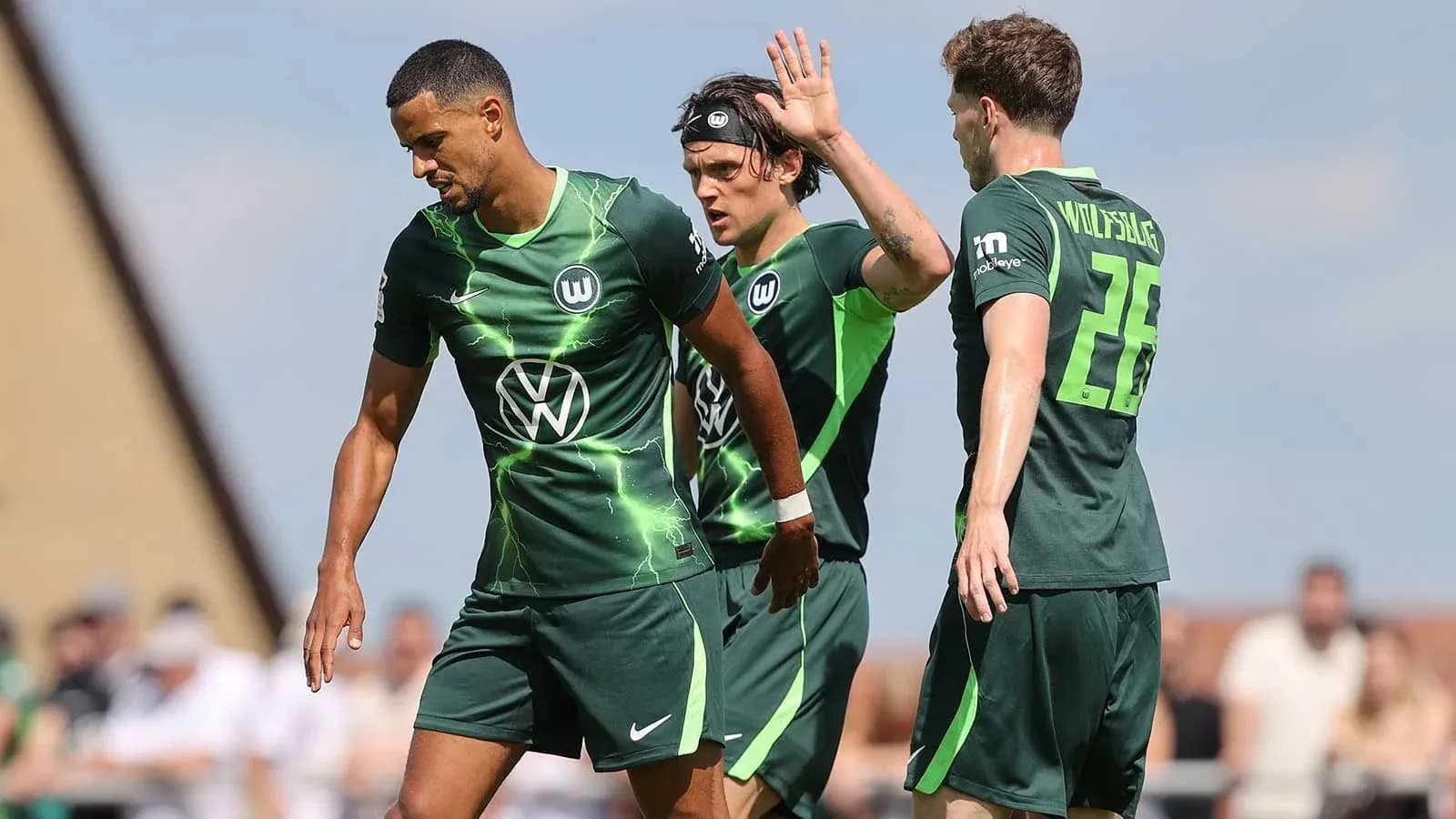

VfL Wolfsburg’s Dominance in the 2. Bundesliga: A Financial Power Play
Relegation was supposed to shrink VfL Wolfsburg. Smaller budget, tighter belts, a reset in every department. Instead, the club has walked into the 2. Bundesliga like a heavyweight into a village gym.
So far this summer, Wolfsburg have invested 22.7 million euros in new players. The rest of the league combined? Just under 19 million in publicly known fees. One club outspending 17 rivals put together. That is not just a gap. It is a different reality.
For the other second-division sides, every transfer is a calculation, every euro weighed twice. Wolfsburg are building a squad on a scale that even fallen giants like Hamburger SV, Schalke 04 or 1. FC Cologne could only look at with envy. The question writes itself: is this still normal competition, or has the balance already tipped into distortion?
Reese as the Symbol of a New Order
Nothing captures Wolfsburg’s special status more sharply than Fabian Reese’s move.
Eight million euros to Hertha BSC for their captain, their figurehead, their project leader. In the 2. Bundesliga.
Reese has been one of the league’s outstanding players in recent seasons: 91 competitive appearances for Hertha, 35 goals, 31 assists. Wolfsburg sporting director Pirmin Schwegler called him “one of the strongest players in the 2. Bundesliga” when he arrived. Few would argue.
The player himself did not take the step lightly. He spoke openly about how difficult the decision had been, pointing to Wolfsburg’s persistence, the professional setup, and “the values of the club, of Volkswagen and of the people around it” as decisive factors. It was the language of a man who knew he was leaving more than just a workplace behind.
In Berlin, Reese had become far more than a winger with good numbers. He was the face of a club trying to reconnect with its city after years of chaos. Hertha underlined that bond in spectacular fashion in November 2025, when they extended his contract early until 2030. Sporting director Benjamin Wieber spoke of a player they “absolutely wanted to tie to the club for the long term,” stressing that Reese identified with Hertha “one hundred per cent.”
The message was unmistakable: this was not just another employee. This was the future.
Less than a year later, that story is over. Torn up not by a Champions League club, but by a direct rival in the same division. Wolfsburg put eight million euros on the table and Hertha’s symbol of renewal disappeared in green and white.
For Hertha fans, it cuts deeper than the usual sale of a key player. Reese’s emotional ties to Berlin, his manner, the long-term contract – all of it had made him a point of identification. Now he turns out for a club that, in many eyes, represents almost the opposite of what Hertha want to be.
On the pitch, Hertha lose one of their best. Off it, they lose a face. Wolfsburg gain both. And the transfer lays bare the structural truth of this league: when a relegated side can pay eight million euros for a second-division player from another big 2. Bundesliga club, the financial conditions are no longer remotely comparable.
Buying the League’s Backbone
Reese is not an isolated case. He is part of a pattern.
Fraser Hornby has arrived from SV Darmstadt 98 for four million euros. Once again, a direct rival loses an important piece to Wolfsburg. Muhammed Damar joins from TSG Hoffenheim, Hauke Wahl from another relegated Bundesliga club for 1.8 million euros.
Robert Glatzel costs “only” around 1.7 million euros in transfer fee, but his signing underlines another Wolfsburg advantage. They do not just win auctions on fees; they win on wages. Glatzel brings more than 180 second-division games and a track record of double-figure goal returns. For many clubs at this level, his salary alone would be out of reach.
Wolfsburg are behaving in the 2. Bundesliga exactly as they did in the top flight. The context around them, though, has changed dramatically. Even as main backer Volkswagen grapples with an almost existential crisis and the prospect of up to 100,000 job losses, VfL continue to operate with a financial power that dwarfs most of their new opponents.
They have paid 700,000 euros to SC Freiburg for Swiss forward Alessio Besio, a 22-year-old who did not make a single professional appearance for Freiburg in three years and spent last season on loan in the third division with Verl. Timon Wellenreuther arrived from Feyenoord for around one million euros before a knee injury sidelined him for weeks. Elvis Rexhbecaj joined on a free from FC Augsburg, yet even that “free” transfer would be a completely different economic dimension for many second-tier clubs once wages and bonuses are factored in. Rexhbecaj has more than 150 Bundesliga games behind him.
This is not a youth project. This is a targeted raid on the league’s backbone. Established second-division performers, proven Bundesliga players, depth in almost every position. The 2009 German champions are not flirting with promotion. They are trying to engineer it.
The scale only truly comes into focus in comparison. Schalke 04, in the 2025/26 second-division season, generated around 8.75 million euros from sales and invested just 3.4 million. Transfer surplus: 5.35 million. Their most expensive signing? Christian Gomis for 1.5 million.
Reese alone cost Wolfsburg more than twice Schalke’s entire transfer summer.
Before their promotion in 2024/25, Hamburger SV also worked on a different level – and still nowhere near this. HSV spent around nine million euros on new players, brought in about three million, and their record signing, Alexander Rossing-Lelesiit, cost roughly 2.8 million euros.
Hannover 96 tell a similar story. They took in 11 million euros in 2025/26, spent 4.33 million, and ended with a surplus of around 6.68 million. For them, every sale mattered. For Wolfsburg, each major outgoing seems to be the trigger for the next incoming.
Big Sales, Bigger Leverage
The picture would be incomplete, though, if Wolfsburg were painted as a club simply burning money without restraint. The numbers on the other side of the ledger matter.
Patrick Wimmer’s move to TSG Hoffenheim brought in around ten million euros. Jakub Kamiński’s transfer to 1. FC Cologne added another 5.5 million. Lovro Majer’s switch to AEK Athens reportedly came in at six million. In total, Wolfsburg currently show income of around 24 million euros from sales.
On paper, that means a small surplus despite the eye-catching spending spree.
The crucial difference lies not in the balance sheet, but in what follows. Wolfsburg can immediately reinvest those millions into a squad designed for an instant return to the Bundesliga. Most 2. Bundesliga clubs use transfer surpluses to plug holes, stabilise finances, or slowly build. Wolfsburg recycle the money straight back onto the pitch.
There is precedent. When VfB Stuttgart went down in 2019/20 and chased immediate promotion, they also spent heavily – around 25.4 million euros on new players. Silas cost eight million from Paris FC, Sasa Kalajdzic around six million from Admira Wacker. Stuttgart, though, offset that with sales totalling roughly 79.5 million euros, ending the window with a surplus of more than 54 million.
Wolfsburg’s strategy is similar in structure but different in scale relative to their competition. Last season, still in the Bundesliga, they generated around 37 million euros from sales and spent about 68 million, leaving a deficit of just under 31 million euros. Vinicius Souza alone cost around 15 million from Sheffield United. Mohamed Amoura’s permanent move from Union Saint-Gilloise came in at about 14.75 million.
For Wolfsburg, million-euro transfers are routine. What has changed is the backdrop. In the Bundesliga, they were one of several clubs capable of double-digit million investments. In the 2. Bundesliga, they are a financial outlier. The same sums suddenly feel excessive, even absurd, when set against clubs whose entire transfer budget is smaller than the fee Wolfsburg have just paid for Fabian Reese.
The Bayern of the Basement – and Then Some
The names tell you what Wolfsburg want: Reese, Hornby, Glatzel, Wahl, Rexhbecaj, Wellenreuther. This is not a team built to “compete” in the 2. Bundesliga. It is a team built to leave it.
The plan is hardly subtle. The stay in the second tier should last one season, if that. Players like Amoura have followed the club down, strengthening a squad that already looked like it belonged higher up the ladder.
According to transfermarkt.de, Wolfsburg’s squad value stands at 194.15 million euros. That figure would place them ninth in the Bundesliga. In the 2. Bundesliga, the next-best squad belongs to fellow relegated side FC St. Pauli at 45.93 million euros. The gap? Roughly 4.5 times.
Comparisons with FC Bayern Munich in the top flight almost underplay the situation. Bayern’s squad, at 1.07 billion euros, is not even worth twice as much as RB Leipzig’s (currently 604 million). Borussia Dortmund are still buying. In Germany’s first division, financial giants face other giants.
In the second, Wolfsburg stand almost alone.
Whether that translates into domination on the pitch will only become clear once the season starts. Injuries, pressure, expectation – football has ways of complicating even the most carefully constructed plans.
But this transfer window has already made one thing impossible to ignore: VfL Wolfsburg are operating in a different financial league to most of their new opponents. The 2. Bundesliga has gained a heavyweight. The rest of the division now has to decide whether to swing back or simply try to survive the blows.