.svg&w=384&q=75 "Naijagoal logo")

The Unscripted World Cup: Memorable Matches and Heroes
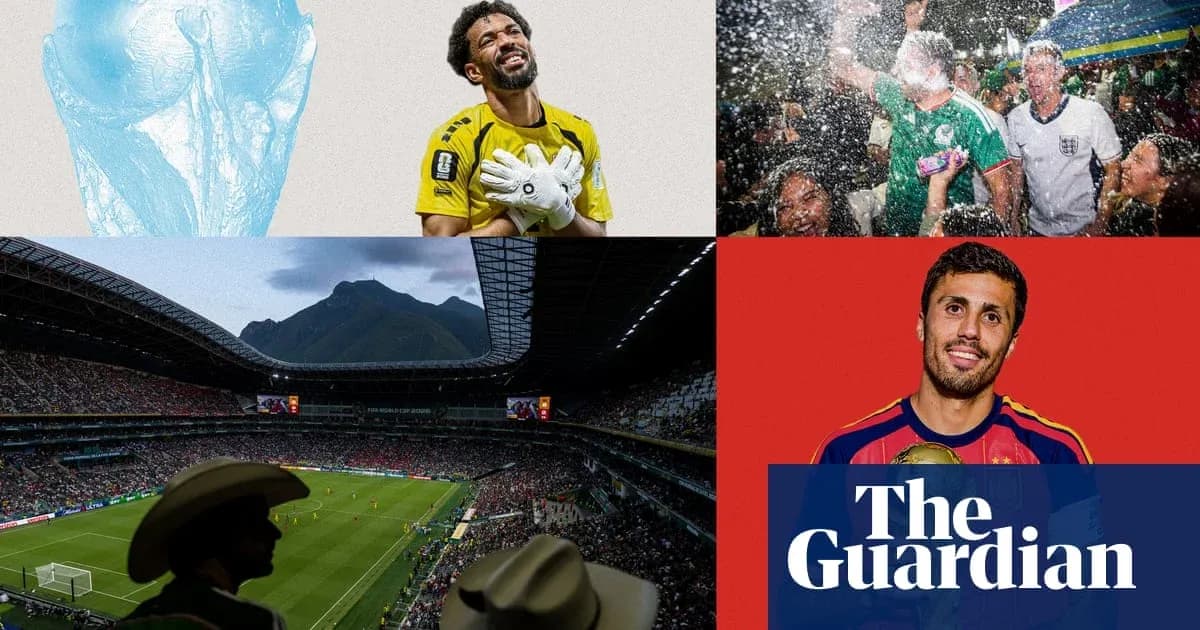
They came for a World Cup. They left with something stranger, louder and far more memorable – a tournament where Mexico pushed England to the brink at the Azteca, Cape Verde stared down Argentina, and Germany finally blinked in a penalty shootout.
Across the continent-spanning circus, one truth held: the best stories rarely followed the bracket.
Matches that bent reality
Ask 10 reporters for the match of the tournament and you don’t get consensus. You get a collage.
For pure, old‑fashioned jeopardy, Paraguay 1-1 Germany in the last 32 stood alone. Germany do not lose shootouts. It’s part of the sport’s assumed furniture. Yet here they unraveled from the spot in spectacular fashion, the aura stripped away kick by kick.
Elsewhere, logic simply left the building. Algeria 3-3 Austria felt like a fever dream. This was supposed to be a quiet biscotto, a mutually convenient draw to ease both sides through. For a stretch in the second half, it drifted exactly that way, a game on autopilot. Then stoppage time detonated, the script shredded, and a non‑event became something nobody could quite explain.
The Azteca staged its own epics. Mexico 2-3 England kept dragging the pulse rate higher. The buildup started almost as soon as the draw dropped, and the game delivered: a thunderstorm delay, a ferocious first half from Mexico, England clinging on as Thomas Tuchel’s side survived the vaunted stadium and the best 45 minutes Mexico could summon. Some saw it live, others on TV, but everyone agreed – it felt like drinking cortisol neat. Not always high on quality, but utterly gripping, an away win that will echo for England even as later disappointments cloud the campaign.
France 4-6 England belonged in another category: borderline farce, chaos with an elite technical base. In Seattle, Egypt 1-1 Iran brought a different kind of drama. Iran thought they had a stoppage‑time winner, only to see it disallowed, then twice rattled the woodwork in the dying moments. The draw left an unbeaten Iran out, their path blocked by obstacles on and off the pitch.
Argentina, as ever, lived on the edge. Their 3-2 win over Egypt in the last 16 turned on the familiar figure of Lionel Messi. Two goals down, the defending champions looked finished, already half‑packed for home. Then Messi dragged them back, orchestrating a comeback that felt both inevitable and outrageous, all in normal time and under the cloud of refereeing controversy that refused to leave the story alone.
Cape Verde, debutants in name only, refused to play their assigned role. Their 2-2 draw with Uruguay in Miami showcased discipline and joy in equal measure, a performance that won neutrals and hinted at something deeper. Later, Argentina 3-2 Cape Verde joined the canon of improbable World Cup epics. Sidny Lopes Cabral bent one into the top corner and into tournament folklore, an equaliser that stunned the champions and sent a shockwave through every fanbase dreaming of an upset.
For some, though, the pull of the familiar proved irresistible. England 1-2 Argentina brought back all the old feelings: grievance, intensity, inevitability. In a World Cup that kept throwing up wild new combinations, this rivalry still cut through.
When the dust settled, a handful of fixtures kept resurfacing in conversations: Mexico v England for its sheer unpredictability, Argentina v Cape Verde for its wonder, Argentina v Egypt for its Messi‑fuelled defiance. None of them tidy. All of them unforgettable.
Rodri and the race for supremacy
On the individual stage, one name rose above the noise. Rodri.
Spain’s metronome didn’t just control games; he bent tournaments to his rhythm. In a competition where the big names all arrived and all, ultimately, fell short, he stood out as the outstanding player for the outstanding team. As Spain reverted to a purer, possession‑driven model, Rodri sat at its heart – setting tempo, snuffing out danger, and making complex matches look oddly simple. Capitán, líder, leyenda, and fully deserving of the Golden Ball.
Others pushed him hard. Kylian Mbappé collected the Golden Boot, boosted by a wild third‑place game, but every time France surged, he sat at the centre of it. Until Spain stopped them in the semi‑final, he looked like the tournament’s defining forward.
Erling Haaland walked away with something different: validation. He powered Norway to a first‑ever quarter‑final, mounted a short but credible Golden Boot chase and left with his global profile supercharged, particularly in the North American market that watched him dismantle reputations in real time.
Lionel Messi, even without the trophy, still bent matches to his will. His name kept surfacing in these end‑of‑tournament conversations, not out of sentiment, but because he still changed games when they hung in the balance.
Jude Bellingham justified every argument made in his favour and made a mockery of those who doubted his place in England’s squad. Michael Olise produced moments of majesty, particularly against England, where only his finishing denied him a hat‑trick. Dani Olmo shone for Spain, a constant creative spark. Pau Cubarsí announced himself. Pico Lopes threw his body on the line for Cape Verde, becoming a cult figure for those who watched him closely.
And then there was Vozinha. Forty years old, without a club, the Cape Verde goalkeeper turned into a phenomenon. He shut out or frustrated heavyweight opponents, his story as relatable as it was unlikely. For some, he was the player of the tournament, a reminder that World Cups still belong to unlikely heroes as much as global superstars.
A goal that stopped the world
Every World Cup collects a library of great goals. This one had a single, undisputed centrepiece.
Sidny Lopes Cabral against Argentina.
From distance, from nowhere, from the outer edges of imagination, the Cape Verde full‑back‑turned‑winger unleashed a long‑range strike that seemed to hang in the air and then obey its own private physics. It curled past a fully extended Emi Martínez and inside the far post, an equaliser in extra time of a knockout tie against the reigning champions. The moment froze the stadium. It rewired the sound inside living rooms thousands of miles away.
His reaction only deepened the legend: hands to his head in disbelief, then a beeline to find his girlfriend in the crowd. A goal, a celebration, a story – all perfectly aligned. Journalists who had read academic papers on ball aerodynamics exempted this one from any scepticism. Fans who had barely heard of Cape Verde suddenly had a new favourite player.
Other strikes deserved their own spotlight. Eldor Shomurodov’s instinctive lob for Uzbekistan against DR Congo, from a tight angle, offered a kind of technical satisfaction no other goal quite matched. Julián Álvarez, quiet for much of the tournament, detonated a vicious, swerving long‑range effort in extra time against Switzerland in Kansas City, lighting up the stadium.
Kerim Alajbegovic, Bosnia and Herzegovina’s 18‑year‑old prodigy, danced through defenders and lashed one in off balance against Qatar, enhancing a growing reputation. Johan Manzambi’s slaloming run and perfectly weighted pass for Breel Embolo’s opener against Algeria deserved to be replayed on loop.
Wilson Isidor’s long‑range thunderbolt for Haiti against Morocco, struck as sweetly as anything seen at a World Cup, gave a football‑mad but underrepresented nation a moment to cling to. Harry Kane’s second against DR Congo, Haaland’s precise low drive from outside the box to finish off Brazil – each told its own story of power, composure and timing.
Some even remembered a disallowed rocket – possibly from Uzbekistan – arrowed into the top corner, chalked off but still burned into the memory. Yet every road in this conversation led back to Sidny Lopes Cabral. One swing of his right foot, and a tournament had its signature image.
The human moments behind the spectacle
Strip away the tactics and the trophies and a World Cup often comes down to snapshots.
Eloy Room’s record‑breaking performance for Curaçao against Ecuador, a 37‑year‑old goalkeeper reveling in the most saves ever made in 90 minutes at a World Cup, then joking that he now needed a statue back home. Vozinha’s mother, against all odds, making the journey from Cape Verde to watch her son play on the biggest stage.
In stadiums, once the crowds drifted away, the pitches filled with the people who actually kept the show running. Stadium workers, low‑level Fifa staff, volunteers, security guards, local club stalwarts. They kicked a ball around, took photos, ran across the grass they had protected for weeks. A quiet, unscripted reward.
The Azteca cast its own spell. Mexico’s win over Ecuador produced a noise that felt almost physical, the stadium living up to its mythology. Later, Mexico v England there turned into an epic night: thunderstorm delays, a draining contest, Jude Bellingham driving England forward, and a collective exhaustion when it finally ended. For some, it was the greatest away win in England’s history, even if the campaign ultimately soured.
There were lighter, almost surreal touches. Senegalese journalists sharing a packet of malted milk biscuits during their anthem. A game of eight‑a‑side with Danny Cipriani, once a trainee at Tottenham alongside Harry Kane. A mariachi in a giant sombrero being walked through the permutations that might still bring Spain to the Azteca. A motorcade carrying the Spain team bus passing the very window from which Lee Harvey Oswald shot JFK.
Pico Lopes throwing himself into tackles for Cape Verde, embodying both national pride and the twilight of a career that may never bring a big‑money move. Nestory Irankunda reviving Tim Cahill’s iconic celebration for Australia against Turkey, a symbolic handover from one generation to the next.
Bagpipes blaring Scotland the Brave before their long‑awaited World Cup return against Haiti in Foxborough, the pre‑kickoff emotion standing in stark contrast to what followed. Journalists standing knee‑deep in Monterrey floods waiting for a bus after a fruitless trip to retrieve a soon‑to‑be‑lost iPad. Pancakes at Mile End Deli, chow mein bridges, live shows in Manhattan and the rare opportunity to shout “HELLO NEW YORK!” to a packed room.
For many covering the tournament in the US, the sheer scale of interest in the sport felt like a shock. In cities still grappling with political tension and social strain, strangers stopped to talk football. For some, it offered a welcome reprieve from the isolation of the second Trump era.
Hosts under the microscope
Three hosts, three different experiences, one sprawling World Cup.
In the United States, the level of public engagement surprised seasoned observers. This is a country that loves big events, but this felt deeper. People leaned into the tournament, asked questions, picked sides, stayed up late. The stadiums impressed, the crowds grew, and Mauricio Pochettino’s US team hooked a new wave of followers as they produced some of the prettiest football ever seen from an American national side, only to fall short against Belgium.
Yet the cracks showed. Travel between venues became a test of endurance, with many stadiums marooned miles from city centres and public transport often an afterthought. Florida’s car‑dependence, Boston’s traffic – they became part of the World Cup folklore too. The Folarin Balogun reprieve, facilitated by the US administration and indulged by Fifa, left a sour taste, a reminder of how off‑field power can bend on‑field events.
Canada embraced its role with enthusiasm. Toronto buzzed for the country’s first World Cup game on home soil, even as Bosnia and Herzegovina held them to a draw. Around Canada Day, locals wanted confirmation they now counted as a “real” football nation. Their team responded with moments of genuine thrill, including a 6-0 demolition of Qatar at BC Place under Jesse Marsch’s relentless, hype‑man energy.
Mexico, in many ways, felt like the spiritual heart of the tournament. The football culture there pulsed with fervour and edge, never dwarfed by its co‑hosts despite the imbalance in infrastructure and narrative weight. From Monterrey’s dramatic landscapes to Mexico City’s Azteca nights, the welcome was warm, even when England came and won. Mexico barnstormed Group A, outclassed an Ecuador side on the rise and then hurled everything at England until the tank emptied in the final half‑hour.
Across all three countries, the people made the difference. Hotel staff, bartenders, volunteers, fans – in the US, in Canada, in Mexico – went out of their way to show visitors a better version of their homelands. Many wanted to make clear that politics and policy were not the whole story. They weren’t.
On the pitch, the co‑hosts delivered roughly what was expected, maybe a touch more. Off it, the tournament’s organisation under direct Fifa control raised questions. The absence of a true local organising committee, some argued, should stand as a cautionary tale for the future. A World Cup of this scale needs roots, not just branding.
This World Cup scattered its magic widely: across the Azteca and Seattle, Miami and Monterrey, Toronto and Kansas City. It gave the game a new cult hero in a 40‑year‑old Cape Verde goalkeeper, a new global star turn in Rodri, and a goal from Sidny Lopes Cabral that will live for as long as people care about this sport.
The next question is simple, and daunting: how do you top a tournament that never once did what it was told?