.svg&w=384&q=75 "Naijagoal logo")

United States Secures 2-0 Victory Over Australia in World Cup
Soccer won. That much felt inevitable on a bright, temperate Friday in the Pacific north-west, in a rare World Cup meeting of two nations who can actually agree on what to call the sport.
What wasn’t guaranteed was how. The answer, in the end, was a sharp, controlled 2-0 victory for the United States over Australia in front of a roaring, partisan crowd of 66,925, a result that sealed the hosts’ passage to the knockout rounds and kept top spot in Group D firmly within reach, pending Turkey’s clash with Paraguay.
A stage built for a statement
Seattle turned itself into a World Cup postcard. Three dense blocks of Australian yellow clustered behind one goal, loud and stubborn, but swallowed by a stadium that felt unmistakably American in both volume and intent.
Then the helicopters came.
Four military choppers thundered overhead, perfectly timed with the final notes of the national anthem. It was a made-for-TV moment, but inside the ground it did what it was supposed to do: tightened chests, raised voices, and turned a group-stage fixture into something heavier.
Both teams walked in carrying more than just their own expectations. In the US and Australia, every World Cup still doubles as a referendum on the sport itself, a fight for relevance against domestic behemoths. Lose, and it’s not just a bad night; it’s ammunition for the doubters back home.
This one was never going to be treated lightly.
No Pulisic, no problem
The buildup had been dominated by one question: Christian Pulisic or no Christian Pulisic?
The US star limped out of the opener at half-time with a calf issue and spent the week training apart from the group. Mauricio Pochettino waited until shortly before kick-off to confirm what many feared: Pulisic wasn’t available. For a team that has often looked short of ideas without its talisman, it was a genuine concern.
Australia, meanwhile, arrived with a point to prove. US pundits had been loose with their language, labelling the Socceroos a “layup” and worse, despite their impressive opening win. Inside the American camp, the tone was the opposite: a steady drumbeat of respect, almost mantra-like, about Australian quality and physicality.
Within 60 seconds, that respect looked well placed.
Alex Freeman’s loose pass invited trouble and Mohamed Touré pounced, driving at Chris Richards before squeezing off a low effort from a tight angle. Matt Freese gathered comfortably, but the warning was clear: any lapse would be punished.
The United States responded by tightening their grip on the ball and, soon enough, on the match.
Balogun forces the breakthrough
Once the early nerves settled, the US began to probe both flanks, stretching Australia’s disciplined back line and forcing the wing-backs into longer, more uncomfortable shifts.
The opening goal came from the left, from a player operating in a role that might have belonged to Pulisic on another day.
Antonee Robinson fired a pass down the channel to Folarin Balogun, stationed wide. Balogun burned past Jacob Italiano and whipped a low ball into the six-yard box. Defender Burgess, caught on his heels, could only stab at it. The deflection wrong-footed everyone and spun into his own net.
Another early own goal for the US at this World Cup, another platform. Paraguay had crumbled in similar circumstances. Australia did not.
Within two minutes, they were swinging back. Touré held off a packed US back line long enough for Mathew Leckie to try something audacious, wrapping his foot around the ball from the top of the box. It sailed high and wide, but the intent was clear: they weren’t going away.
The physical edge that had been promised in the pre-match chatter began to surface in flashes. Nishan Velupillay clattered into Tyler Adams right in front of the US bench, drawing howls from the crowd. Jordan Bos picked up the first yellow card for a hand to Weston McKennie’s face. Alessandro Circati followed with another booking after clipping Malik Tillman as he burst toward the area, the resulting free-kick desperately and bravely cleared.
Australia were hanging on, but they were still in the fight.
Freeman’s redemption and a crucial second
In the 39th minute, the game paused for a jarring collision. Freeman and Paul Okon-Engstler clashed heads and both stayed down, trainers sprinting on. After treatment, both continued, the kind of decision that can tilt a narrative.
Moments later, Freeman was at the heart of it again — this time at the right end.
The move started with Tillman, who refused to let a lost cause die on the endline, wrestling with Velupillay and eventually drawing a dangerous free-kick near the corner. Robinson rolled the restart to the top of the box for Sergiño Dest, whose shot was blocked at full stretch by Harry Souttar, the defender hurling himself into the path of the ball.
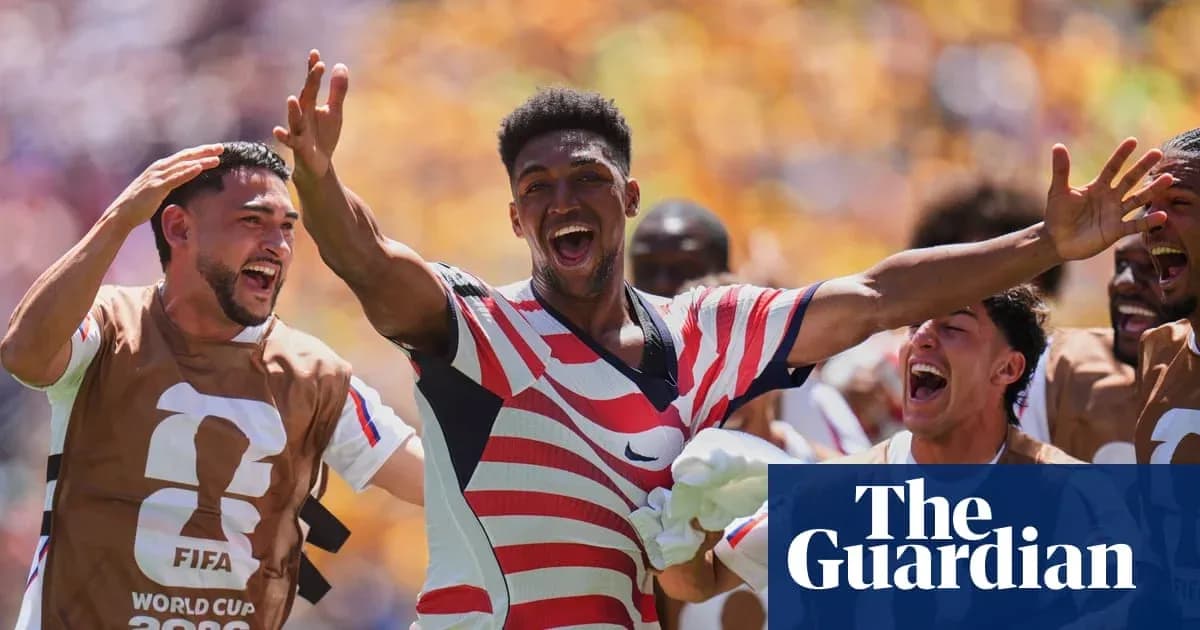
The rebound dropped loose. Freeman reacted first, bundling it over the line in a scrambled, ugly, vital finish. The flag went up, the goal went to review, and the stadium held its breath. Then came the signal: goal stands.
Freeman, now back in his usual centre-back position, ended up celebrating almost the full length of the field away from where he scored, engulfed by teammates streaming from the bench. From near-disaster to decisive scorer in a matter of minutes — the kind of swing that sticks with a player for a long time.
At 2-0, the US had the cushion they craved. Australia had a mountain.
Popovic rolls the dice
Tony Popovic knew he couldn’t wait. His team had been second best for most of the half, and the scoreboard reflected it.
He came out for the second half with a flurry of changes and a bolder plan. Jason Geria replaced Burgess, while Nestory Irankunda and Connor Metcalfe — the two scorers from the Socceroos’ opener — came on for Touré and Velupillay. On the ball, Australia morphed into a more aggressive 4-3-3, only dropping into a five-man back line without possession.
The shift opened the game up instantly.
Seven minutes after the restart, McKennie turned in midfield and slid Balogun through, leaving only Souttar in pursuit. The forward drove toward goal, but the giant centre-back recovered enough to get in the way and block the shot. A let-off, but also a clear sign of what the US could do in transition if Australia overcommitted.
Still, the Socceroos began to find joy in wider areas. Robinson took a booking in the 56th minute as he tried to halt a growing threat down his flank.
Just past the hour, Popovic added more spark. Cristian Volpato replaced Leckie, and the Sassuolo man almost made an instant impact. Irankunda surged down the right, tore into space and cut the ball back. Volpato met it in stride inside the box but lashed over the bar. Minutes later, Metcalfe saw an effort smothered easily by Freese.
Australia were finally asking questions. The clock, though, was against them.
Hanging on, closing out
As the game tilted, Pochettino went the other way with his changes, reinforcing the defensive spine. Robinson, Dest and Ricardo Pepi made way for Sebastian Berhalter, Auston Trusty and Joe Scally, a clear signal: protect what we have.
Popovic pushed further. Jackson Irvine entered for Okon-Engstler, another attacking nudge, and the Socceroos responded with a late surge of pressure. Circati forced a desperate clearance. Half-chances and near-misses flickered around the US box without quite becoming clear sights of goal.
The physical temperature climbed again. Challenges grew heavier, the crowd louder. “USA” rolled around the stadium as yellow cards piled up — Souttar, Balogun and Italiano all booked in the closing stages for niggly, on- and off-the-ball incidents that spoke to both frustration and fatigue.
There was even time for an unusual twist: referee Felix Zwayer suffered a knock that briefly delayed the final whistle, needing treatment before he could continue. When play finally resumed, the US saw out the remaining moments with the composure of a side that knew its job was done.
As the whistle went, Balogun turned to the stands, arms waving, urging more noise from a crowd already in full celebration. For one afternoon at least, this corner of the Pacific north-west lived up to its temporary billing: Soccer City, USA.
The United States march on, knockout place secured, top spot in Group D within touching distance — and all of it achieved without their biggest star. The question now is simple: how much further can this team go when the stakes rise again?