.svg&w=384&q=75 "Naijagoal logo")
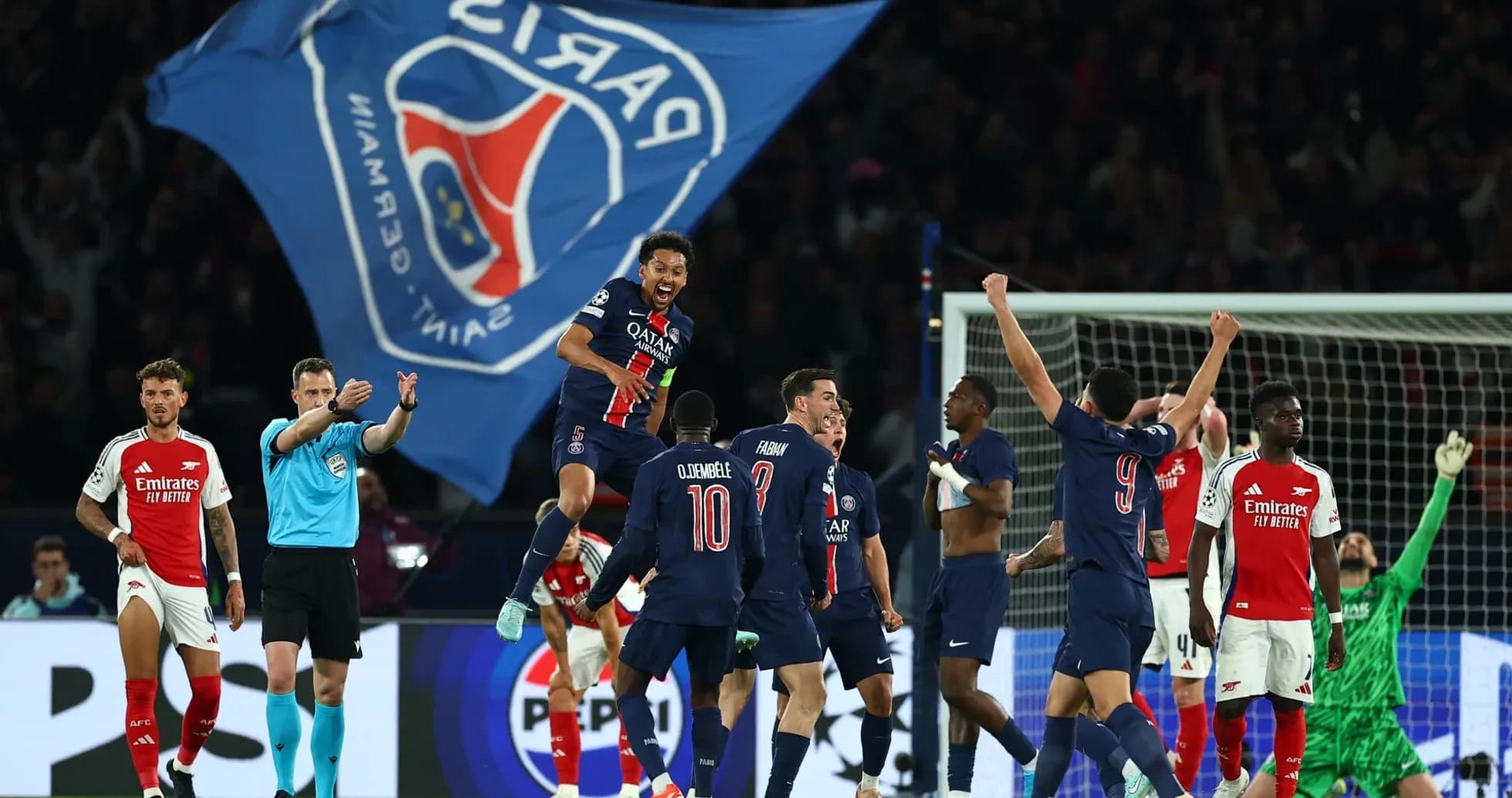

UEFA Champions League Final: Paris Saint Germain vs Arsenal
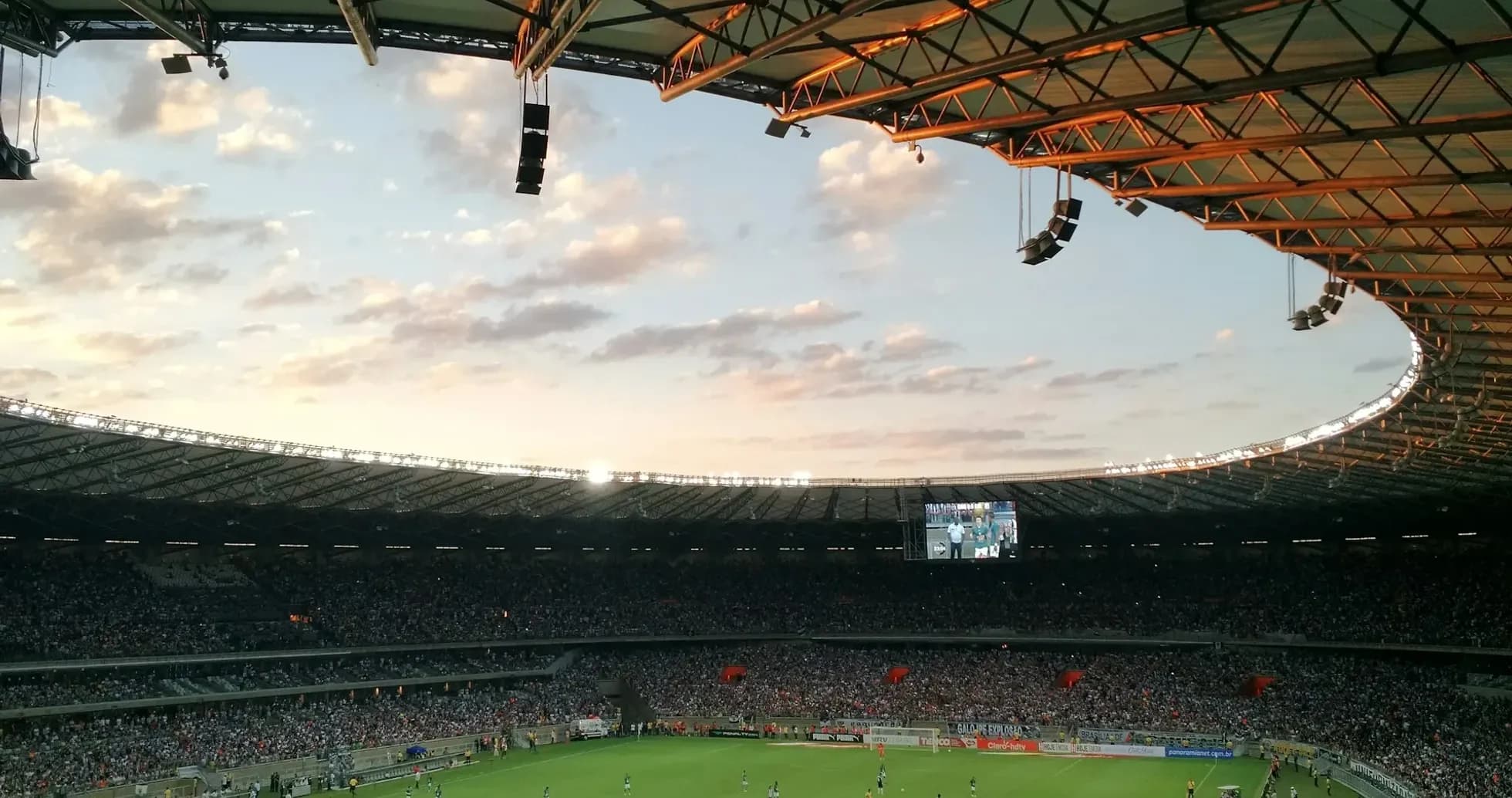
On 30 May 2026, under the vast arch of the Puskas Arena in Budapest, Paris Saint Germain and Arsenal walk out knowing there is nothing bigger left to chase: the UEFA Champions League final, one night for immortality. Paris Saint Germain arrive as a dangerous knockout force with goals spread across their attack (21 scored and 11 conceded in 8 matches), while Arsenal come in as the competition’s benchmark of consistency (23 scored and only 4 conceded in 8 games). For Paris Saint Germain, it is a chance to turn firepower into the ultimate prize; for Arsenal, it is the opportunity to crown a near-perfect continental campaign with the trophy itself.
Season Context
Paris Saint Germain reach this final from a strong but not flawless position in the UEFA Champions League table. Ranked 11th with 14 points from 8 matches, they have combined a potent attack with some defensive openness (21 goals for, 11 against). The “Promotion - Champions League (Play Offs: 1/16-finals)” tag confirms they have already navigated one knockout hurdle, and their journey here has been built on the ability to outscore opponents rather than control every moment.
Arsenal arrive as the competition’s standard-setters. Sitting 1st with 24 points from 8 games, they boast a perfect record of 8 wins from 8, backed by a powerful goal difference built on 23 goals scored and just 4 conceded. Their “Promotion - Champions League (Play Offs: 1/8-finals)” status underlines that they have consistently operated in the elite bracket of this campaign, pairing efficiency in front of goal with a remarkably secure defence.
Form & Momentum
Paris Saint Germain’s form line of DLDWL hints at a side that can be thrilling but occasionally erratic (4 wins, 2 draws, 2 defeats in 8). Their scoring rate is formidable at 2.63 goals per game (21 in 8), but the 1.38 goals conceded per match (11 in 8) shows why they can be described as vulnerable at the back (11 goals conceded in 8 games). This mixture of firepower and fragility makes them a classic high-variance finalist: capable of blowing teams away, but also of being punished if they lose control.
Arsenal’s form string of WWWWW is the picture of relentlessness (8 wins from 8, no draws or defeats). Averaging 2.88 goals per game (23 in 8) while conceding just 0.5 per match (4 in 8), they combine one of the tournament’s most efficient attacks with an elite defence (only 4 goals conceded in 8 games). That balance justifies describing them as dominant on both sides of the ball (23 goals for, 4 against), and it explains why they come into Budapest with such aura and confidence.
Head-to-Head Patterns
Recent European meetings between these two have been finely poised and often tense. On 7 May 2025, Paris Saint Germain edged Arsenal 2-1 at Parc des Princes (UEFA Champions League, season 2024, May 2025), a semi-final second leg where the French side’s home advantage proved decisive over 90 minutes. Just days earlier, on 29 April 2025, Paris Saint Germain had also won 1-0 at Emirates Stadium (UEFA Champions League, season 2024, April 2025), showing they could control an away knockout tie in London. However, Arsenal had previously claimed a 2-0 home victory on 1 October 2024 at Emirates Stadium (UEFA Champions League, season 2024, October 2024), underlining that they are more than capable of dictating this matchup when they find their rhythm.
Tactical Preview
Paris Saint Germain are built around a clear attacking identity, underlined by their consistent use of a 4-3-3 shape (16 matches in that formation in the wider data). That system allows attackers like K. Kvaratskhelia, O. Dembélé, D. Doué and B. Barcola to stretch the pitch and attack one-on-one. K. Kvaratskhelia has been a true reference point with 10 goals and 6 assists (16 direct goal contributions), supported by O. Dembélé’s 7 goals and 2 assists and D. Doué’s blend of 5 goals and 4 assists. Behind them, Vitinha offers control and progression from midfield (6 goals, 1 assist and 1,553 completed passes at 93% accuracy), while A. Hakimi provides width and delivery from full-back (6 assists and 23 key passes). This attacking core explains their high scoring output of 21 goals in 8 Champions League matches, even though the 11 goals conceded in the same span suggest that their aggressive posture can leave space to exploit.
Defensively, Paris Saint Germain’s back line mixes experience and physicality, with defenders such as Marquinhos, Nuno Mendes, L. Hernández and I. Zabarnyi in the squad. The disciplinary data shows I. Zabarnyi has already received one red card, and L. Hernández has also been sent off once, underlining a potential risk when defending in space or under pressure (2 red cards between them). If Paris Saint Germain push their full-backs high, Arsenal’s wide forwards will look to target the channels around the centre-backs, especially in transition.
Arsenal, by contrast, have alternated between 4-3-3 (9 matches) and 4-2-3-1 (5 matches), giving them tactical flexibility without sacrificing their defensive structure. Their overall record of 23 goals for and 4 against in 8 games is mirrored by excellent underlying defensive numbers across a larger sample (only 6 goals conceded in 14 matches in the broader statistics), which supports describing them as extremely solid at the back (6 goals conceded in 14). Players like W. Saliba, Gabriel Magalhães, R. Calafiori and P. Hincapié provide a strong defensive core, while Martín Zubimendi’s 14 tackles, 10 interceptions and 4 yellow cards show his role as a combative midfield screen.
In attack, Arsenal spread responsibility. Gabriel Martinelli has 6 goals and 2 assists in this Champions League campaign, combining direct dribbling (38 attempts, 17 successful) with end product. Around him, B. Saka, Gabriel Jesus, V. Gyökeres, K. Havertz and L. Trossard give Arsenal multiple profiles to exploit Paris Saint Germain’s defensive gaps, whether through wide isolations or late runs into the box. With Arsenal’s last-five defensive index at 95% and Paris Saint Germain’s attacking last-five index at 62%, the final shapes up as a duel between Arsenal’s compact block and Paris Saint Germain’s explosive front line.
Statistical Snapshot
- Competition: UEFA Champions League, season 2025 — 30 May 2026.
- Venue: Puskas Arena, Budapest.
- Prediction: Win or draw — Double chance : draw or Arsenal.
- Win Probabilities: Home 10% / Draw 45% / Away 45%.
- Model: Paris Saint Germain 42.0% — Arsenal 58.2%.
Betting Verdict
The prediction model leans towards Arsenal avoiding defeat, reflected in the “Win or draw” comment and the advice of “Double chance : draw or Arsenal”, supported by a model edge of 58.2% in their favour and a flawless Champions League record (8 wins from 8, 23 goals for, 4 against). With most bookmakers offering home odds roughly between 2.28 and 2.41, draws around 3.10–3.37 and away wins around 3.00–3.29, the value appears to sit on Arsenal in protection-based markets rather than the straight match winner. Arsenal’s defensive solidity (only 4 goals conceded in 8 games) and their strong recent record against Paris Saint Germain in London contrast with Paris Saint Germain’s more volatile profile (21 scored but 11 conceded in 8). In this context, backing “Double chance: draw or Arsenal” aligns both with the statistical edge and with the tactical matchup that favours Arsenal’s balanced, resilient approach over 90 minutes or more.