.svg&w=384&q=75 "Naijagoal logo")

Can Trent Alexander-Arnold Be a Midfielder?
The Trent question refuses to die. Can Trent Alexander-Arnold really be a midfielder?
Gareth Southgate tried it at Euro 2024 and quickly backed away after two group games. Jurgen Klopp built an entire Liverpool structure around his ability to drift inside and dictate from a right-back starting point. Now it is Jose Mourinho’s turn to experiment.
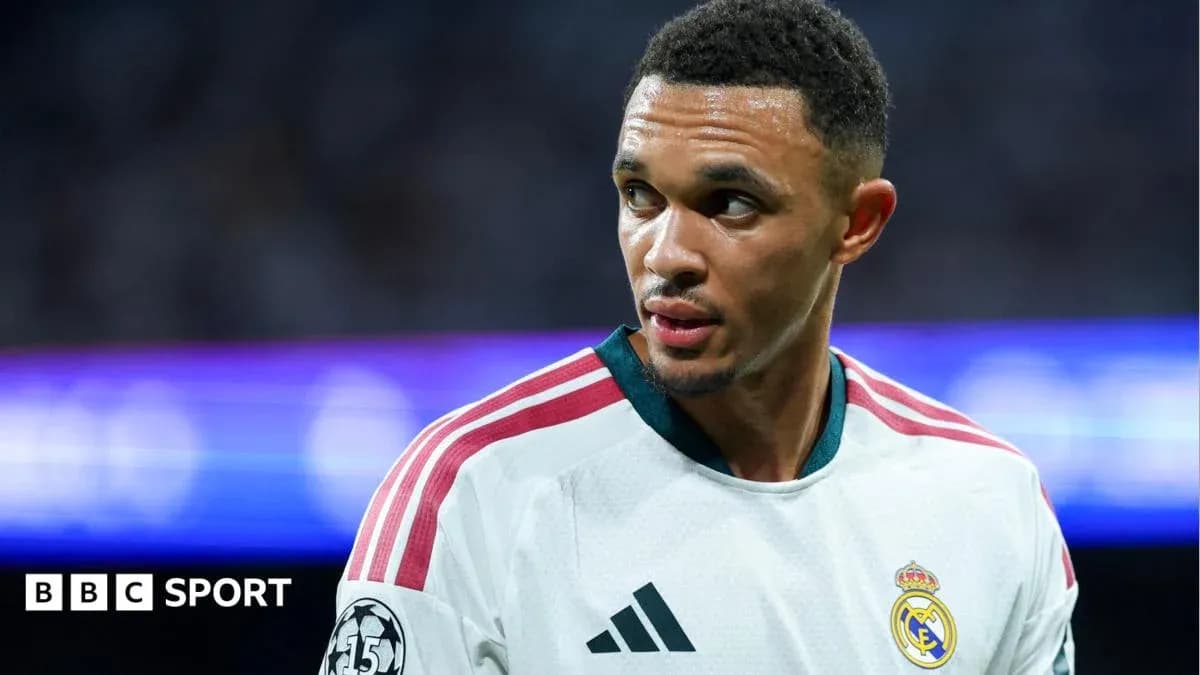
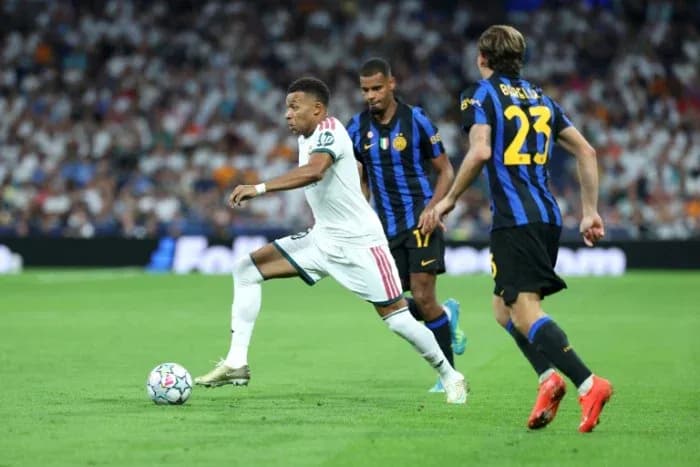
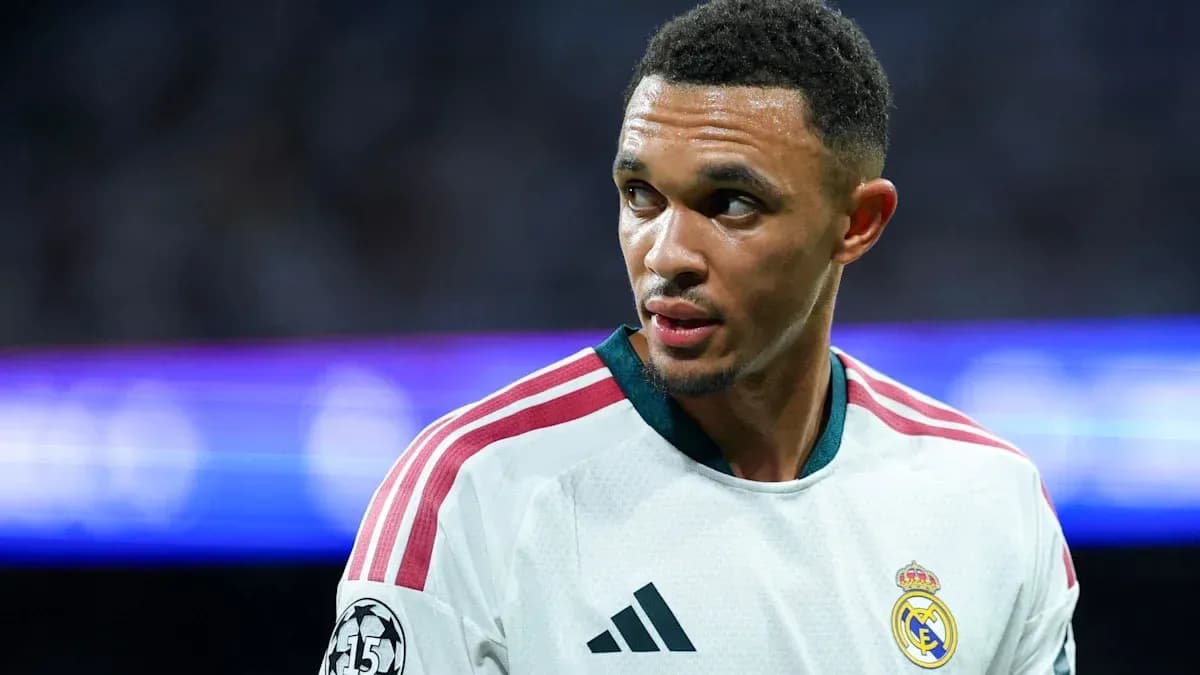
On Tuesday night, in the tight, nervous air of a Champions League tie against Inter Milan, Alexander-Arnold started in the centre of Real Madrid’s midfield. Not at right-back, not as an inverted full-back. In the middle. Properly in there.
Real won 2-1. The debate rolled on.
Mourinho’s one-night-only midfielder
This was not some grand positional revolution. It was necessity.
Suspensions for Eduardo Camavinga, Arda Guler and Bernardo Silva stripped Mourinho of his usual options. The Portuguese turned to Alexander-Arnold and paired him with Federico Valverde, asking the England international to interpret a role that still doesn’t quite belong to him.
"He has played midfield with England and Liverpool... but he is not a midfielder," Mourinho said afterwards, his verdict as blunt as it was revealing.
"He has played very well. He has interpreted what he needed to really well, tactically. Both him and Valverde have worked very well at this level."
So Mourinho liked what he saw. He was “very grateful” for the shift. But he also made it clear: this is not the new normal.
Mixed night in the middle
Alexander-Arnold’s performance mirrored the long-running conversation about him. Flashes of quality. Questions about the rest.
He created two chances. He slung in more crosses than any other Real player. His technique, as ever, looked a class apart when the ball left his right foot. His passing accuracy, though, dropped to 83.3%, and he did not win a single tackle.
As Inter pulled one back in the 77th minute, the tension inside the Bernabeu spiked. Mourinho turned to his bench and took Alexander-Arnold off. Whistles followed around the stadium – more a raw outpouring of frustration at Real’s laboured display than a targeted verdict on one player, but they formed a sharp soundtrack to his walk off.
By then, his tank was empty. Mourinho later underlined just how demanding this role is for a player who has spent his career building his engine for a different lane.
"He has lost some balls because it is not the same to play in this position compared to at right-back," Mourinho said. "The intensity of physical work is quite difficult. He has a different engine. He has given 100%. He left the pitch with nothing left to give."
A right-back without a nailed-down right-back spot
This was also the first competitive match in which Alexander-Arnold and fellow right-back Denzel Dumfries both started for Real. Mourinho had previously tested the pairing in pre-season against Fiorentina, with Alexander-Arnold at right-back and Dumfries further forward on the same flank.
That tells its own story. Mourinho still hasn’t settled on a first-choice right-back.
Last season, Alexander-Arnold had to wrestle with Dani Carvajal for minutes. Now Dumfries is in the mix and the fight has simply changed opponent, not intensity. There is no guaranteed home for him in this team, not yet.
Even so, those close to the situation say Mourinho has been impressed. He values Alexander-Arnold’s professionalism, his attitude, and – crucially – his versatility. In a squad stuffed with specialists, the England international offers something different.
Built to roam, not to stay put
Mourinho does not see Alexander-Arnold as a classic full-back. That much is obvious. The 27-year-old’s game has always been about drifting into central areas, stepping into midfield pockets, and launching attacks from unusual angles.
His passing range, his whipped crosses, the disguised through balls, the dead-ball delivery – these remain elite weapons. They are the reasons Klopp allowed him to wander so far from the traditional right-back lane at Liverpool. They are also why every coach he plays under is tempted, at some point, to push him closer to the heart of the pitch.
The question is not whether he can play there. He clearly can. The question is whether he can live there.
England’s unfinished experiment
Southgate wrestled with that same dilemma.
In June 2023, he handed Alexander-Arnold the England number 10 shirt for a Euro 2024 qualifier in Malta. England won 4-0, Alexander-Arnold scored from midfield and looked at ease threading passes between the lines.
"I haven't played it too much, but it feels comfortable," he told Channel 4 afterwards. "It feels natural, I will say that. It's somewhere I can see myself playing."
That sparked a year of flirting with the idea. Southgate dipped in and out of the experiment, nudging him inside, trying to reshape him as a central player. Then came Euro 2024. Two group games. An underwhelming 1-1 draw with Denmark. Alexander-Arnold hooked before the hour. The plan quietly shelved.
For England, the trial ended with him back on the bench. For Real, it may never truly begin.
A role that won’t disappear
Mourinho’s stance is clear: Alexander-Arnold is not suddenly Real Madrid’s new central midfielder. He was a solution to a problem on the night, not the blueprint for the season.
Yet the idea will not vanish. Not when a player can step into midfield, hit 40-yard diagonals, slide passes into forwards and deliver set-pieces that change games. Not when managers at club and country level keep circling back to the same possibility.
Alexander-Arnold left the pitch against Inter having emptied himself in an unfamiliar role, his future position still a live debate. For a player caught between right-back and midfield, between old job and new temptation, the next few months at the Bernabeu may finally answer the question that keeps coming back. Or they might just make it louder.