.svg&w=384&q=75 "Naijagoal logo")

From Relegation Fight to Ambitious Rebuild: Tottenham's Transformation
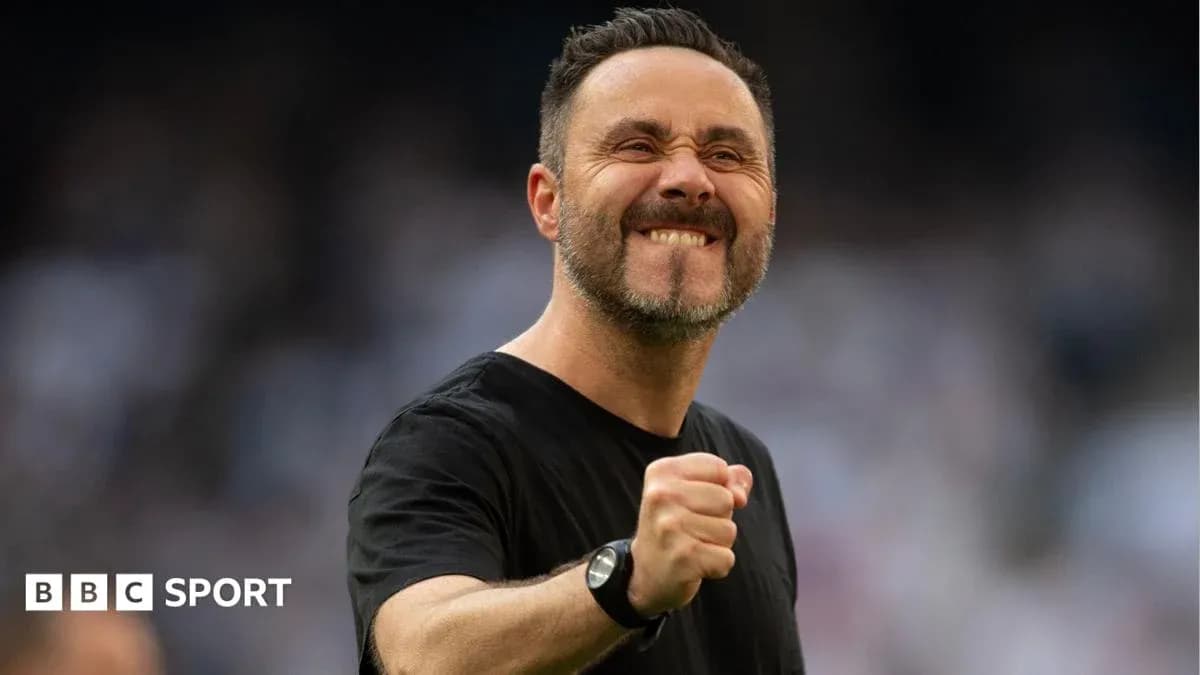
There is a line Roberto de Zerbi used in the depths of last season that has already passed into Tottenham folklore.
“Did we pass away?”
He wasn’t joking. In the away dressing room at the Stadium of Light, after a 1-0 defeat at Sunderland in his first game in charge, players lay on their backs, some in tears, staring at the ceiling and the prospect of relegation. It was the first of seven games to keep Spurs in the Premier League. Survival arrived on the final day. Barely.
Four months on, the scene could not be more different.
From broken dressing room to Sydney buzz
On a private floor of a Sydney hotel, a short stroll from the Harbour Bridge and Opera House, the same squad looks unrecognisable. Laughter bounces off the walls. Players drift between coffees made by their own barista and fiercely contested table tennis matches. A club-record £237m of new signings mingle into the group, the mood no longer funereal but quietly ambitious.
Sandro Tonali, the £100m centrepiece of the rebuild, is here. So is £85m midfielder Mateus Fernandes. Jan Paul van Hecke, Andrew Robertson and Martin Dubravka have all pulled on a Spurs shirt on this pre-season tour of Australia and New Zealand. Only Marcos Senesi, granted extra time off after Argentina’s World Cup final, has yet to feature, though he is now training at Hotspur Way.
De Zerbi, 47, looks around and sees something he could not possibly claim back in April.
“I deserve to want the top players, because now Tottenham deserves to build up a top team,” he says.
This is not the language of a manager braced for a relegation fight. It is the language of a man who has stared at the drop, lived on its edge, and decided to drag the club somewhere very different.
Two plans, one promise
Tottenham planned for both futures. One transfer blueprint for relegation. One for survival.
De Zerbi insists he would have stayed even in the Championship, but he is relieved to be working from Plan A – the version where Spurs keep their best players, or at least “respect the will” of those, like captain Cristian Romero and goalkeeper Guglielmo Vicario, who may yet choose to move on.
At the start, he went face to face with everyone.
“At the beginning of my time in April I had one million individual meetings,” he jokes. The message in those conversations was anything but light. If a player wanted to leave, the deal was simple: “Yes, help me to stay up, and then I help you to leave. If you don’t help me to stay up, you stay underwater with me.”
The threat was half in jest, half deadly serious. Spurs were sinking. They needed clarity, not comfort.
Over the past 12 months, the club has changed around him. Fan anger was raw and understandable after a chaotic 2025-26 campaign. Into that storm stepped new chief executive Vinai Venkatesham, operating on behalf of the Lewis Family Trust. He and technical director Johan Lange – the lone survivor from the previous hierarchy – now steer negotiations.
They are flanked by director of football operations Rafi Moersen and performance director Dan Lewindon, both recruited from City Football Group. Lewindon’s brief is blunt: fix the injury record.
De Zerbi, though, does not stand back and watch. He wades in.
“Like a shark” in the market
“In the transfer market, when I want one player, I become like a shark,” he says. “No chance to say no.”
The bite has been expensive. Fernandes from West Ham for £85m. Tonali from Newcastle for £100m. Two record deals, two midfielders, two statements.
“I love working in the transfer market. It’s not a pressure, it’s one of the nicest parts in my work, in my job,” he explains.
Why? Because decisions bring responsibility. And responsibility, in his world, builds bonds.
“If the coach calls the player, you can build a special connection at the beginning. With Mateus Fernandes, I spoke with the mum, with the father.” He told Fernandes’ father he would be a “second dad” in England, a line that cuts through the usual cold language of deals and clauses.
That personal touch helped. So did his relentlessness. Spurs beat Manchester United and Manchester City to Fernandes and Tonali. They took Van Hecke despite interest from Chelsea. They moved aggressively, and they moved early.
Insiders describe it as game theory. Spurs knew they had to be fast and forceful – on fees, on wages, on the manager’s own charm offensive.
Sometimes, the pitch came with a sting.
After a 2-2 draw with Brighton in April, when Georginio Rutter’s 95th-minute equaliser damaged Spurs’ survival hopes, De Zerbi sent Van Hecke – the man who supplied the assist – a message.
“You wanted to push down Tottenham for Brighton when you made the assist to Rutter, now you have to come to me, you have no choice,” he told him.
For Tonali, the approach was just as direct. De Zerbi texted him the day after Spurs secured safety with a final-day win over Everton, then flew to Brescia to meet him at home. That conversation proved decisive. Club staff finished the job with further talks, but the tone had been set.
Now De Zerbi hints at one more flourish – what he calls a final attacking “bomba”. Two forwards are expected, with a move for Manchester City’s Savinho among the priorities.
Big spend, clear lines
The numbers are huge, but De Zerbi bristles at any suggestion Spurs have lost control.
He says he is under “no pressure” from ownership, even after the Lewis family injected £100m in June. In his view, the money was overdue, not indulgent, and in line with what Chelsea, Arsenal and Liverpool have done in recent years.
There have been exits too. Luka Vuskovic’s £45m move to Brighton brought in a significant fee. Questions still hang over the futures of Lucas Bergvall and Djed Spence.
“We assessed the request of Vuskovic [to join Brighton], with Vinai, with Johan together, because I consider Tottenham’s money my money,” De Zerbi says. “It’s like the owner is my father, I think you don’t want to ask your father to lose money.”
That is the framework. Sell at the highest possible price. Buy as smartly as you can. Work to a five-year plan, not a five-week panic.
It also meant walking away from Joao Palhinha. Spurs admired the midfielder, but the overall package to sign him permanently from Bayern Munich did not fit the model. De Zerbi’s verdict was not about ability. It was about value.
Culture shock
The rebuild is not just on the pitch or the balance sheet. It is in the corridors and canteens of Hotspur Way.
After that bleak afternoon at Sunderland, the gloom seeped into the staff areas. Heads were down. Shoulders slumped. The club felt heavy.
“The day after I organised a meeting without players and I said, ‘The first one I see say something negative, I send you home immediately’,” De Zerbi recalls.
He wants more than tactics and talent. He wants “behaviour, attitude and spirit” to shift. This is a squad that has finished 17th in back-to-back seasons, the first of those softened by a Europa League triumph under Ange Postecoglou, the second scarred by a genuine fear of the drop. The trauma lingers.
So he took them out. One big dinner in Mayfair. With alcohol. With laughter. With a reminder that they were still footballers at a major club, not condemned men.
He believes they were unlucky in their final fixtures and could have secured survival earlier. More importantly, he believes they had started to see themselves as worse than the outside world judged them.
“I think they considered themselves in that moment worse than the people thought,” he admits. The healing is not complete. “I hope next time they organise [dinner and drinks] for themselves.”
That is the goal: a group that doesn’t need the manager to hold its hand. A club that doesn’t flinch at adversity. A dressing room that no longer lies on its back after defeat, wondering if it has “passed away”.
“With love, friendship and care, you become top, top, top,” De Zerbi says.
The money is on the table. The shark has his players. The mood has flipped. Now comes the only part that really counts: proving that this version of Tottenham belongs back among the elite, not anywhere near the trapdoor they escaped on the final day.