.svg&w=384&q=75 "Naijagoal logo")
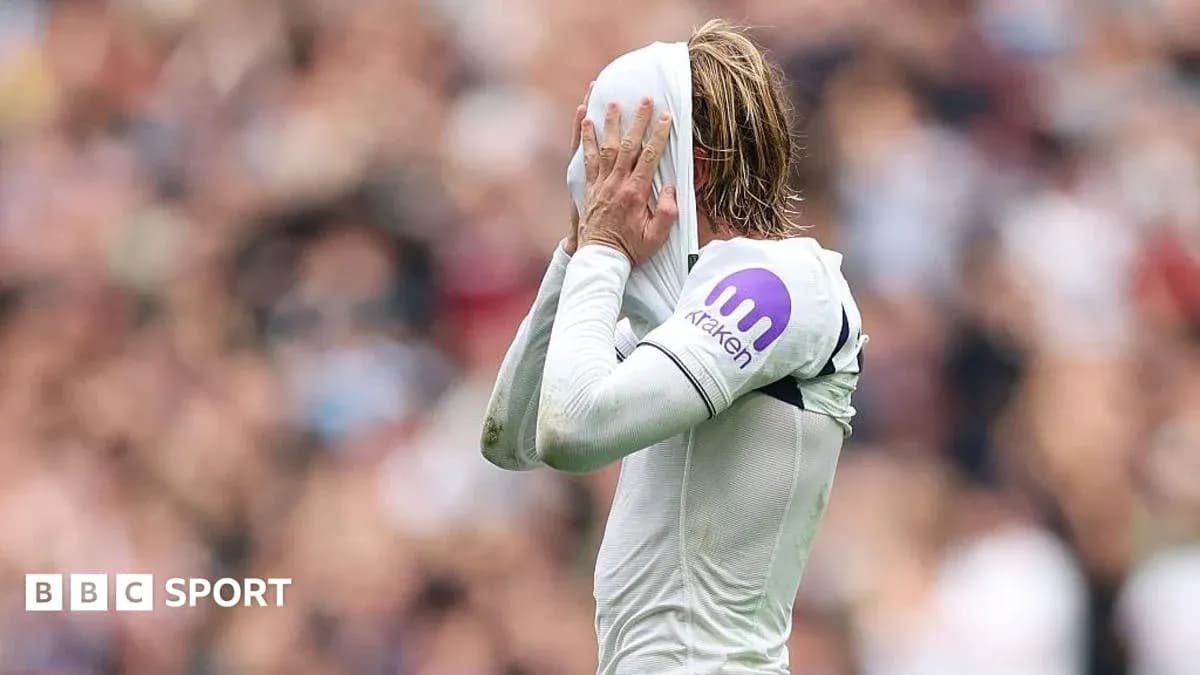

Tottenham's Struggles Continue: A 3-2 Defeat to Aston Villa
Tottenham’s slide was almost scripted.
The longer they pressed, the more inevitable the punch in the gut felt. By the time Aston Villa walked off with a 3-2 win, Roberto De Zerbi’s verdict was blunt and damning: his team were “too fragile”.
They had started anything but. Spurs controlled the opening stages, moved the ball with purpose, and pinned Villa back. Zion Suzuki had to be sharp to turn away efforts from Savio and Archie Gray. The crowd sensed a breakthrough. Instead, they watched the same old story.
From control to collapse
The game turned in first-half stoppage time, and it turned in the most avoidable way.
With Micky van de Ven off the pitch receiving treatment for a blow to the face, Tottenham were temporarily down to 10 men. De Zerbi tried to plug the gap, shuffling Rodrigo Bentancur into centre-back and dropping Mateus Fernandes into midfield. Spurs just needed to see out the half.
They didn’t.
Andy Robertson tried to prevent a corner and only succeeded in gifting the ball straight to John McGinn. Boubacar Kamara’s shot caused chaos, Johan Manzambi reacted quickest and stabbed in from close range. One scruffy goal, one absent defender, one team suddenly exposed.
Spurs have not won any of their last 36 Premier League games when conceding first. When Manzambi scored, the numbers screamed what everyone inside the stadium already knew: the writing was on the wall.
Some fans missed the opener, already heading for half-time refreshments. Many more would not be around at full-time.
Kudus denied, Jackson punishes
Tottenham emerged after the break with intent and a flicker of defiance. They thought they had their lifeline on the hour when Mohammed Kudus swept in from a Robertson cross. The celebrations were cut short. A tight offside call on Robertson chalked it off.
Seven minutes later, the punishment was brutal.
Suzuki launched long, exactly the sort of ball Spurs had spent “many meetings” preparing for, according to De Zerbi. Nicolas Jackson latched on, finished, and the contest effectively died right there. A game that had felt finely balanced suddenly looked like a training drill in ruthlessness.
De Zerbi was furious with the manner of the concession.
“We knew this season Aston Villa are playing 86% more long balls than last season,” he said. “We have to defend compact, the leaders have to be leaders. The second goal we conceded was incredible.”
Villa had been warned. Tottenham still let them walk straight through the front door.
Buendia’s bullet empties the stands
If the second goal broke Spurs, the third scattered what was left of their belief.
With 11 minutes to go, Emi Buendia stepped inside and unleashed a stunning 25-yard strike into the top corner. A brilliant goal, hit with anger and precision. It also triggered a mass exodus.
Thousands of home supporters streamed out before the restart, unwilling to watch the final act of another bleak afternoon. They missed Conor Gallagher’s tidy finish and Jan Paul van Hecke’s header – Tottenham’s first Premier League goals of the season, arriving when the contest had already dissolved.
The late rally barely registered. The damage, in every sense, was done.
A brutal table and an even harsher history
Two points from five games. Bottom three. More than £300m spent in the summer and still no Premier League win.
This is Tottenham’s worst top-flight start since 2008-09, when they also had two points from five. Back then, Juande Ramos survived three more defeats before Harry Redknapp dragged them up to eighth. Spurs have now gone five league matches without a win at the start of a season for the first time since 1986.
“Sacked in the morning,” sang the Villa fans at De Zerbi, as he prowled the touchline, looking short of answers once Jackson made it 2-0.
On the pitch, the contrast between investment and impact was stark. Sandro Tonali, the £100m arrival from Newcastle, was overshadowed by McGinn, Villa’s tenacious captain and a £2.75m signing from Hibs eight years ago. Savio, bright early on and denied three times by Suzuki, faded badly. Omar Marmoush, brought in to bring goals, brought almost nothing.
Spurs have thrown money at the scars of two relegation battles and still look unsure of who they are.
Villa’s reset, Spurs’ reckoning
Villa arrived with their own questions. More than £250m spent, high-profile exits, a Europa League title in the back pocket and a squad reshaped out of necessity. They, too, needed a first league win after three defeats in their opening four games.
They got it with clarity and conviction. Long balls when they needed to go long. Grit when they needed to suffer. A ruthless edge when chances finally came.
They now look like a side settling into a new version of themselves. Tottenham, by contrast, look like one still trying to work out the basics.
Former Brighton striker Glenn Murray urged patience with De Zerbi.
“He is trying to build something, it will take time,” he said on BBC’s Final Score. “They have had more shots in three of the past four games, more possession and more touches in the opposition box. The metrics are there to say he will turn it around.”
The numbers say one thing. The league table screams another.
De Zerbi’s anger and the work ahead
De Zerbi did not spare his players or himself.
“My focus is why we concede the first goal with 10 players, we can stay stronger, communicate more and more, defend in a compact way,” he said. “We have to explain another game like Newcastle where we played the first half well and then we lose. It’s my responsibility.”
He admitted he chose silence in the dressing room.
“I didn’t speak with the players, I didn’t want to say anything,” he added. Those heading off on international duty, he said, “have to play and work”. Those staying behind – James Maddison, Gallagher, Dominic Solanke, Tosin Adarabioyo, Marcos Senesi, Savio – “have to work more because their physical condition, I didn’t like in this game.”
Fragility. Fitness. Leadership. Structure. All under scrutiny now.
The international break gives Tottenham three weeks to breathe, to drill, to reset. Or simply three weeks to stew on a start that has already dragged them into another crisis.
When they return, the question will be simple and unforgiving: is this just a painful transition, or the shape of their season to come?