.svg&w=384&q=75 "Naijagoal logo")

Tottenham's Injury Crisis: Examining the Dual-Surface Pitch
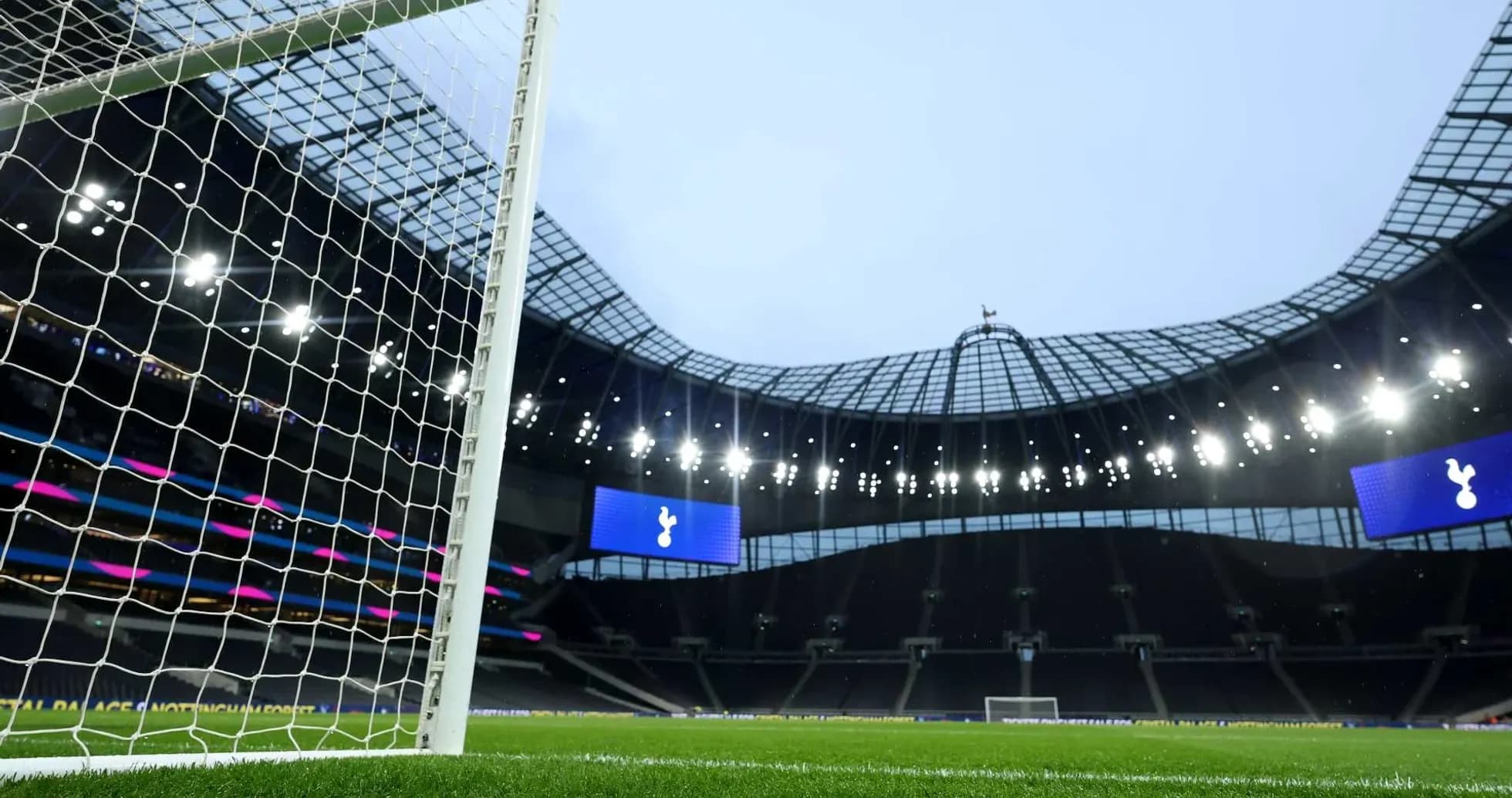
The Tottenham Hotspur Stadium was built as a statement of modern engineering: a sliding grass field that disappears to reveal an artificial NFL surface, a venue designed as much for spectacle as for sport. Now that same showpiece is under suspicion.
Inside the club, the question is blunt: is the pitch hurting their players?
Pitch of Dreams, or Problem Underfoot?
According to Sky Sports, new performance director Dan Lewindon has launched a detailed investigation into whether the stadium’s dual-surface technology is playing a part in a worrying rise in serious leg and ligament injuries.
Independent testing has already been carried out on the bounce and surface tension of the grass. The data, though, has offered no clear verdict. Nothing conclusive, no smoking gun. So the work goes on, with Spurs now comparing their surface to others across the Premier League to see if something, somewhere, is out of line.
The concern is not theoretical. It is rooted in what keeps happening in N17.
Dejan Kulusevski, Radu Dragusin, Wilson Odobert – all have suffered significant injuries at home. James Maddison partially tore his ACL in a home game against Bodo/Glimt, then later ruptured it completely. One incident can be bad luck. A cluster, all on the same pitch, demands answers.
The debate is not just a north London issue. Real Madrid are conducting their own review after a spate of ACL injuries since installing a retractable pitch at the revamped Santiago Bernabeu. Two of Europe’s flagship arenas, both boasting cutting-edge surfaces, both now under the microscope for the same grim reason.
A Department Under Review
Lewindon’s remit goes far beyond grass and rubber crumb. His three-month review has also exposed what are described as structural problems inside Spurs’ performance department.
The belief growing within the hierarchy is stark: the medical and coaching teams have not been working closely enough. Decisions have been made in silos, communication has frayed, and the result has been a cycle of repeat injuries and prolonged absences.
To break that cycle, Spurs are preparing a shift in philosophy. The club wants a “small-team approach”, assigning specific physios to tight groups of around six players. The idea is to build deeper relationships, tailored training plans, and sharper, more consistent physical preparation. Less production line, more specialist care.
It is a move that hints at a club trying to reconnect all the moving parts around its squad, and to move away from the sense of players being passed from one department to another without a single, unified plan.
Four Managers, One Season, One Bruised Squad
The chaos has not been confined to the treatment room. The dugout has been a carousel.
In the space of a single year, four head coaches have led the side: Ange Postecoglou, Thomas Frank, Igor Tudor and Roberto De Zerbi. Four different philosophies. Four different training intensities. Four different sets of tactical demands.
For players, that constant upheaval has a physical cost. One regime ramps up pressing, another changes the running patterns, another alters the load in training. Bodies adjust, then adjust again, then again. Somewhere in that churn, the risk goes up.
Inside the club, there is a growing acceptance that this lack of continuity has contributed to the injury crisis. The squad has been forced to chase the shifting demands of each new coach, and the muscles and ligaments have paid the price.
The Xavi Simons Flashpoint
Nowhere has the scrutiny on Spurs’ medical operation been sharper than in the case of Xavi Simons.
During a win at Wolves, the midfielder went down, was treated with ice spray, and then allowed to return to the pitch. Minutes later, he was stretchered off with a ruptured ACL. The images fuelled outrage among supporters, who questioned how a player with such a serious injury could have been sent back into the game.
Inside the club, though, there is no sense of regret. Spurs have defended the decision, and Lewindon is understood to have been very satisfied with how the medical staff handled the incident.
Simons wanted to continue. Pitchside, with limited time and tools, a definitive ACL test is notoriously difficult. In that context, the decision to give him a chance to carry on has been deemed correct by the club. Crucially, Tottenham maintain that his brief return to the field did not cause any additional damage.
It was, however, just one chapter in a brutal opening spell for De Zerbi. In his first three matches in charge, he also lost Cristian Romero and Destiny Udogie to serious injuries. A new coach, a depleted squad, and a medical department under siege.
De Zerbi is said to be pushing hard for a stronger support network around the players, including the addition of a team psychologist to help knit together the performance and medical teams and to improve communication in a high-pressure environment.
Maddison’s Verdict: Not Just Bad Luck
From the dressing room, the frustration has a human voice. James Maddison has not shied away from the scale of the problem.
“Our situation with the injuries has been worse than any other club,” he said. “People try and say, ‘Oh, but we’ve got this and that’. But ours is astronomical, and we need to look at why that is.”
He is realistic enough to accept that not every incident can be pinned on science, structure or surface.
“Sometimes it can just be unlucky, sometimes it can be a coincidence, like me doing my ACL or [Dejan] Kulusevski getting a horrendous knock off [Marc] Guehi. That’s not the medical team, that’s not the pitch or all the theories that you see, sometimes that’s rubbish.”
Yet the numbers, the absences, the names on the treatment table – those, in Maddison’s eyes, changed the course of Tottenham’s season as they battled to stay clear of relegation trouble.
“We’ve been a bit unlucky,” he added. “But like I said, the big names that we’ve missed, it does affect you and you can’t just deny that. Myself, Kulusevski and [Mohammed] Kudus, and [Rodrigo] Bentancur missed three months and whatnot. If you had had them for the whole season, we wouldn’t have been in this situation, I strongly believe. That’s just not me being naive, that’s just a fact. But it is the situation we find ourselves in, and I am just proud of the lads to dig deep today.”
That is the tension at the heart of Tottenham’s inquest: how much of this is misfortune, and how much is preventable?
Lewindon’s review, the pitch tests, the restructuring of the performance department and the push for psychological support all point in one direction. Spurs know they cannot afford another season defined by crutches, scans and rehab schedules.
For a club that built a stadium to host the biggest shows in world sport, the real test now is far less glamorous: can they finally build a platform that keeps their best players on the grass?