.svg&w=384&q=75 "Naijagoal logo")

Torino vs AC Milan: Tactical Analysis of Serie A Opener
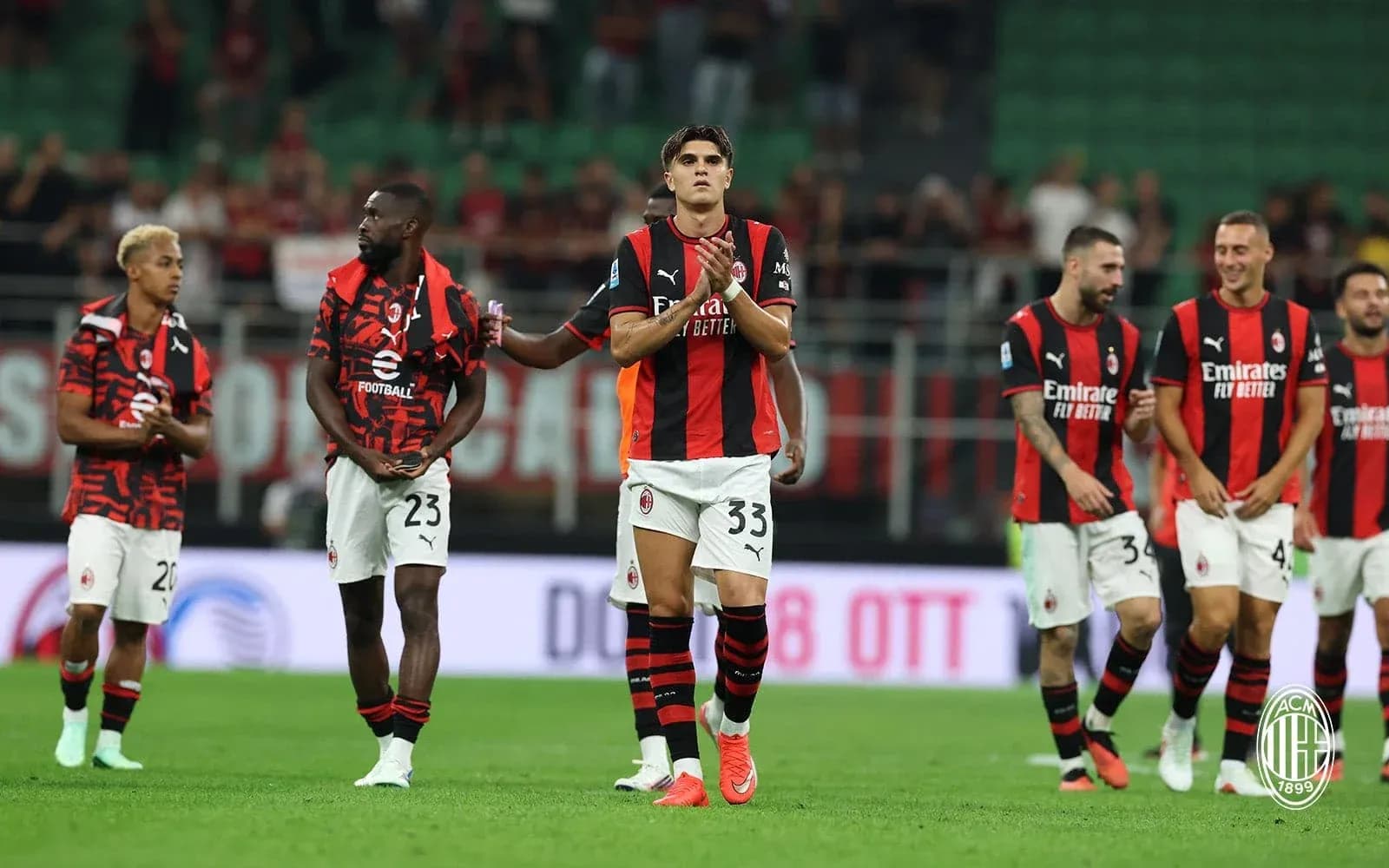
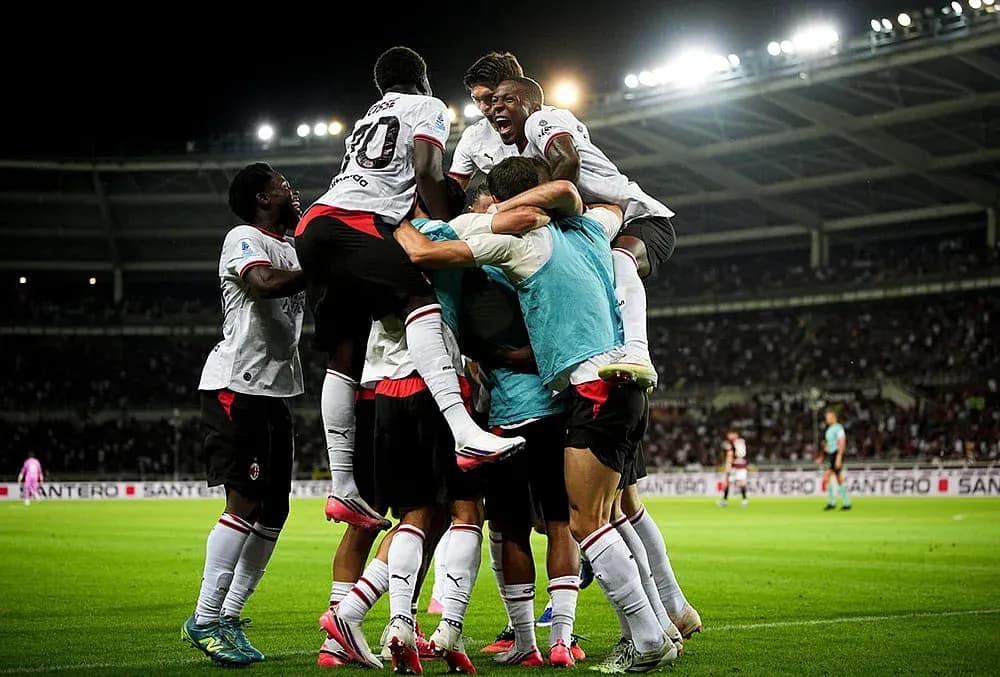
On a warm Turin evening at the Stadio Olimpico Grande Torino, Serie A’s new season opened with two sides mirroring each other on the whiteboard but not on the table. Both Torino and AC Milan lined up in a 3-4-2-1, both entrusted their creativity to a pair of withdrawn forwards, and both sought control through numbers in midfield. Yet when the whistle went at full time, the scoreboard told a sharper story than any tactical chalkboard: Torino 1–2 AC Milan.
Following this result, the league table already sketches contrasting trajectories. Torino sit 13th with 0 points from 1 match, their overall goal difference at -1 after scoring 1 and conceding 2. AC Milan, by contrast, have opened away from home with authority: 3 points from 1 game, an overall goal difference of +1, built on 2 goals scored and 1 conceded on their travels. For Ruben Amorim, this is the kind of controlled away win that underpins a Europa League push; for Ignazio Abate, it is a narrow defeat that nonetheless hints at a coherent identity.
I. Structural Mirrors, Different Personalities
Abate’s Torino used the 3-4-2-1 as a cage of controlled aggression. D. Mascardi anchored the back line behind a trio of S. Coco, A. Ismajli, and P. Comuzzo. Ahead of them, the double pivot of M. Pedersen and G. Gineitis was asked to be both shield and springboard, with K. Fitz-Jim and A. Cacciamani operating as wide midfielders who had to cover the entire flank.
In the half-spaces, N. Vlasic and C. Casadei floated behind G. Simeone. On paper, that trio offers a blend of graft, vertical running, and penalty-box presence. In practice, Torino’s structure was compact but not yet ruthless. They have, overall this campaign, scored 1 goal and conceded 2; at home that is also 1 for and 2 against, a statistical reflection of a side that can hurt opponents but still bleeds at the wrong moments.
Milan’s 3-4-2-1 under Amorim had a different texture. M. Maignan’s presence allowed the back three of M. Gila, K. De Winter, and S. Pavlovic to hold an aggressive line. The wing zones were patrolled by S. Chukwueze and P. Estupinan, nominally listed as midfielders but functionally wing-backs with a winger’s instinct. Inside, Y. Musah and A. Jashari formed a dynamic, high-energy pairing.
Ahead of them, R. Loftus-Cheek and A. Cisse supported G. Ramos. Where Torino’s front three sought combinations around the box, Milan’s trio constantly threatened to run beyond, drag markers, and create vertical lanes. That difference in intent was decisive.
II. Tactical Voids and the Weight of Absences
Both managers had to negotiate significant absences, and those voids shaped the match’s tactical narrative.
Torino were without F. Anjorin (hip injury), E. Comert (suspended after a red card), F. Israel (shoulder injury), and P. Pellegri (knee injury). The absence of Comert in particular forced Abate to lean on Comuzzo and Coco either side of Ismajli, removing a more experienced organiser from the back line. Without Pellegri, Torino’s bench lacked a different type of central reference; instead, the late-game attacking change came from C. Adams, who nonetheless made his mark with a goal and a place among the league’s early top scorers.
For Milan, the list was even more star-studded: Y. Fofana (inactive), S. Gimenez (ankle injury), R. Leao (muscle injury), C. Nkunku (inactive), and F. Tomori (inactive) all missed out. That meant Amorim had to construct an attack without his most explosive wide threat and a defence without one of its most established centre-backs. The response was telling: rather than mimic Leao’s profile, he shifted responsibility onto the collective, with A. Cisse and Loftus-Cheek driving into spaces that Leao might otherwise have owned.
Disciplinary risk, too, had its own subplot. Milan’s early-season yellow-card profile is dominated by Loftus-Cheek, who has already taken 1 yellow card in Serie A. The league data also, somewhat curiously, lists him among top red-card profiles, underlining that his physical, duel-heavy style walks a thin line. Torino, by contrast, have no significant card trends yet, but the shadow of Comert’s prior red card loomed over Abate’s defensive choices.
III. Key Matchups: Hunter vs Shield, Engine Room vs Engine Room
The “Hunter vs Shield” duel in this match-up is less about a single striker and more about attacking trios against defensive blocks.
On Torino’s side, the late cameo of C. Adams was emblematic. With 1 goal from 1 appearance and a perfect shot-to-goal conversion so far, he has immediately become their most efficient finisher. His movement between the lines, combined with the creative impulses of Vlasic and Casadei, will be central to how Torino evolve in the coming weeks. Yet the shield that opposed them was stern: Milan have, overall, conceded just 1 goal in this campaign, all of it away from home, giving them an away goals-against average of 1.0. The back three, protected by Musah and Jashari, showed the capacity to absorb pressure and then spring forward.
On the other side, Milan’s hunters are already carving reputations. A. Cisse, with 1 goal from 3 shots and 10 duels contested (6 won), embodies Amorim’s desire for forwards who work as hard without the ball as with it. G. Ramos, even when not on the scoresheet, pins defences and opens corridors for runners.
The true star of the early season, though, is A. Rabiot. Coming from the bench, he has produced 1 goal and 1 assist in just 34 minutes, with 1 shot on target and a key pass that underlined his ability to decide games in compressed time. His dual presence on both the top scorers and top assists lists makes him Milan’s most efficient “closer.” When he steps onto the pitch, the tempo and threat profile of Milan’s attack changes instantly.
In the “Engine Room” duel, G. Gineitis quietly impressed for Torino. Across 90 minutes, he completed 30 passes at 86% accuracy, added 1 key pass, and even blocked 1 shot. He won all 3 of his duels and drew 2 fouls, a sign that he can both circulate and resist pressure. Opposite him, Musah and Jashari offered mobility and bite, while further ahead Loftus-Cheek blended physical presence with line-breaking carries, though his 1 yellow card and 1 foul committed show the cost of that aggression.
Chukwueze, meanwhile, was Milan’s wide metronome and dagger. With 45 passes at 77% accuracy, 4 key passes, 2 shots (1 on target), and 1 assist, he was the conduit through which so many of Milan’s attacks flowed. His ability to stretch the pitch on the right created space inside for Cisse and Loftus-Cheek to exploit.
IV. Statistical Prognosis and Tactical Trajectory
From a statistical standpoint, the early-season picture is sharp. Torino have, at home and overall, scored 1.0 goals per game and conceded 2.0. Milan, on their travels and overall, are averaging 2.0 goals for and 1.0 against. No penalties have been awarded to either side so far; with 0 total penalties and 0 missed, there is no spot-kick narrative yet to complicate the numbers.
Defensively, Torino’s overall goal difference of -1 (1 scored, 2 conceded) mirrors their 13th-place standing: competitive but not yet efficient. Milan’s overall goal difference of +1 (2 scored, 1 conceded) aligns with a 5th-place rank and an early label as Europa League contenders.
Tactically, the match suggested that Abate’s Torino have a clear structure but still lack vertical punch from the start. The introduction and immediate impact of Adams hints that he may soon graduate from impact substitute to central pillar, especially with Pellegri sidelined. Gineitis offers a reliable platform, but Torino will need more incision from Vlasic and Casadei between the lines if they are to turn tight games into points.
For Milan, Amorim’s blueprint is already visible: a back three that can defend high, wing-backs who double as playmakers, and a rotating cast of attacking midfielders who can all threaten goal. The fact that they could win away without Leao and Tomori, while leaning on Cisse’s work rate, Chukwueze’s creativity, and Rabiot’s ruthlessness, is ominous for the rest of the league.
Following this result, the story of Torino vs AC Milan is not just 1–2 on the opening weekend. It is the tale of two 3-4-2-1s: one still searching for its cutting edge, the other already sharpening its tools for a long campaign.