.svg&w=384&q=75 "Naijagoal logo")
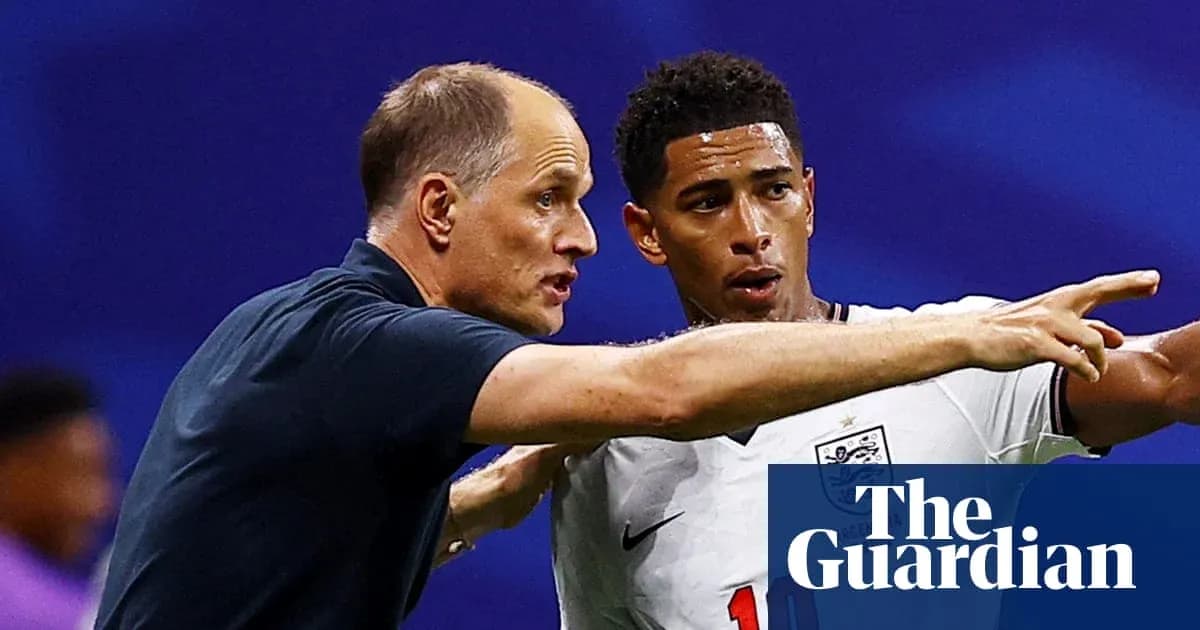

Thomas Tuchel's Challenge After World Cup Heartbreak
Thomas Tuchel has been a familiar face again around Premier League grounds this season, slipping into VIP areas, shaking hands, talking football. One recent exchange has stuck with him. “People are killing me,” England’s head coach told a colleague. Still. Two months on.
Two months since that 2-1 World Cup semi-final defeat by Argentina in the United States, the air around the national team still feels thick. The emotions haven’t thinned: heartbreak, anger, disbelief. A late lead thrown away, a final snatched from their grasp. The scars from it may never completely fade.
Inside the fanbase, the split is stark. One side cannot get past the collapse from 1-0 up with five minutes to play. For them, the blame sits squarely at Tuchel’s feet. The substitutions. The retreat. The five at the back. They see a coach who flinched when the pressure peaked.
The other side looks at the wider picture. They see a team that fought its way to only the fourth World Cup semi-final in England’s history. They remember the personality, the defiance, the surges of belief. The last-16 win over Mexico at the Azteca Stadium with 10 men. The extra-time slog past Norway in Miami in 40C heat. The breathless opening victory over Croatia. The third-place win against France. A best World Cup finish since 1966.
Both camps are loud. Both are convinced they are right. Tuchel hears them all, but the fury cuts deepest. He is still bruised, still bewildered that a semi-final run can be framed as failure in a country where such stages are not routine.
This is the tension that now shadows him into the next cycle, one that will run straight into Euro 2028, a tournament England will co-host. On Friday he will name his squad for the opening four Nations League fixtures: Spain at Wembley, Czechia home and away, then Croatia away. A sharp restart, no easing back in.
Tuchel wants to look ahead. So do his employers at the Football Association. For that to work, he has to let go of the noise around Argentina – however wild he feels some of the criticism has been, however much it has distorted the view of what England actually achieved in the US.
The England job has long been branded impossible. Not because of tactics or talent, but because of the weight of expectation and the ferocity of the fallout when it goes wrong. One bad night and the cycle of blame begins again, choking the next campaign before it starts. The only way out is through. You don’t solve it with essays and explanations. You absorb it and keep walking.
Inside Wembley, the FA’s stance is clear: Tuchel is their man. Their faith in him runs deeper than one chaotic night against Argentina. The easiest way to understand it is to rewind to the last 32 against the Democratic Republic of the Congo – a match that came closer than anyone cares to admit to becoming an Iceland 2016-style catastrophe.
England trailed 1-0 with 15 minutes left. Tuchel, by his own admission, wondered if his tournament was about to end in humiliation. Then Harry Kane took over, scoring twice to turn the game on its head. The captain’s intervention saved more than a scoreline; it saved an entire project.
The FA looked at that night and saw something they liked. They saw in-game changes that worked, just as they had at other points in the World Cup. They saw a squad that looked like a genuine brotherhood, not a PR construct. Tuchel has spoken often about that bond. Those inside the camp insist it was real. For the FA, that mattered. They stand fully behind him and regard the idea that he should have resigned or been sacked after a semi-final as absurd.
Tuchel went to the World Cup talking about putting a second star on the England shirt. He didn’t get there. Did the death-or-glory rhetoric make the eventual fall sharper? Possibly. But what was the alternative? Announcing that the quarter-finals or semi-finals would be “fine”? That would have landed just as badly, in a different way.
Quietly, the FA never saw England as favourites. They were seeded fourth. The draw was awkward. The schedule gave them the latest possible start, a long break between their first and second group games, then a compressed run-in. Throw in the travel, the altitude in Mexico, the Miami heat against Norway, and the margins began to look even thinner. Inside the camp, winning the whole thing was always going to require punching above their weight.
The Euros feel different. Euro 2028 will be, in effect, a home tournament, shared with Scotland, Wales and the Republic of Ireland. The FA fought hard to be co-hosts. They believe this group will peak on home soil.
First, though, the country has to decide whether it can move on from Argentina. Whether it can live with Tuchel’s decisions that night, even if it doesn’t love them. That feels like the starting line for this new campaign.
The semi-final itself remains raw. Tuchel could not shift the momentum in the second half once Argentina went into all-out fury mode. England sank deeper and deeper, long before the hydration break when Ezri Konsa replaced Anthony Gordon and the shape flipped to a back five. By then, they were locked into survival football, barely able to string passes together, let alone build attacks.
Tuchel owns that. He knows he could not drag his team back onto the ball. But he also knows what they had in their legs – or rather, what they didn’t. Altitude against Mexico with 10 men. 120 minutes in the heat against Norway. By the time they faced Argentina, England were running on fumes.
The decision to reinforce the defence was cold, calculated. Tuchel read the data, read the energy levels, and chose what he believed was the percentage play, the least bad option. It failed. When it failed, it looked dreadful. A manager “parking the bus” and paying the price. Would more attacking changes have changed the ending? Nobody can say for sure. What is clear is that England were ultimately overrun.
Now the calendar offers no hiding place. England are back in Nations League Group A, where the opposition bites. Spain at Wembley next Saturday will test everything: Tuchel’s selections, his tone, the crowd’s patience.
The last Nations League campaign, down in Group B, did more damage than the FA anticipated. The fixtures against Ireland, Finland and Greece were supposed to be manageable. Instead, the level dropped. Even Greece at Wembley turned nasty, England losing 2-1. World Cup qualifying had also been gentle. The hope now is that a tougher Nations League programme will harden England for Euro 2028.
Tuchel’s squad announcement comes with complications. Four World Cup players are likely to miss out through injury: John Stones, Dan Burn, Djed Spence and Jordan Henderson. That opens doors. Tino Livramento, Levi Colwill, Jarrad Branthwaite and Lewis Hall are pushing hard for defensive recalls.
Midfield brings its own dilemma. Does Kobbie Mainoo keep his place after a World Cup that never really caught fire for him? His form for Manchester United has been one of the few bright notes in their poor start. Alex Scott and Myles Lewis-Skelly are also jostling for a return.
Higher up the pitch, Cole Palmer and Phil Foden are in contention for the No 10 role. Eberechi Eze and Noni Madueke, by contrast, have stumbled out of the blocks at Arsenal. Around the forward line there is growing noise about Josh King and Ryo Ngumoha, with Dominic Calvert-Lewin and Liam Delap also generating serious momentum.
When Tuchel steps in front of the cameras on Friday, the names on the list will matter. So will the way he speaks. England have already seen what happens when their manager goes into a defensive crouch. Now the question is whether he can front up, carry the scars from Argentina, and still convince a restless nation that this story is nowhere near finished.