.svg&w=384&q=75 "Naijagoal logo")

The Summer Transfer Fantasy That Never Was
“We were so close … At the end of the day, really, they made him an offer he couldn’t refuse.”
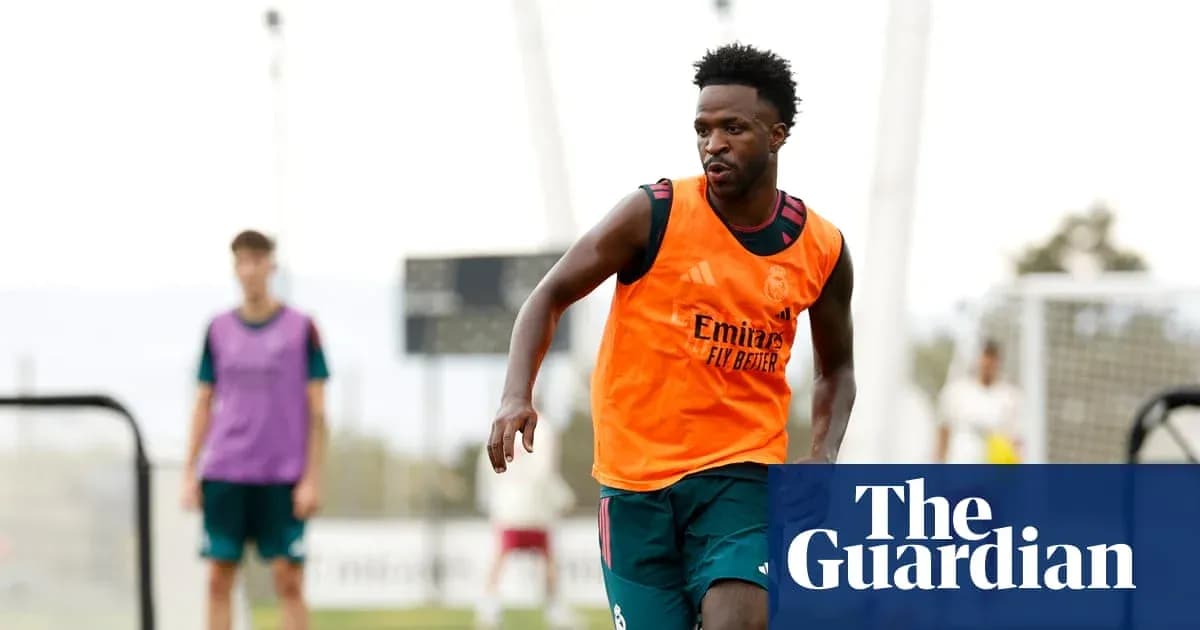
The words belong to Glenn Hoddle in 2002, mourning Tottenham’s failed move for Rivaldo. They might as well be echoing around north London now as Arsenal watch Vinícius Júnior grin for the cameras and sign on again at Real Madrid.
Back then, Spurs tried to plug the Rivaldo‑shaped hole by bringing home Robbie Keane, the prodigal son with the boyhood scarf and the sharp turn in the box. It was a pragmatic answer to a romantic question. Arsenal now stare at a similar void, their Vinícius dream dissolved in a swirl of agent briefings and contract extensions. Where do you turn when the fantasy evaporates? To another Brazilian? To a defender? To Cristian Romero, of all people?
The transfer window does this every year. It invites supporters into a parallel universe where logic suspends itself and the imagination takes over. In that world, Vinícius is already tormenting full-backs from Burnley to Bournemouth, gliding past desperate challenges on those mythical wet Tuesday nights at Stoke that everyone invokes and nobody actually wants to watch. No one struggles to settle, no one tweaks a hamstring on debut. They just score a gazillion, smash their xG into splinters and make every scouting department look like geniuses.
It’s football as daydream. And it is intoxicating.
Then comes the hangover. The deals that don’t happen, the gaps that don’t get filled, the squads that suddenly look one injury away from panic. Scroll through Liverpool’s corner of social media and you’ll find the anxiety in full voice: Virgil van Dijk, 73, apparently the only senior centre-back left standing in Red. The numbers are exaggerated for effect, but the unease is real enough.
Maybe Bradley Barcola turns up and calms some of that noise. Maybe he doesn’t. He is not, as yet, a DONE DEAL, capital letters and all.
Arsenal’s coping mechanism has been to latch on to the idea of Bruno Guimarães arriving instead. If you can’t have the superstar winger, why not the metronomic midfielder? Who needs Big Vin if another Brazilian can slide passes into the stride of Gabriel Martinelli and the rest of Mikel Arteta’s front line? The mind adjusts. The fantasy shifts shape.
Every summer has its keystone transfer, the one that locks others in place and slams doors elsewhere. This time, the decisive move isn’t Vinícius leaving Madrid but Madrid throwing a mountain of money at him to stay. That single decision sends a tremor through the elite.
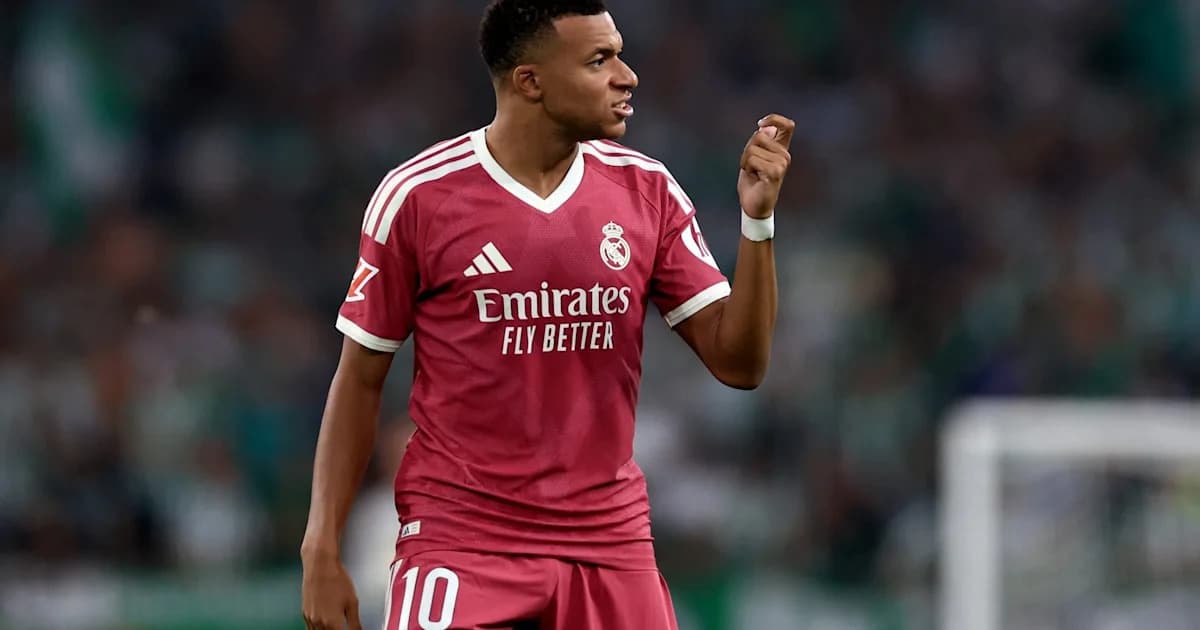
Rodri, fresh from lifting the 2024 Ballon d’Or and still fuming, along with his club, at the fallout from that award, had been mentioned in the same breath as the Bernabéu. With Vinícius locked in and Kylian Mbappé already on silly money, the numbers no longer add up. There is no room at that particular inn for the Spain captain.
So the picture changes again. Rodri, Manchester City’s fulcrum and the outstanding performer at the Geopolitics World Cup, is now said to want Barcelona instead. For City, that would be a brutal loss. For the Premier League, another star name edging towards the departure lounge. For Barcelona, still wrestling with their own economics, it would be a statement that they intend to keep playing at the grown-ups’ table.
This is the transfer window at its purest: love, loss and the strange pride clubs and fans take in almost signing someone. Better to have chased and missed, the logic goes, than to sit on your hands and watch everyone else play fantasy football with real money.
The noise around it all never stops. On Friday night, while the speculation churns, the Littlewoods Cup ticks back into life. Middlesbrough against Wrexham, 0-0 and then 1-0 on penalties, the kind of tie that lives in the shadows of the summer’s grand theatre yet still matters intensely to those inside the stadium. The game goes on while the market rages.
Off the pitch, the sport wrestles with a different kind of turmoil. Lise Klaveness, president of the Norwegian Football Federation, has had enough of Gianni Infantino. Her message is blunt: the trust is gone, there is no way back. As she calls for him to step aside, Mexico and Argentina line up on his side, deepening the civil war at the heart of Fifa. Power struggles at the top mirror the jostling in the market below.
Letters pour in, jokes about “fire in the belly” and American lettuce, International Beer Day and International Hangover Day neatly paired on 7 and 8 August. Even the idea of an ever-forgiving reader gets punctured by another correspondent eager to prove that such a soul surely cannot exist. The game feeds on itself, on its own absurdities.
Across the North Sea, the European picture has its own brand of chaos. Scottish football briefly felt like the centre of the universe in late May. By early August, it has reverted to something darker and more familiar: a seething pit of self-loathing and back-biting.
Hearts have been gutted. Manager Derek McInnes gone, top scorer Lawrence Shankland gone, and with them the spine of a side that promised so much. The results have been brutal. A 6-0 hammering by Sturm Graz in Bigger Cup, followed by a 6-1 mauling by Benfica in the first leg of their Bigger Vase tie. The afterglow of last season has vanished in a flash of floodlights and defensive collapses.
Rangers, who raided Hearts in that post-season brain drain, have not exactly flourished either. A 1-1 league draw at Dundee United, then a 2-1 first-leg defeat to Jagiellonia Bialystok of Poland in the same competition. McInnes, who walked into Ibrox with the air of a man on the rise, could soon find the pressure dial turning sharply upwards.
There is, at least, some light. Motherwell’s 1-1 draw away at HJK Helsinki offers hope in Europe, and Hibernian’s win over Shkendija of Macedonia in Tin Pot’s qualifiers keeps another Scottish flag flying.
Elsewhere, the news ticker never rests. Ivan Toney, now at Al-Ahli and part of England’s forward pool, has been charged with assault causing actual bodily harm after an incident at a London nightclub last December. He is due in front of Westminster magistrates’ on 24 September. The case will run alongside any discussion of his next move on the pitch.
In Africa, a deal that would have guaranteed Caf at least $1bn in secured income over eight years has been scrapped. The reason is structural, not financial: the decision to move Afcon from a biennial tournament to a four-year cycle. The shift in rhythm has a price.
Back in England, Leeds United have decided their own gamble is worth taking. James Trafford arrives from Manchester City for around £40m, making him the fourth-most-expensive goalkeeper in history. He sounds unruffled by the fee. He trusts his abilities, he says. He will work as hard as he can and enjoy it as much as he can. Leeds have heard big talk before. Now they need big saves.
Tottenham, never far from the transfer drama, are threatening to spoil the gossip columns’ favourite storyline. Cristian Romero, long linked with Arsenal in a thousand fevered threads, is instead in talks over a move to Atlético Madrid. Micky van de Ven, their other defensive pillar, is expected to be rewarded with a new deal. For Spurs, it is another summer of recalibration. For the Mill, it is one less fantasy to spin.
On the international stage, Belgium have handed their Golden Generation™ to Mark van Bommel. The former midfield enforcer has jumped at the job rather than wait for the Netherlands gig. He insists he did not even think about holding out for his homeland. This challenge suits him, he says. Different from club work, but right for him. Belgium’s gilded core has been through more false dawns than most. Now it gets another new voice.
Down in the EFL, the Coca-Cola Cup has already claimed its first scalp. Bristol City are out, beaten 1-0 at home by League Two Walsall. Manager Lee Grant insists there were encouraging signs, praises the collective effort, talks up the performance. The cup, as ever, offers no consolation beyond the lessons learned.
And then there is memory. Newcastle United step into a season that marks 100 years since their last league title. The photograph of St James’ Park on the eve of that 1926-27 campaign shows a very different ground. No Shearer’s Bar, no corporate gloss, just terraces and expectation. Hughie Gallacher scored 36 goals that season and would have been impossible to keep out of any bar they might have built for him.
A century on, the sport has changed beyond recognition. The money, the power plays, the mega-contracts that keep Vinícius in Madrid and send ripples through Manchester and Barcelona. Yet the core remains the same: hope, disappointment, argument, and the belief that the next signing, the next manager, the next season will finally unlock it all.
The window is still open. The fantasies are still alive. How many of them will survive first contact with reality?