.svg&w=384&q=75 "Naijagoal logo")

Sturm Graz vs Fenerbahçe: Champions League Qualifying Showdown
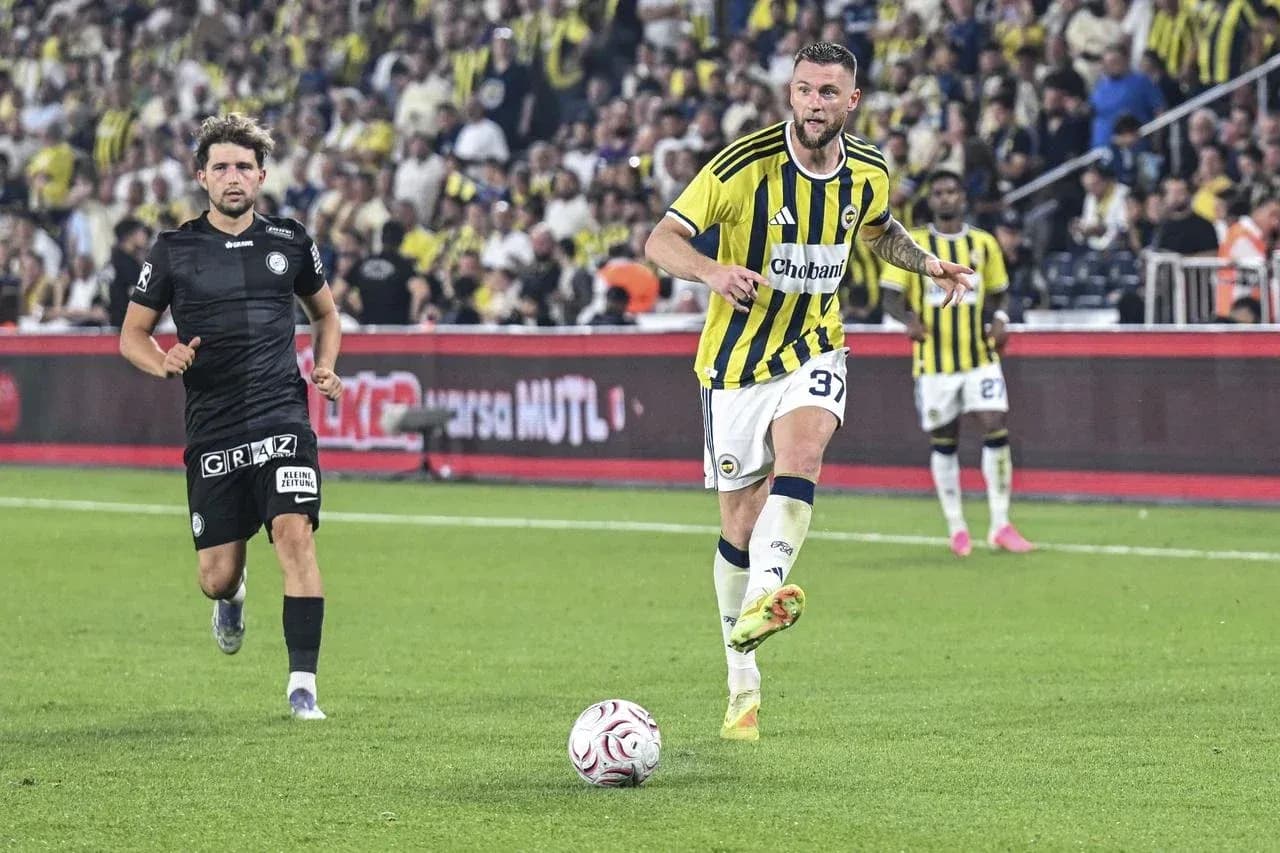
Sturm Graz host Fenerbahçe at Merkur-Arena in the UEFA Champions League 3rd Qualifying Round, with the Austrians needing to overturn a 2–0 first-leg deficit from Istanbul to keep their group-stage dream alive. This is effectively an early-season knockout tie: progression sustains European revenue and competitive momentum, while elimination forces an immediate reset of continental ambitions for 2026.
Head-to-Head Tactical Summary
The most recent meeting came on 5 August 2026 in Istanbul, where Fenerbahçe beat Sturm Graz 2–0 in the first leg of this 3rd Qualifying Round, leading 2–0 at half-time and closing the game down efficiently. In 2017, the sides also met in European qualifiers: on 3 August 2017 in Istanbul, Fenerbahçe drew 1–1 with Sturm Graz after leading 1–0 at half-time; a week earlier, on 27 July 2017 in Graz, Sturm Graz lost 2–1 at Merkur-Arena, with Fenerbahçe again 2–1 ahead at half-time. Across these three fixtures, Fenerbahçe have two wins and one draw, consistently starting stronger and managing first-leg or away scenarios with control.
Global Season Picture
- League Phase Performance: There is no current group-stage or league table data provided for either club in this Champions League campaign, so their exact goals for, goals against, and points in the qualifying phase cannot be quantified from standings.
- Season Metrics: In the league phase so far, Sturm Graz have played 3 Champions League qualifiers, winning 2 and losing 1, scoring 6 and conceding 2. Their attacking output has been front-loaded at home, averaging 4.0 goals per home match and 1.0 away, while defensively they have yet to concede at home and allow 1.0 goal per away game. Discipline-wise, their yellow cards are concentrated between minutes 16–75, suggesting rising aggression as matches develop. Fenerbahçe have also played 3 qualifiers, with 2 wins and 1 draw, scoring 4 and conceding just 1. They average 1.5 goals at home and 1.0 away, with a very tight defence (0.0 goals conceded at home, 1.0 away) and two clean sheets already. Their card profile shows late-game yellow cards, particularly from minute 76 onwards, hinting at increased defensive work or game management under pressure.
- Form Trajectory: Sturm Graz’s form line of W W L reflects a strong start followed by the setback in Istanbul; they have shown they can dominate at home but are now reacting to their first defeat. Fenerbahçe’s W D W pattern underlines consistency and resilience, with no losses and the ability to both protect leads and recover from setbacks across their three qualifiers.
Tactical Efficiency
Sturm Graz’s numbers point to a high-ceiling but volatile attack: six goals in three qualifiers, including a 4–0 home win, show they can generate volume and convert chances, especially in Graz. However, their only defeat (2–0 away) underlines that when the front line is contained, they lack margin for error. Defensively, two goals conceded in three matches and two clean sheets indicate a generally solid structure, but they now face the challenge of pushing numbers forward without exposing transitions.
Fenerbahçe’s early campaign is built on balance and control. Four goals scored and only one conceded across three matches, plus two clean sheets, speak to a compact defensive block and effective game management. Their biggest win of 2–0 at home in this tie’s first leg shows a pragmatic approach: establish a cushion, then manage risk. The penalty conversion (1 from 1) adds a clinical edge in key moments. Relative to Sturm Graz, Fenerbahçe’s attack is slightly less explosive in raw output but more controlled, while their defence has been marginally more efficient, particularly at home. That defensive stability is tactically decisive in a second leg where they can afford to prioritise structure and counter-attacks over sustained possession.
The Verdict: Seasonal Impact
This second leg is season-defining for both clubs. For Sturm Graz, overturning a 2–0 deficit would mark a statement European night, sustaining their Champions League path and the associated financial and sporting upside; failure would likely drop them into a lower-tier competition and reframe 2026 as a year of rebuilding rather than progression. Their aggressive home scoring profile suggests they can make this competitive, but they must balance urgency with defensive discipline to avoid conceding an away goal that would almost kill the tie.
For Fenerbahçe, converting their first-leg advantage into qualification would reinforce a narrative of continental maturity: a clean qualifying run, continued unbeaten form, and access to a higher competitive and commercial tier later in 2026. An early exit, by contrast, would raise questions about their ability to manage away legs under pressure despite strong underlying defensive metrics. The trajectory of their European season hinges on whether they can replicate the compact, efficient performance from Istanbul in a more hostile environment in Graz.