.svg&w=384&q=75 "Naijagoal logo")

Spokane Velocity Edges Boise in USL League One Cup Clash
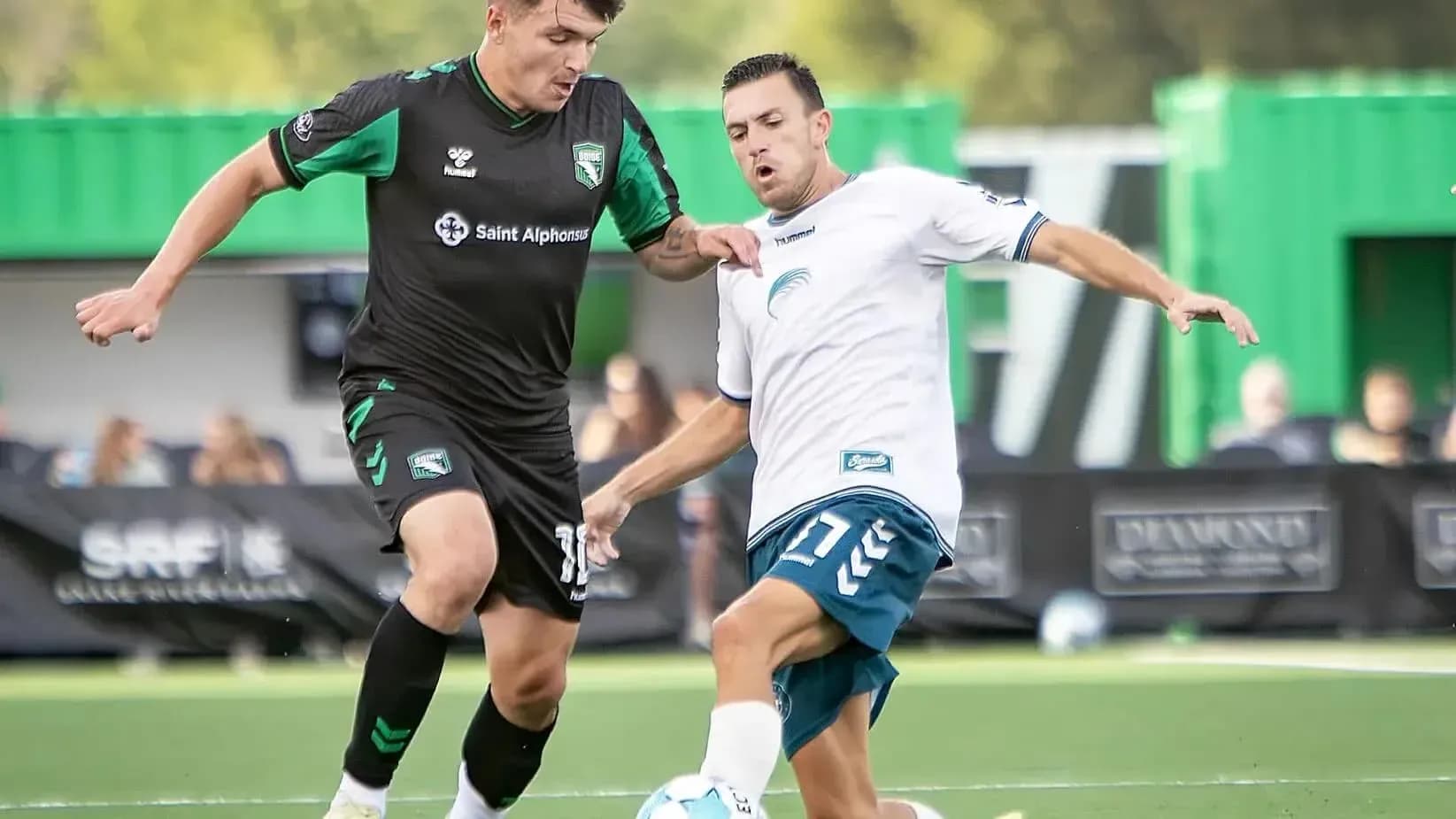
On a cool night at One Spokane Stadium, Spokane Velocity and Boise closed out a group-stage contest that felt more like a knockout rehearsal than a routine date in the USL League One Cup calendar. The hosts edged it 2–1, a result that sits neatly within each club’s emerging seasonal DNA.
Heading into this game, Spokane’s story in Group 1 was one of sharp contrasts. Overall they had played 3, winning 2 and losing 1, with 3 goals scored and 5 conceded. The goal difference of -2 underlined how fragile their margin for error remained. At home, though, they had been a different beast: 2 wins from 2, 3 goals for and just 1 against, averaging 1.5 goals for and 0.5 against at One Spokane Stadium. Boise arrived as a more chaotic, high-scoring proposition. Overall they had played 3, winning 2 and losing 1, with 7 goals for and 6 against, a goal difference of 1. On their travels, they had split their two away games (1 win, 1 loss), scoring 3 and conceding 3, with an away average of 1.5 goals scored and 1.5 conceded.
I. The Big Picture: Identities Taking Shape
Spokane’s campaign has been built on home control and defensive tightening in front of their own supporters. Their biggest home win so far, a 2–1 scoreline, fits the final here perfectly: they tend to do just enough in attack while trusting a compact defensive core to hold firm. Their only heavy blemish came away in a 4–0 defeat, reinforcing the notion that this is a side whose confidence and structure are heavily venue-dependent.
Boise, by contrast, have leaned into volatility. A 4–3 home win and a 2–1 away victory in their “biggest wins” portfolio, coupled with a 2–1 away defeat, paint a picture of a team that rarely plays in straight lines. Their overall goals-for average of 2.3 and goals-against average of 2.0 suggest open games, where their attacking thrust is often matched by defensive exposure.
II. Tactical Voids and Discipline: Edges in the Margins
With no explicit injury or suspension data, the tactical voids are less about who was missing and more about how the squads were constructed on the night.
Spokane’s starting XI was built around a spine of resilience and experience. In goal, S. Lewis wore the number 1 shirt, the natural anchor of a side that has conceded just 1 goal at home in the competition before this match. Ahead of him, defenders such as S. Fitch (4), G. Margvelashvili (5), C. Miller (12), and D. Waldeck (18) formed a back line clearly designed to protect the central channel and dominate first contacts. The midfield and attacking lanes featured the creative and running power of C. Fernandez (6), S. John-Brown (11), L. Gil (10), and J. Gallardo (7), with N. Brett (9) as the primary reference point up front and A. Lewis (77) offering flexibility between lines.
Boise’s structure hinted at a more transition-heavy approach. J. Mazzola (99) started in goal behind a defensive unit of J. Ricketts (2), J. Yaro (15), J. Crull (16), and N. Moon (14). In midfield, the presence of D. Kostyshyn (10), M. Ndiaye (5), and P. Mayaka (66) suggested a blend of ball-winning and forward thrust, with B. Bodily (7), T. Amang (22), and T. Moshobane (11) forming a front line built for pace and direct running.
Disciplinary trends across the group stage provided an undercurrent to this fixture. Spokane’s yellow cards have clustered between 61–75 minutes, where 42.86% of their cautions arrive, with smaller but steady contributions in the 16–30, 31–45, 46–60, and even 91–105 ranges. They have also seen a red card in the 46–60 minute band. Boise, meanwhile, spread their yellows more evenly, with 33.33% arriving between 31–45 minutes and 16.67% in each of 0–15, 46–60, 61–75, and 76–90. Both sides therefore entered the contest with a known propensity for mid-to-late game disciplinary spikes, raising the stakes for any tight second half.
III. Key Matchups: Hunter vs Shield, and the Engine Room
The “Hunter vs Shield” dynamic in this tie was Boise’s aggressive attacking profile against Spokane’s home defensive record. Boise’s overall 7 goals from 3 games, including 3 on their travels, made them one of the more dangerous forward units in the group. Spokane, however, had allowed just 1 goal at home before this match, relying on the structure around S. Lewis, Fitch, Margvelashvili, Miller, and Waldeck to compress space and limit high-quality chances.
In the “Engine Room,” the contest revolved around Spokane’s central creators and connectors versus Boise’s ball-winners and distributors. For Spokane, Fernandez and Gil were the obvious fulcrums, linking phases and trying to feed Brett and Gallardo between the lines. Boise’s response was anchored by Mayaka and Ndiaye, with Kostyshyn offering a more advanced outlet. The battle for second balls and turnovers in central areas was always going to dictate whether Boise could turn this into the kind of stretched, end-to-end game where their forwards thrive, or whether Spokane could keep it measured and territorial.
IV. Statistical Prognosis and What the Result Tells Us
From a statistical standpoint, the meeting of Spokane’s home averages (1.5 goals for, 0.5 against) and Boise’s away profile (1.5 for, 1.5 against) pointed toward a narrow, multi-goal contest. A 2–1 home win sits right in that intersection: Spokane slightly outperforming their usual attacking output at home, Boise hitting their typical away scoring mark but failing to clamp down defensively.
Neither side has taken nor missed a penalty in the competition so far, so the margins were always likely to be found in open play and set pieces rather than from the spot. With Boise yet to keep a clean sheet overall and Spokane posting 1 clean sheet at home, the probabilities leaned toward both teams scoring but the hosts having the sturdier platform.
Following this result, the narrative is clear. Spokane remain a formidable home side, capable of bending a high-scoring opponent to their preferred tempo. Boise, for all their attacking promise, still live on a knife-edge defensively, particularly away from home. In a knockout context, this kind of game would be decided by who better manages those critical mid-second-half moments where both teams’ disciplinary histories flare; on this night in Spokane, the balance of structure, discipline, and home comfort tilted just enough in Velocity’s favor.