.svg&w=384&q=75 "Naijagoal logo")

Spain's World Cup Mourning: Mikel Merino Reflects on Disappointment
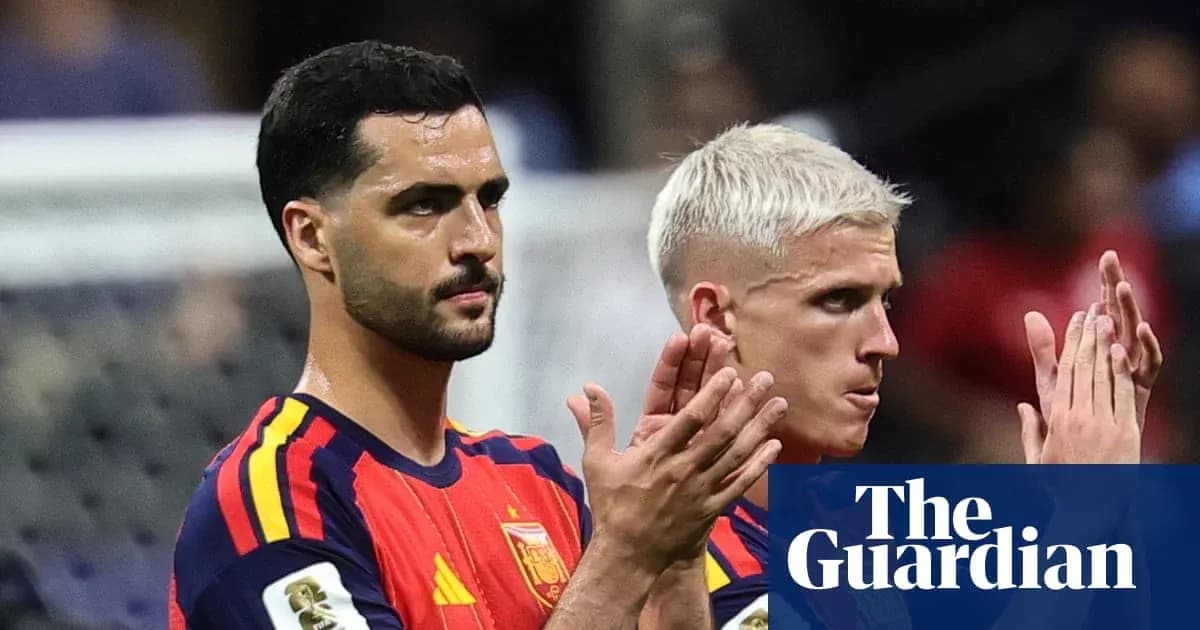
Mikel Merino called it “mourning” – with a “u”. No one had died, he reminded everyone, but it felt close enough. Spain had not lost, not technically, yet a 0-0 draw with Cape Verde in their World Cup opener landed with the weight of something far heavier than a single point.
This was not how it was supposed to begin.
Six long days now stretch in front of them at their Tennessee training base before they can put it right. Six days to replay chances in their heads, to scroll past criticism on their phones, to sit with that hollow feeling Merino tried to explain.
“Every player lives with that mourning,” the Arsenal midfielder said. “You have to swallow the disappointment. We have to recover as soon as we can.”
A lonely seat at the inquisition
On the morning after, 11am in the heat, almost everyone was out on the pitch. Almost. Merino was inside, sat alone behind a top-table microphone, facing seven long rows of Spanish reporters and the hum of discontent from outside.
He knew why he was there. This is what happens when a favourite stumbles on day one. The questions grow teeth. The tone hardens. The inquest begins.
All part of the game, he called it. And then he set about calming the storm.
“If there’s one thing that’s not good for us, it is for there to be panic,” he said, handling half an hour of interrogation with a clarity that Spain’s attack had lacked in Atlanta. He spoke about mentality, about criticism, about the need to be better “tomorrow” – a line Luis de la Fuente repeats regardless of the result.
Merino has seen this movie before. In 2010, Spain lost their opening match and ended the summer as world champions. Back then he had just turned 14, a kid watching a team of idols turn a stumble into a legacy.
Now he is one of the men being asked to do the same.
Family, ego and the quiet anger
Merino kept circling back to one word: family.
“It is easy to talk of ‘family’ but when things don’t go well, when they are difficult, is when you truly see that ‘family’ – and I see unity, enthusiasm and a will to play well,” he said.
He went deeper, into the fragile ecosystem of an elite squad. Every player arrives from a club where he is important, maybe the star. The national team strips that status away. Only a few can start. The rest must live with it.
“It is important to have ego; as a footballer, with all the criticism from outside you need it to feel good on the pitch. But you also need the humility to know that this belongs to everyone,” he said.
That is where the word “family” stops being a slogan and starts being a test. Can you still be united when you are angry? Can you still back a teammate when you are the one left on the bench or the one who missed the chance?
“You can be annoyed, angry, but that energy has to be positive.”
His choice of “mourning” was quickly seized upon, the kind of phrase that ricochets around social media and talk shows. He did not back away from it.
“Maybe I didn’t express myself well,” he offered, then doubled down. “It was an attempt at a metaphor, a comparison. You’re so competitive that when it doesn’t go well, sometimes you go home and don’t even want to talk to your family. That’s why I say it’s like a mourning. Everyone deals with it differently.”
Some players will watch the game back immediately, dissect every touch. Others will run from it for a few hours, talk about anything but football. Merino belongs to the first group.
“I like to face it and watch [games back] as soon as possible but that doesn’t mean it’s the best approach for everyone.”
The mental grind of a long wait
Normally, players crave a quick turnaround. Another game, another chance, the fastest way to rinse the taste of a bad night from the palate. This expanded World Cup offers the opposite: gaps, time, space for doubts to breathe.
“What you want after a bad game is to play again straight away to get the bad taste out of your mouth,” Merino said. “The risk is you have lots of time to go over it; it’s a mental challenge to deal with that, evade all that and be as free as you can mentally.”
Doing that in private is hard enough. Doing it with the lights on, under the permanent scrutiny of a World Cup, is something else entirely.
“That’s a reality; it’s part of the business, the reason we earn what we earn, why football is so big, so important: because you’re here to cover it, to create stories through which we explain things to fans,” he told the room.
Some players embrace that circus. Others endure it. Either way, there is no hiding place.
Merino has learned to confront the bad nights quickly. Four or five hours after the final whistle, he said, perspective begins to creep back in. The tournament is still young. There is still time to fix it.
Then the focus shifts outward, to the group. Who needs a hand on the shoulder because they missed the chance? Who is crushed because they did not play a minute? Who needs space to sit alone with their own version of mourning?
Knowing the answers to those questions is as important as knowing when to play the extra pass.
A reset and a distant echo of 2010
Results elsewhere offered a small but tangible lift. Saudi Arabia and Uruguay drew, easing the immediate pressure and, in Merino’s words, leaving Spain with the feeling that they “start over”.
“I like to see the positive side,” he said. He reached again for history, for the comfort of precedent. The last world champions began their campaign with a defeat to Saudi Arabia. Spain’s class of 2010 lost their first game and still climbed the mountain.
“There was lots of criticism and they turned it around; that is an example to follow from people who were idols,” he said. “I often take inspiration from athletes who have lived my dreams before I did. That generation means so much for this one: we want to emulate them.”
The mourning will pass. It always does. The question now is whether this Spain side can do what their heroes once did: take the pain of a faltering start and turn it into the fuel that drives them all the way.