.svg&w=384&q=75 "Naijagoal logo")
Southampton's Promotion Controversy: The Spying Allegation
Southampton’s promotion push now carries an awkward asterisk. Not for a late red card, a controversial penalty, or an injury to a star forward – but for an accusation that cuts to the heart of sporting integrity: spying.
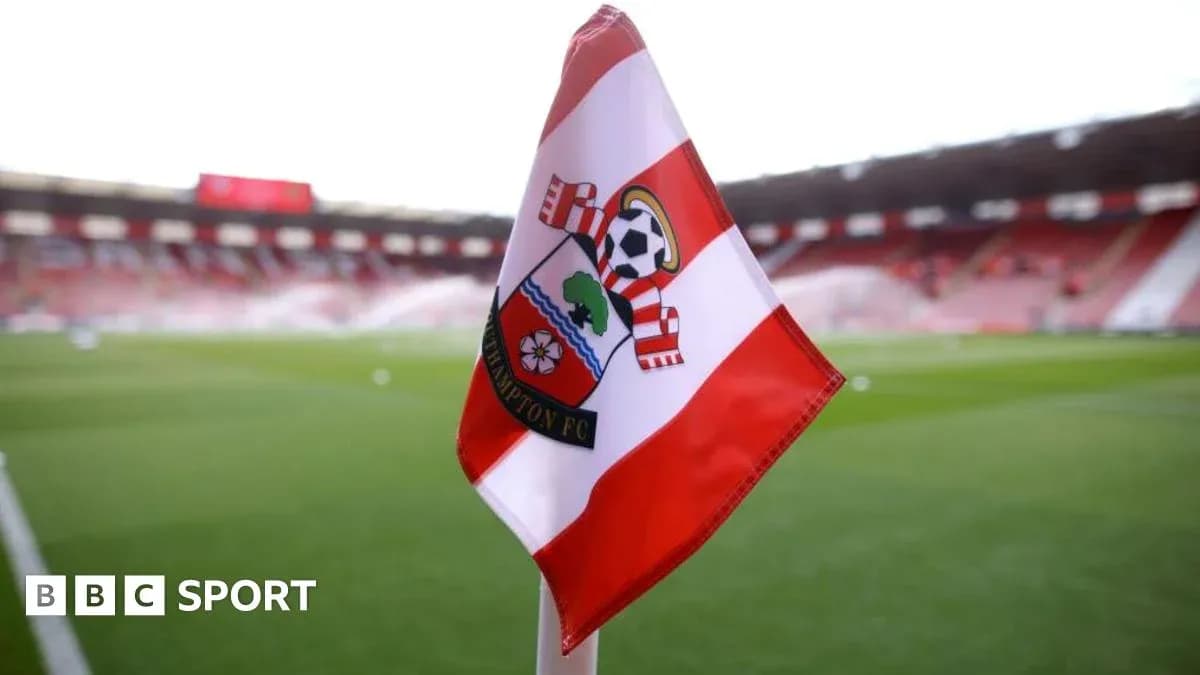
The club have asked for more time to complete an internal review after being charged by the English Football League with breaching rules on “observing, or attempting to observe, another club's training session within 72 hours of a scheduled match” and failing to act “with the utmost good faith” towards Middlesbrough.
The timing could hardly be more explosive. The allegation centres on events at Rockliffe Park last Thursday, just 48 hours before the sides played out a tense 0-0 draw at Riverside Stadium in the first leg of their Championship play-off semi-final.
Middlesbrough say a member of Southampton’s coaching staff was caught watching and recording that training session. Not rumoured. Not whispered. Found, they claim, on site and filming.
Southampton have not, at any stage, attempted to deny that allegation.
Silence on the touchiest question
If there was any doubt about the sensitivity of the issue inside St Mary’s, it evaporated after the first leg. Saints boss Tonda Eckert cut short his post-match news conference when repeatedly pressed on whether he had sent a performance analyst to spy on Boro’s preparations.
He refused to answer. The questions kept coming. He walked out.
Behind the scenes, the stakes are even higher. Under normal circumstances, Southampton would have 14 days to respond to the charges. The EFL, though, has moved to accelerate the process, asking an independent disciplinary commission for “a hearing at the earliest opportunity”.
The clock is ticking. The play-off final at Wembley is scheduled for 23 May, the day after that standard 14-day window closes. The EFL does not decide the punishment itself, but it knows any delay could turn the entire play-off campaign into a legal minefield.
Saints host Middlesbrough in the second leg at St Mary’s on Tuesday night. Kick-off 20:00 BST. On paper, it’s a straight shootout for a place at Wembley against Hull City.
In reality, the picture is far murkier.
“All facts and context”
Southampton chief executive Phil Parsons struck a careful tone as the club tried to buy time.
“The club is fully co-operating with the EFL and the disciplinary commission, while also undertaking an internal review to ensure that all facts and context are properly understood,” he said.
“Given the intensity of the fixture schedule and the short turnaround between matches, we have requested time to complete that process thoroughly and responsibly.
“We understand the discussion and speculation that has followed over recent days, but we also believe it is important that the full context is established before conclusions are drawn.”
The EFL, though, cannot sit and wait. Not when the disciplinary commission has the full range of sanctions available – from a fine, to a points deduction, to the nuclear option of removing Southampton from the play-offs altogether.
That possibility, however remote it might seem, changes everything. If Saints progress on the pitch, Middlesbrough will know that an off-field verdict could yet drag them back into the picture. With a right of appeal also in play, the pressure to resolve the matter quickly is obvious.
Leeds, Bielsa and a rule born from scandal
English football has been here before, but the landscape has shifted.
Seven years ago, Leeds United were fined £200,000 after a member of their staff was found acting suspiciously outside Derby County’s training ground in January 2019, ahead of a league fixture. Marcelo Bielsa later admitted he had sent staff to watch the training sessions of every opponent Leeds faced in the 2018-19 season.
At that time, there was no specific rule against spying on training. Leeds were punished under the broader obligation to act with “good faith” towards other clubs.
That case prompted the EFL to tighten the rulebook. Rule 127 was introduced, explicitly banning any attempt to watch an opponent’s training sessions in the days leading up to a game.
Southampton are now charged under both the original “good faith” provision and this newer, targeted rule. That dual charge matters. It means a simple fine might not satisfy those inside the game who believe the deterrent must be stronger.
Context could count against Saints too. Leeds’ offence came during a regular league fixture, in the middle of a long campaign. Southampton’s alleged spying is said to have taken place just before a play-off semi-final – a two-legged tie that can define a season and reshape a club’s financial future.
In disciplinary terms, that can be framed as an aggravating factor.
What the commission will weigh
Much will hinge on detail. Who knew what, and when? How high up the coaching structure did the instruction go? What exactly was recorded or transmitted from Rockliffe Park? Was it a brief, opportunistic look, or something more organised?
Even if senior figures argue they were unaware of the staff member’s actions, that would only soften the blow, not erase it. The individual on site still represented the club. Under the rules, that is enough.
If the commission opts for a points deduction, the arguments will begin immediately. Should Saints go up via the play-offs, Middlesbrough will surely ask if a Championship points penalty is any real punishment for a club now sitting in the Premier League.
The EFL cannot sanction a Premier League club directly. It can only recommend a deduction. At that stage, the Premier League board would decide whether to apply any penalty in the 2026-27 season.
That kind of delayed justice would satisfy few. It would also leave a promotion bid under permanent suspicion, with fans of all sides questioning the value of what they are watching.
A cloud over the run to Wembley
The most high-profile recent example of spying in football came not in England but at the 2024 Olympics women’s tournament in Paris. Fifa docked Canada six points for using a drone to spy on New Zealand, and banned three members of staff – including the head coach – from all football for a year.
That case showed how severe sanctions can become when governing bodies decide a line has been crossed.
Southampton’s situation is different in scale and setting, but the principle is the same: trust in fair competition. Once that is damaged, every result feels provisional.
So the Championship play-offs move on under a cloud. St Mary’s will be full, the noise ferocious, the football frantic. A place at Wembley is on the line.
Yet somewhere beyond the touchline, in meeting rooms and legal submissions, another contest is already under way – one that could decide not just who goes up, but what that promotion is worth.
Southampton have asked for more time. The EFL, staring at the calendar and a looming final at Wembley, know that is the one thing this saga cannot be allowed to take.